Curry Udon With Glossy Roux and Chewy Noodles in 32 Minutes
Jump to recipe ↓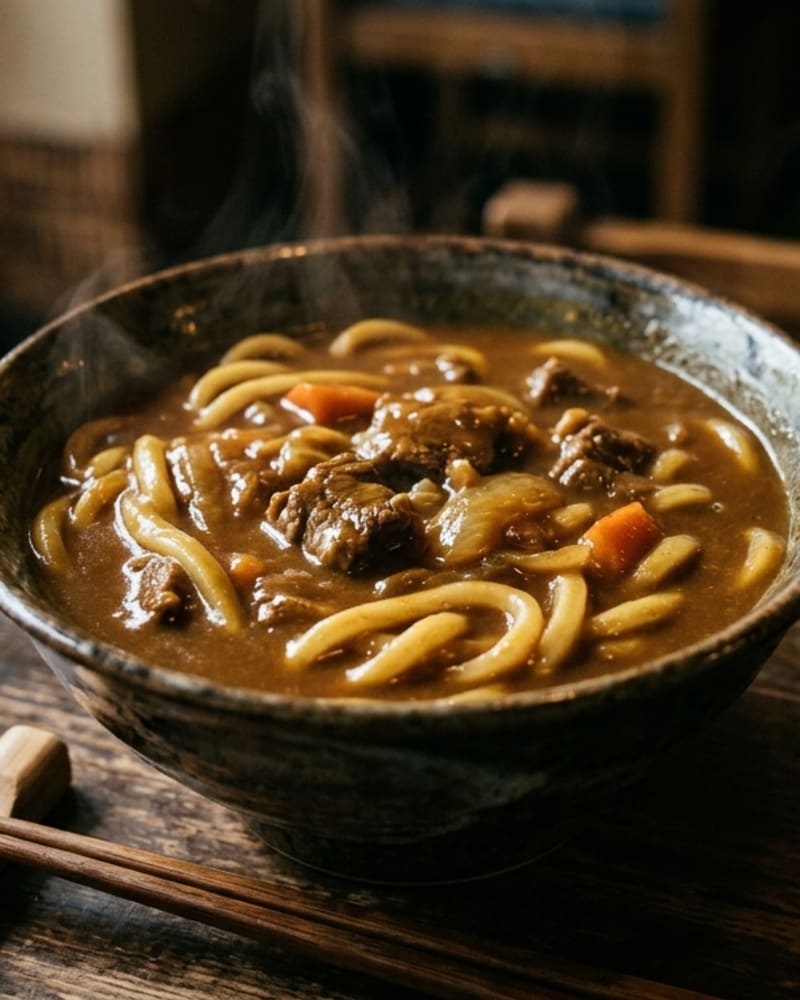
It is 7:05 on a Thursday, the sky went dark an hour ago, and nothing sounds better than something thick and hot in a bowl. This curry udon recipe puts a block of Japanese curry roux to work on chicken, carrot and onion, then drowns a pile of chewy noodles in it. It is comfort food after a bad day, and it does not ask you how it went.
The roux does the cooking and you just have to stir it in.
Everything starts with a quick brown. The chicken thighs sear in oil for 4 to 5 minutes, the onion and carrot soften in the same pot, and then the broth and soy sauce go in to simmer until the carrot is tender. The roux breaks into the broth in pieces, and 3 to 4 minutes later the broth is thick and glossy.
The udon is the easy part. It cooks while the curry finishes, you drain it, divide it among 4 bowls and ladle the sauce over the top. The green onions go on last, and they matter more than they look like they should.
Japanese curry is thicker and milder than many other curries, and the roux block is a large part of why. It packs fat, flour and spice into one piece, which means it dissolves into the broth and thickens it without any extra work. That is what makes this curry udon recipe a weeknight dish: the sauce is built into the block.
What you need
- 28 oz udon noodles
- 4 oz japanese curry roux
- 1 yellow onion
- 1 carrot
- 1 lb chicken thighs
- 1 tbsp vegetable oil
- 4 cups chicken broth
- 2 green onions
- 1 tbsp soy sauce
- ½ tsp salt
- ¼ tsp black pepper
How to make it
- Slice 1 yellow onion into thin wedges, peel and slice 1 carrot into thin half-moons, cut 1 lb chicken thighs into bite-size pieces, and slice 2 green onions, about 8 minutes.
- Heat 1 tbsp vegetable oil in a large pot over medium-high heat. Season the chicken with salt and black pepper to taste, then brown for 4 to 5 minutes until mostly cooked through.
- Add the sliced onion and carrot and cook 3 to 4 minutes until the onion softens.
- Pour in 4 cups chicken broth and 1 tbsp soy sauce, bring to a boil, then reduce heat and simmer 8 minutes until the carrot is tender.
- Break 4 oz Japanese curry roux into pieces, stir into the pot until fully dissolved, and simmer 3 to 4 minutes until the broth is thick and glossy.
- Meanwhile, cook 28 oz udon noodles according to package directions (usually 1 to 3 minutes for fresh or frozen), then drain.
- Divide the udon among 4 bowls, ladle the curry over the top, and finish with sliced green onions.
Notes
Cooked leftovers keep three to four days refrigerated, per USDA FSIS. Store the curry and the noodles separately if you can, because udon keeps absorbing sauce and softens the longer they sit together.
The curry sauce reheats well with a splash of water or broth, since it thickens in the fridge. Warm it slowly and stir. Cooked udon is better made fresh, or at least rinsed and reheated in simmering water for a short moment before it goes in a bowl.
The chicken should be cooked to 165°F, the USDA safe minimum for poultry. It browns first and then simmers in the broth for several minutes, so it will get there, but a thermometer in the thickest piece settles the question.
Taste the curry before you ladle it. The roux carries most of the seasoning, and the soy sauce adds the rest.
If you want to bring the heat up, choose a hotter roux rather than adding more spice to the pot. The roux is already balanced for salt and sweetness, and extra seasonings can throw that off. This curry udon recipe is easiest to adjust through the roux you buy.
Swaps that actually work
The roux and the udon are the point. Japanese curry roux comes in blocks, and the brand and the heat level change the final flavor, so choose one you like and keep the rest simple. Frozen udon, fresh udon and shelf-stable packages all work, so use whatever the store has and follow the package.
Chicken thighs stay juicy through the simmer. Chicken breast works but dries out easier, so cut it a little larger and watch the simmer. Thinly sliced beef also works and cooks much faster, so add it later than the chicken.
The carrot and the onion can be swapped for other vegetables you have, such as potato or mushrooms, as long as you cut them small enough to cook in the broth. Chicken broth can be replaced with another light broth.
Swapping in a different noodle means the dish is not udon anymore, and the thick, bouncy noodle is what holds the sauce. Choosing another pasta here is like picking a different person at the end of the date: it might work, but it is a different evening.
If it goes wrong
The sauce is lumpy. The roux was not dissolved. Break it into small pieces next time, and for now, whisk the sauce over low heat until the lumps melt, or press them against the side of the pot.
The sauce is too thick. Roux keeps tightening as it sits. Add a splash of hot broth or water, stir, and taste. A thick sauce is fixable, and a thin one needs only another minute of simmering.
The sauce is too thin. It did not simmer long enough after the roux went in. Give it another minute or two and it should coat a spoon.
It tastes flat. Salt is a common fix, and a small splash of soy sauce adds depth without making it taste like soy. Add a little at a time.
The noodles are gummy. They sat in water or sauce too long. Drain them as soon as they are done and serve straight away.
If you want the noodles to feel like a full meal, add a handful of spinach to the pot just before you ladle, so it wilts into the sauce. The recipe above does not include it, but it suits the dish and costs you nothing in timing.
What to serve with it
The curry is the whole dinner, but a small side of something cold and crisp helps: sliced cucumber with a little vinegar, a quick pickle, or a plain salad.
If you want the better version of the default, pair it with a soft-boiled egg dropped in the bowl, which is not in the recipe above but suits a curry sauce well.
It makes a decent lunch the next day if you keep the noodles separate and reheat the sauce on its own.
A bowl of this curry udon recipe is the kind of dinner that makes the end of a bad day feel survivable. It does not require good knife skills, a clean kitchen or good news.
Why this one earns its place
You do not need a lot of skill for a bowl this good, which is the entire pitch. It is a thick, glossy, forgiving dinner that you can cook while your phone charges, and it feels like someone is taking care of you even when that someone is you.
When you swipe it into your week, the agent can shop the roux, the udon and the rest of the list, so the only decision left is whether you want a second bowl.
If you want more curry on the table, try Chicken Katsu Curry or Miso Ramen, or settle the question of tonight with what's for dinner tonight.
More like this: all Japanese recipes in Crave Corner.