Miso Ramen That Turns a Carton of Broth Into a Bowl Worth Slurping
Jump to recipe ↓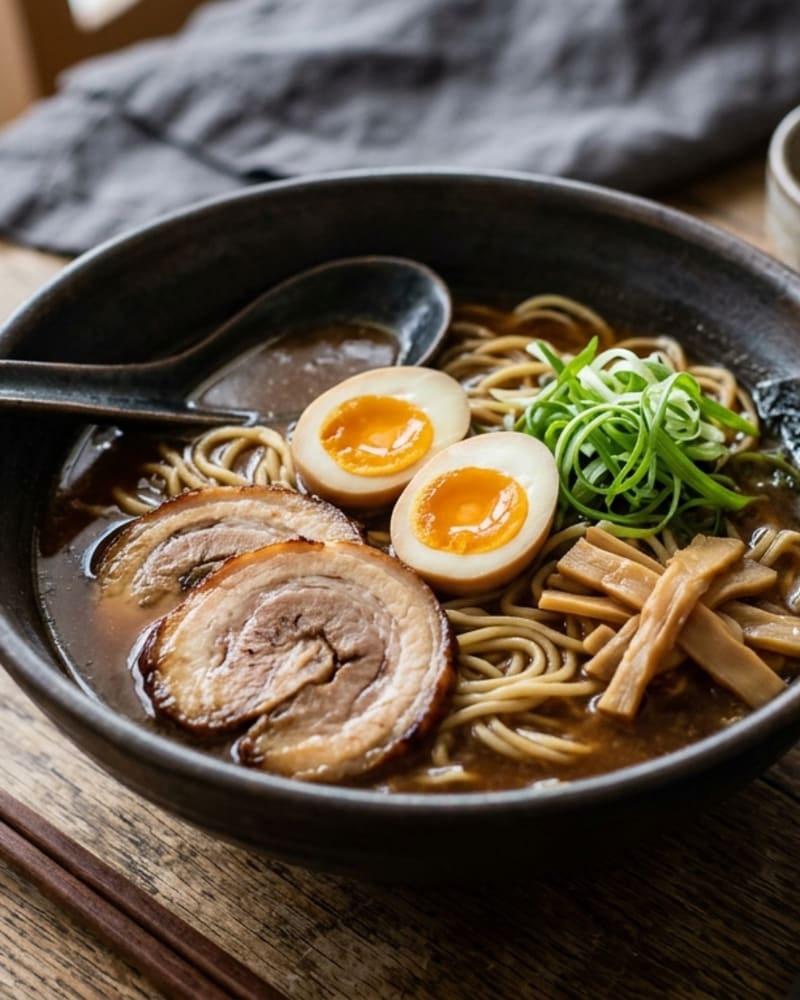
About 614 calories per serving, estimated from the ingredient list.
It is 1:15, it is raining, and the only acceptable lunch is something in a bowl you hold with both hands, which is more commitment than your last situationship ever showed. You swiped right on it this morning, and the agent already made sure the tofu is home. This miso ramen recipe makes two of those bowls in about 25 minutes.
Proper ramen broth is a project. Here, three tablespoons of miso are the cook's shortcut: stirred into a carton of vegetable broth, the fermented soybean paste brings salt, savoriness and a gentle funk all at once, plus a lot of the depth a stockpot spends all day on. Pan-fried tofu makes it a meal, and a pile of sliced scallions keeps it fresh.
What you need
- 2 ramen noodles
- 3 tbsp miso paste
- 4 cups vegetable broth
- 8 oz tofu
- 3 stalks green onions
- 2 tbsp cooking oil
- ½ tsp salt
- ¼ tsp black pepper
How to make it
- Press and cube the 8 oz tofu, which takes about 5 minutes.
- Heat 2 tbsp cooking oil in a skillet over medium heat and pan-fry the tofu cubes for 5 minutes until golden.
- Bring 4 cups vegetable broth to a simmer in a pot.
- Whisk 3 tbsp miso paste into the broth until fully dissolved.
- Cook the 2 packs ramen noodles in the broth according to package directions.
- Slice the 3 whole green onions.
- Add the fried tofu and sliced green onions in the final minute of cooking.
- Divide into bowls and season with salt and black pepper to taste.
Notes
Cooked leftovers keep three to four days refrigerated, per USDA FSIS, but store the broth apart from the noodles. Noodles left sitting in broth keep drinking it and turn soft and swollen by morning.
The broth freezes well on its own. Noodles and fried tofu do not, so make those fresh when you reheat.
Dissolve the miso in a ladle of the hot broth first, then stir it back into the pot. Drop it straight in and it sulks in clumps, leaving salty pockets in an otherwise bland bowl.
In this miso ramen recipe the noodles cook in the broth after the miso is in, so cook them at a gentle simmer instead of a hard boil. Boiling miso hard makes it taste flatter and a little grainy. Give the noodles their package time at that gentle simmer, then bite one to check.
If your noodles come with a seasoning packet, set it aside for another day. The miso is the seasoning here, and the packet on top of it makes the bowl far too salty. Two strong personalities in one small bowl is a lot.
Press the tofu properly. Wrap the block in a clean towel and set something heavy on it for the five minutes the method gives you. Drier tofu browns. Wet tofu steams, sticks and spits oil at you.
You let the agent do the shopping, so the least you can do is warm the bowls before your lunch date sits down. Fill them with hot tap water while the noodles cook, then tip it out.
If the broth tastes thin, the noodles are your first help: cooking them right in the broth, as the method does, lets their starch give it body. Beyond that, a little more miso is the fix.
Swaps that actually work
The miso is the point. White miso is milder and slightly sweet, red miso is darker and saltier, and either one works. If you are new to it, start with white and stir in more to taste. Leave the miso in charge.
Chicken broth works in place of vegetable broth if the bowl does not need to stay vegetarian, and it gives a rounder, richer base. Change it on your list before the agent shops, and the cart follows your mood instead of your Monday self.
Fresh ramen noodles from the refrigerated section, the packs that give a little when you squeeze them in the cold case, are a real step up from dried blocks. Udon or rice noodles work too, cooked to their own package directions. Swipe left on the dried block for a week; it will not take it personally.
Toppings are where you can move freely, and they are where a miso ramen recipe turns into your miso ramen. A jammy soft-boiled egg, leftover roast pork, corn, spinach wilted in the hot broth, bamboo shoots, a sheet of nori or a spoonful of chili oil all belong here.
Firm or extra firm tofu holds up to pan-frying. Silken tofu falls apart the second things get heated, which is a red flag in a skillet and oddly charming in a bowl: drop soft cubes straight into the broth if you like that texture.
The swap that costs you the dish is skipping the scallions. They are the only sharp, fresh thing in a bowl that is otherwise all deep and savory.
If it goes wrong
It is too salty. Miso came on a little strong; it happens with the confident ones. Miso brands vary a lot, and many cartons of broth are already salted. Add a splash of water or unsalted broth, and hold back the salt from the ingredient list until you have tasted.
The noodles are mushy. They sat in hot broth too long. Eat right away, and next time pull the noodles about a minute early, since they keep cooking in the bowl.
The tofu stuck and tore. The pan was not hot enough, the tofu was wet, or it got moved too soon. Let it sit until it releases on its own. Golden tofu lets go of the pan; pale tofu clings.
It is flat. Here it is rarely salt, because miso covers that. It usually wants acid or heat: a few drops of rice vinegar or a spoonful of chili oil wakes the whole bowl up.
What to serve with it
On its own this is a complete lunch for two, built that way on purpose.
The better version of the default is a soft-boiled egg halved on top. Six or seven minutes in boiling water, then into cold water, and the yolk stays jammy.
The thing in the fridge that lifts it is kimchi, or a quick cucumber salad dressed with rice vinegar and a pinch of salt. Something cold, crunchy and sour next to a hot salty bowl is the whole point of a side.
For a next day lunch, reheat the broth on its own and cook a fresh pack of noodles in it. It takes about as long as the first time and tastes like it.
Why this one earns its place
Takeout ramen is a treat. This miso ramen recipe is the version you can have on a Wednesday without thinking about it, from a carton, a tub of miso that lives in the fridge for months, and a block of tofu.
That tub of miso is the quiet win. Once it is in the fridge, a warm, savory lunch is always about 25 minutes away. Swipe right on it once and it is there for every rainy 1:15 after, with the agent adding the tofu and scallions to the cart.
If soup with noodles is your idea of a fix, chicken noodle soup is the slower, cozier cousin. For another fast bowl with Asian pantry flavors, cauliflower fried rice fits the same kind of night. And when the question is simply what to eat, what's for dinner tonight is where to start.
More like this: all Japanese recipes in Crave Corner.