Chicken Katsu Curry With a Crust That Survives the Sauce
Jump to recipe ↓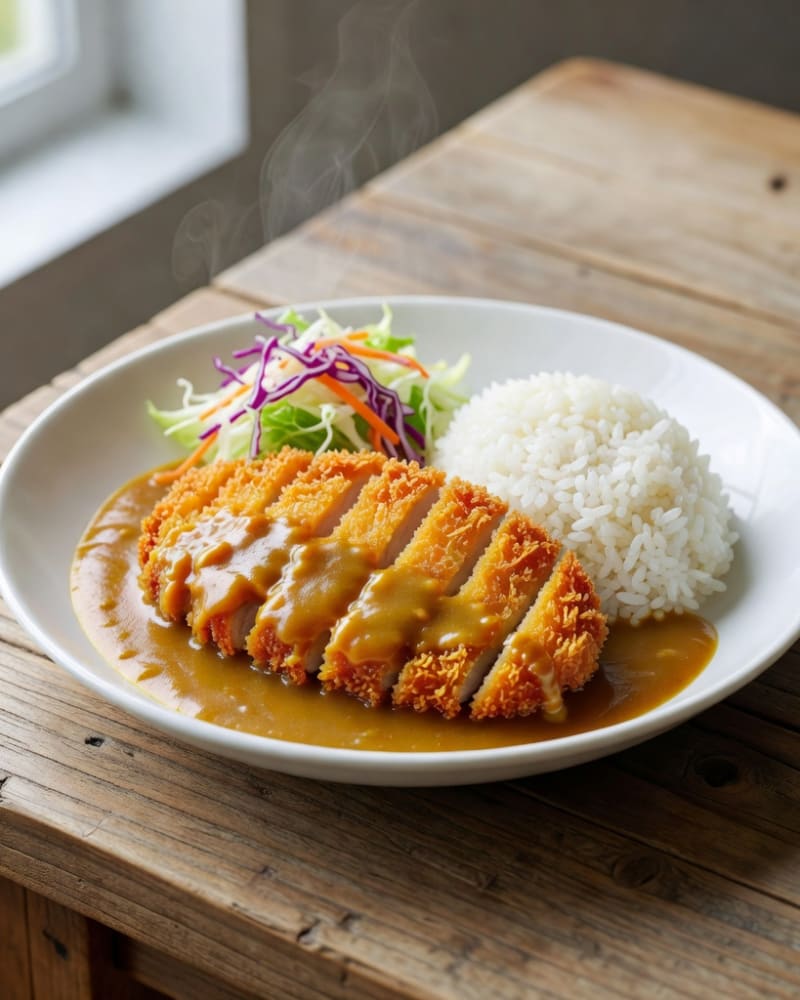
It is 7:10 on a Wednesday, and you want the kind of plate you would order if you were trying to impress someone across a small restaurant table. This chicken katsu curry recipe takes 35 minutes and delivers a crisp cutlet, a glossy brown curry, and a mound of rice. Dim the lights, let them assume you do this on weeknights, and we won't tell.
Crisp on one side of the plate, silky on the other, and both on your table in 35 minutes.
Katsu curry is the plate that makes a weeknight feel like a reservation, and this chicken katsu curry recipe is built for that. The cutlet gives you crunch, the curry gives you comfort, and the rice makes peace between them. It is the sort of dinner that feels like two dishes, which is a generous trick to pull off on a weeknight with a skillet and two pots.
What you need
- 4 chicken breast
- 4 frozen breaded chicken breasts
- 4 chicken breasts
- 1½ cups panko breadcrumbs
- 8 oz japanese curry roux
- 1 potato
- 1 carrot
- 2 cups rice
- 1 onion
- ¼ tsp salt
- ½ cup all-purpose flour
- ¼ tsp black pepper
- 2 eggs
- 2 cups vegetable oil
How to make it
- Pound the 4 chicken breasts thin and season with salt and black pepper. Dice the onion, peel and dice the large potato, and dice the carrot. About 8 minutes.
- Set up breading stations with 1/2 cup all purpose flour, 2 beaten eggs, and 1.5 cups panko breadcrumbs.
- Bread each chicken breast in flour, then egg, then panko.
- Heat 2 cups vegetable oil in a skillet and fry the breaded chicken 4 to 5 minutes per side until golden and crispy.
- Simmer the box of Japanese curry roux with the diced onion, carrot, potato, and water in a pot until vegetables are tender and sauce thickens.
- Cook 2 cups rice in a pot with water according to package directions until tender.
- Slice the chicken katsu and serve over the cooked rice with the curry sauce ladled alongside.
Notes
Cooked leftovers keep three to four days refrigerated, per USDA FSIS. Store the curry, the rice and the cutlets in separate containers, because a cutlet sitting in sauce overnight will not be a cutlet by morning.
The curry is the part most likely to improve on day two. Many curries settle and deepen after a night in the fridge, and this one thickens as it chills, so warm it gently and loosen it with a splash of water. Potato can turn a little grainy if you freeze the curry, so if you plan to freeze it, we would suggest doing it without the potato or accepting a softer texture.
Katsu does not like the microwave. A hot oven or a dry skillet usually brings the crust back to something respectable. Slice it after reheating rather than before so the edges stay crisp.
In a chicken katsu curry recipe, pounding the chicken thin is what makes the cutlets cook in the time they do. Put the breast between two sheets of plastic wrap or in a zip bag and use the bottom of a pan or a rolling pin, working from the center outward until it is an even thickness. Even matters more than thin, because a cutlet with one fat end and one skinny end cooks unevenly.
Japanese curry roux usually comes in a box of blocks that break apart along scored lines, and many grocery stores stock it in the international aisle.
Swaps that actually work
The panko and the curry roux are the point of this chicken katsu curry recipe. Panko tends to give a crust that is airy and shatters rather than crunching dully, and the roux is what lets you make a Japanese curry without a spice cabinet.
Regular dry breadcrumbs are a downgrade you can live with, but the crust will usually be denser and finer. Skipping the roux and shaking in curry powder is a different dish, and you would be going to dinner with a stand-in. If you cannot find a roux, look for a Japanese curry block or cubes, and follow its package directions for the water.
Chicken thighs can replace breasts if you flatten them to an even thickness, and they are more forgiving if your timing slips. Pork loin cutlets turn this into tonkatsu curry, which is a fine evening. Whichever you choose, chicken needs to reach 165°F per USDA, and pork 145°F with a 3-minute rest.
Some cooks grate an apple into the curry for a touch of sweetness, and a spoonful of honey does a similar thing. Short or medium grain rice is a good match, since it clumps slightly and tends to hold the sauce better than a loose long grain.
Vegetables are flexible. Sweet potato can take the place of the potato, and a handful of peas or frozen green beans can go in toward the end.
If it goes wrong
The crust is falling off. The chicken was damp going into the flour, or the panko was not pressed on. Pat the cutlets dry first, press the crumbs on firmly with your palm, and turn the pieces only once in the pan.
The outside is dark and the inside is pink. The oil was too hot, or the cutlet was too thick. Lower the heat to medium and give each side the full time, and if a piece looks raw in the middle after slicing, return it to the skillet for another minute per side until it reaches 165°F.
The crust is soggy. A soggy crust is a katsu that spent too long in the curry's arms. Lift the cutlets out of the oil onto a rack or a paper towel, and let the sauce stay on the plate beside them.
The curry is thin or lumpy. If it is thin, keep simmering until it coats the back of a spoon, since it thickens as the roux melts and the potato softens. If lumps remain, press the roux against the side of the pot with a spoon and whisk until smooth, or strain the sauce through a sieve.
What to serve with it
The default is a mound of rice and a pile of shredded cabbage dressed with a splash of rice vinegar and a pinch of salt. The cabbage gives you a cold, bright bite between the rich mouthfuls. It is the friend who keeps the evening from getting too heavy, and everyone is glad she came.
A better version of the default adds pickled ginger or quick pickled cucumbers on the side. A little sharpness is the right foil for a golden crust and a deep, mellow curry.
A soft-boiled egg or a few slices of cucumber are the sort of thing the fridge often has on hand, and either lifts a plate that is already doing well. Serve it with the lights low and the second helping unannounced. For lunch the next day, a leftover cutlet makes a very good sandwich, which is the same idea behind a katsu sando.
Why this one earns its place
Choosing between crispy and comforting is a dilemma you do not have to solve here. This chicken katsu curry recipe gets both, and it does it with one skillet for frying and two pots, one for the curry and one for the rice, so the kitchen survives the night. Swipe it into your week and let the agent shop the panko and the roux, which leaves you with the good part of the job: deciding how much curry to ladle.
If you want more crunch, try pork tonkatsu, chicken karaage and our guide to quick weeknight dinner ideas.
More like this: all Japanese recipes in Crave Corner.