Butadon, Glazed Pork Belly Over Rice in Five Ingredients
Jump to recipe ↓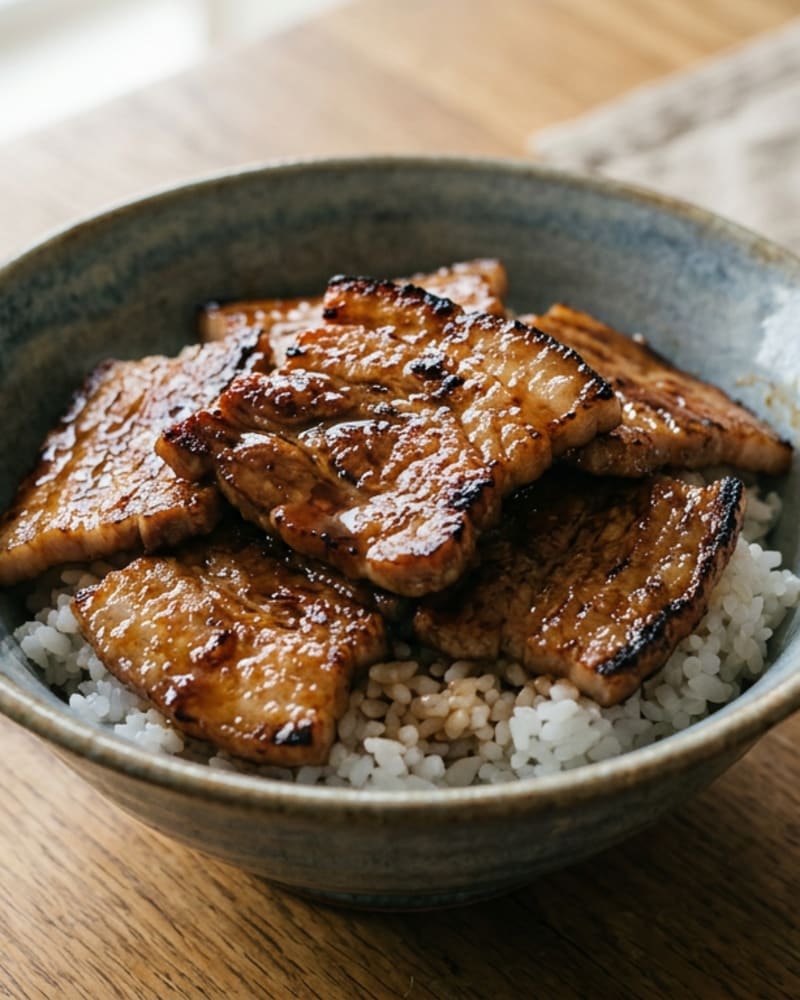
8:05 p.m., you are hungry, tired and out of ideas. This butadon recipe is five main ingredients (plus a splash of water) and about 26 minutes, and it is what you make after a bad day when you want something warm that does not ask questions. Think of it as showing up in a good jacket: very little effort, noticeably better results, and we will not tell anyone the jacket is borrowed.
Pork belly, browned and simmered in soy and sugar, spooned over a bowl of rice.
Butadon is a Japanese rice bowl topped with pork. Onion slices cook down with the browned belly, a splash of soy sauce, sugar and water goes into the skillet, and the whole thing simmers until the pork is tender and the sauce reduces to a glossy glaze. It goes over two cups of cooked white rice, and the sauce soaks into the grains.
The ingredient list is short on purpose. Pork belly brings the richness, soy brings the salt and depth, sugar rounds it out, and onion adds a mellow sweetness. There is nothing to hide behind, which is why it works when the cart is nearly empty and the evening is nearly over.
What you need
- 1 lb pork-belly
- 1/4 cup 0.25 cups soy-sauce
- 2 tbsp sugar
- 1 onion
- 2 cups white-rice
How to make it
- Slice 1 onion thin about 5 minutes prep.
- Cut 1 lb pork belly into bite size pieces and brown 6 minutes in a skillet.
- Add sliced onion and cook 3 more minutes.
- Pour in 1/4 cup soy sauce mixed with 2 tbsp sugar and 1/2 cup water.
- Simmer 12 minutes until pork is tender and sauce reduces.
- Spoon pork and sauce over 2 cups cooked white rice.
Notes
Cooked leftovers keep three to four days refrigerated, per USDA FSIS. Store the pork with its sauce in one container and the rice in another, so the rice does not turn to paste. Reheat the pork gently in a skillet with a spoonful of water, and warm the rice separately.
A butadon recipe like this one tastes good the next day, because the pork keeps soaking up the sauce. The sauce thickens as it cools and the fat firms up, so warm it until it loosens before you serve.
Pork belly is a fatty cut, and that is the whole idea. The fat renders as it browns, and the pork cooks in its own richness. Cut the pieces to bite size, as the method says, so they cook evenly and fit on a spoon. Pieces that are too large take longer to become tender.
Brown the pork for the full 6 minutes before the onion goes in. The browned edges give the dish its depth, and the onion softens in the fat the pork leaves behind. Add the onion and give it 3 more minutes before you pour in the sauce.
The sauce is the simplest part: a quarter cup of soy sauce mixed with two tablespoons of sugar and half a cup of water. Stir it before it goes in so the sugar starts dissolving. The 12-minute simmer is what turns it from a thin liquid into a glaze.
Cooked pork should reach 145°F, per USDA, followed by a three minute rest. A thermometer is a good habit if you are cutting bigger pieces.
Swaps that actually work
The point of this butadon recipe is the pork belly and the ratio of soy to sugar. Everything else is a supporting role. Keep the belly, and keep the sweet-salty balance, and you will taste the bowl you meant to make.
Pork shoulder, thinly sliced, can stand in when belly is hard to find. It is leaner, so it will not carry the same richness, and it may need a splash of oil in the pan. Sliced pork loin dries out faster, so watch the clock. Thick-cut bacon is not the same thing, but it will get you a smoky bowl in a pinch.
Mirin or a splash of sake, if you have them, add depth to the sauce, and a small slice of fresh ginger does the same. Use them instead of some of the water, and taste as it reduces.
Rice can be short-grain or medium-grain white rice. Cook it to the package directions so you have the 2 cups cooked that the method asks for. Brown rice works, though the pork and sauce will sit differently on it.
For toppings, a soft-boiled egg, sliced scallions, sesame seeds or pickled ginger all work, and a little shredded cabbage on the side adds crunch.
The swap that costs you the dish is boiling it dry. If the sauce reduces too far, it goes from glaze to salty syrup. Add a splash of water, and stay near the stove for the last few minutes. On SwipeCart you swipe right on this bowl and the agent puts the pork belly and soy sauce in the cart together, which is the closest a grocery run gets to a meet-cute: short, sweet and nobody has to wander the aisles looking lost.
If it goes wrong
The pork is tough. It needs more time. Keep simmering, adding a splash of water if the pan is dry, and check a piece every few minutes until it gives easily.
The dish is greasy. Pork belly renders a lot of fat. Spoon off some of the excess before you add the sauce, and blot the pork on a paper towel if it is pooling on the rice.
The sauce is too salty. It reduced too far or the soy sauce was strong. Add a little water and a pinch of sugar, simmer for a minute, and taste again. Extra rice absorbs the rest.
The sauce is thin and the rice is wet. It did not simmer long enough. Return the pan to the heat and let it reduce until the sauce coats a spoon.
It tastes flat. Usually it is salt or balance. A little more soy sauce deepens it, and a pinch of sugar rounds it. A squeeze of lemon or a few drops of rice vinegar cuts through the richness if it is heavy.
What to serve with it
The default is rice and nothing else, which is what the bowl is. A small side of pickles or sliced cucumber with salt makes the dish feel complete.
To make it better, add a soft egg, a handful of scallions and a drizzle of the pan sauce over the top. A bowl of miso soup alongside turns it into a proper dinner, and steamed greens bring something fresh to the plate.
It works as lunch the next day. Pack the pork and rice together in a container, warm it through and the sauce keeps everything moist.
Why this one earns its place
You will want this bowl on the nights when nothing else sounds good and you still want to feel looked after. This butadon recipe is comfort food that shows up in a good jacket and leaves before things get complicated, a good answer to the question of what to eat when your day went badly, and an easy swipe when you want dinner to cost you very little thought. Five main ingredients, one skillet, one bowl.
For another pork bowl with a crisp side, try the pork tonkatsu. If you like pork belly, there is bossam. And for a way to keep the cart tidy, see how an AI grocery shopping app handles it.
More like this: all Japanese recipes in Crave Corner.