Bossam That Turns Pork Belly Into a Hands-On Dinner for Two
Jump to recipe ↓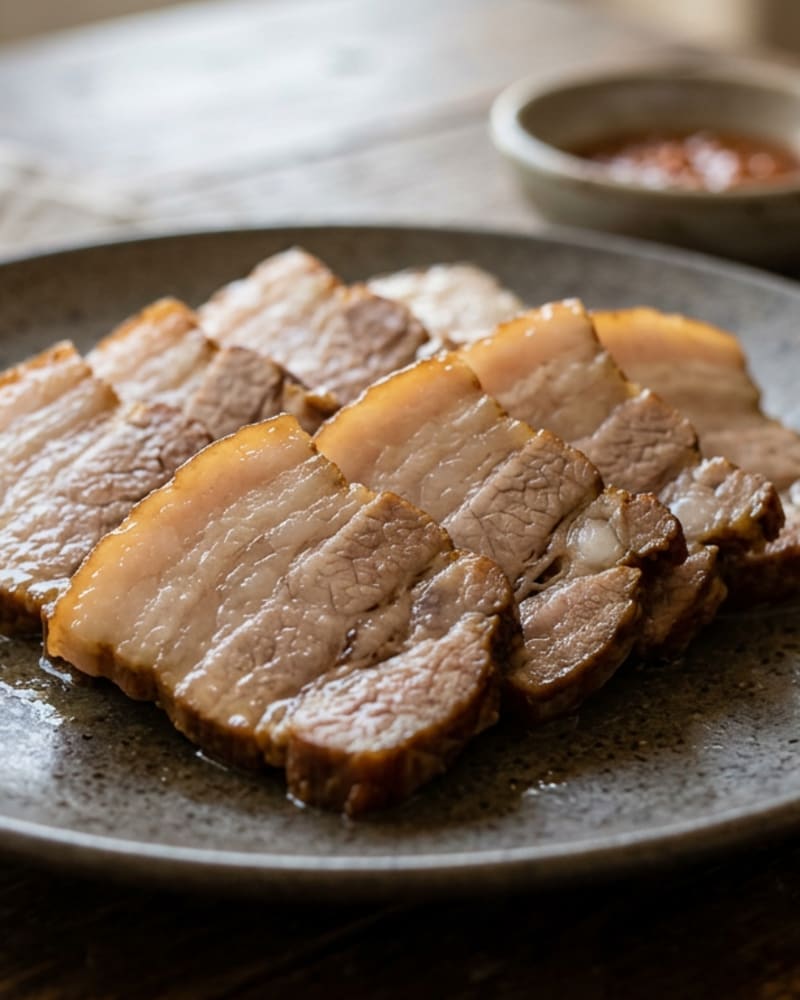
It is 7:10 on a Friday, someone is coming over, and you have two pounds of pork belly and a plan to look effortless. This bossam recipe takes fifty minutes, and you spend very few of them doing anything, which leaves time to change your shirt and act like your place smells like this on purpose.
It is a dinner you eat with your hands and hand across the table, which is the lowest-effort flirting available.
Bossam is a Korean dish of sliced boiled pork served with lettuce leaves, kimchi and a bowl of ssamjang (a thick, savory, slightly sweet and spicy dipping paste). The pork is the quiet one in the room; everything around it does the talking. You build each bite yourself, which means the person across from you can build theirs, and the evening gets a rhythm that a plate of fork-and-knife dinner does not have.
What you need
- 2 lb pork belly
- 8 garlic cloves
- 1 2 inch piece of ginger
- 1 onion
- 1 head lettuce
- 2 cups kimchi
- 4 tbsp ssamjang
- ½ tsp salt
- ½ tsp black pepper
How to make it
- Peel the 8 garlic cloves, peel and slice the 2 inch piece of ginger, and quarter the onion. This takes about 5 minutes.
- Place the 2 lbs pork belly in a pot with the garlic, ginger, and onion. Cover with water and boil for 45 minutes until tender.
- Remove the pork from the pot, let it cool slightly, then slice into thick pieces.
- Wash and separate the leaves from the head of lettuce.
- Arrange the pork slices on a platter with the lettuce leaves, 2 cups kimchi, and 4 tbsp ssamjang on the side.
- Season the pork with salt and black pepper to taste if needed.
- Wrap slices of pork in lettuce leaves with kimchi and ssamjang and eat right away.
Notes
Cooked leftovers keep three to four days refrigerated, per USDA FSIS. Pack the sliced pork, the lettuce and the kimchi in separate containers, since wet lettuce tends to turn slimy quickly and kimchi will perfume everything it touches. Cold pork belly firms up because the fat sets, so give the slices a few minutes at room temperature or warm them gently in a covered pan rather than blasting them in the microwave.
Pork belly is a whole cut, so the USDA minimum is 145°F with a three-minute rest. A long boil should leave you past that, but an instant-read thermometer in the thickest piece turns a good guess into a fact.
Sliced pork from this bossam recipe can be frozen, though the texture tends to soften once thawed, and the lettuce will not survive the trip. The pork tastes freshest the day you make it and is still good the day after, often chopped into fried rice or tucked into a wrap with a fresh lettuce leaf.
Think about the size of the pot before you start. Two pounds of pork belly needs a pot that holds it with room to spare, or the water level drops and the top of the meat sits out of the liquid.
Bossam is the dinner to swipe for a night when the plan is to sit across from someone and take your time. The agent can put the pork belly, the ssamjang and the kimchi in the cart, and the only part left to your imagination is who you invite.
Swaps that actually work
The ssamjang is the point. It is the sauce that makes a wrap taste like a decision instead of a bite of plain pork, so do not shrug it off. If ssamjang is hard to find, stir a spoonful of doenjang (fermented soybean paste) and a spoonful of gochujang (fermented chili paste) together with a little sesame oil, and taste it before it goes on the table.
The pork belly can become pork shoulder, which is leaner and can turn out drier, so slice it a little thinner and pile on the ssamjang.
Lettuce is flexible: butter lettuce, red leaf, green leaf or romaine hearts all work, and many versions use napa cabbage or perilla leaves. Aged, sour kimchi suits this dish well because the tang cuts the fat, and fresh kimchi works if that is what you have. A few sliced raw garlic cloves or green chiles on the plate are a common addition, though not a required one.
Serving this bossam recipe with plain pork and no sauce is like going on a date without conversation: both people are physically present and nothing is happening. If the whole thing feels too rich, add a spoonful of kimchi to every wrap.
If it goes wrong
The pork is tough or chewy. It came out before it was tender. Put it back in the pot and keep it going, checking every ten minutes with the tip of a knife until it slides in with very little resistance. Pork belly tends to forgive extra time more than it forgives too little.
The slices fall apart when you cut them. They were too hot and too soft. Let the pork rest until it is cool enough to handle, or slip it into the fridge for ten minutes, and use a sharp knife with long, smooth strokes instead of sawing.
It tastes bland. If your bossam recipe comes out quiet, remember that plain boiled pork is the strong, silent type and mild by nature. Season the slices with salt and black pepper, and add a pinch of flaky salt to the top of each slice if it still seems quiet. The ssamjang and kimchi do the rest of the work, so be generous with both.
The lettuce tears. The leaves were wet, or they were too small to hold a wrap. Pat them dry and overlap two leaves so the second one catches whatever the first one drops.
What to serve with it
The default for a bossam recipe is steamed rice, which turns each wrap into a small, tidy parcel and gives you something to do with leftover sauce. The better version is a few small plates around it: sliced garlic, green chiles, pickled radish and a bowl of perilla leaves if you can find them.
The thing in the fridge that lifts it is a second jar of kimchi, because the sourness cuts through the fat. If anyone wants a soup alongside, a simple clear broth keeps things light.
As lunch the next day it works, but pack the lettuce separately and assemble at the last minute. Warm the pork before you wrap it so the fat softens again.
Why this one earns its place
Some dinners are eaten next to someone, and this one is eaten with someone. The wrap-and-pass routine gives a table something to do with its hands, which can be a good setting for the conversation you have been meaning to have.
This bossam recipe belongs in the rotation for date night at home, for a friend who needs feeding, or for a Friday that deserves a little ceremony. If you like the pile-it-on style, try Korean Beef Bulgogi Bowls or Gimbap, and for the cooking-for-two angle, meal planning for couples is a good place to start.
More like this: all Korean recipes in Crave Corner.