The AI Grocery Shopping App, Explained: From Recipe to Checkout
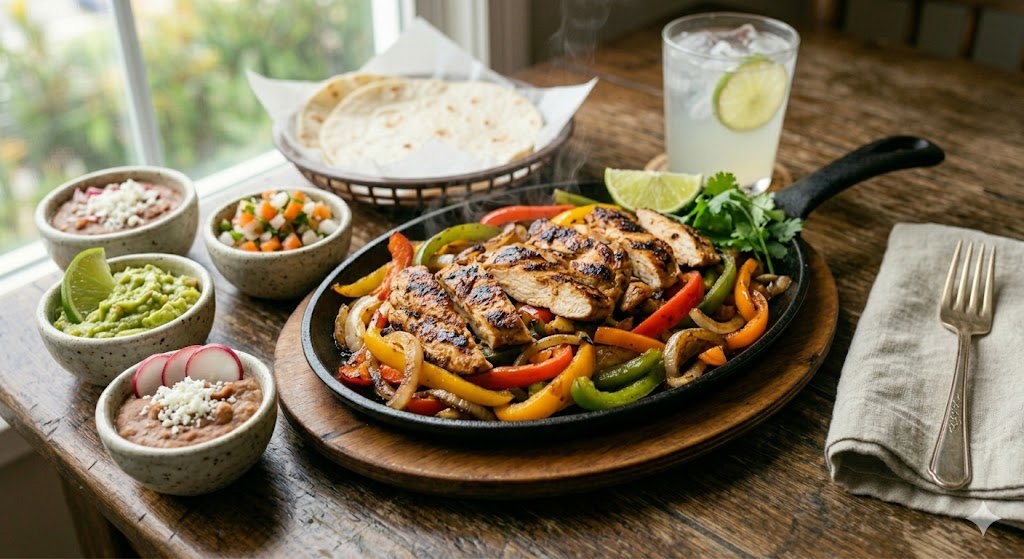
You decided on chicken fajitas. Good. Now open the grocery app and start typing.
Chicken thighs. Bell peppers, but how many. Onion. Tortillas, and which size. Cumin, which you might already have. Lime. Sour cream. Eight more searches, four judgment calls about quantity, and one substitution you accept because the store is out of the thing you wanted.
The recipe took four seconds to choose. The cart took twenty minutes to build.
That gap is what people mean when they say AI grocery shopping app in 2026. Not a chatbot that suggests recipes. Something that closes the distance between deciding and owning the ingredients.
What the phrase used to mean, and what it means now
Two years ago an AI grocery app meant recommendations. It looked at what you bought, guessed what you might want next, and put it on a shelf in the interface. Useful, occasionally. It still left every mechanical step to you.
What changed is that the software started acting instead of suggesting. Through 2026 the major grocery and delivery platforms shipped assistants that take an instruction and build a real basket from it. Type a list, photograph a handwritten one, or describe a dinner, and a cart comes back populated and priced.
That is a different category of tool. The recommendation engine hands you an idea. The agent hands you a checkout page.
The four jobs an agent actually does
Underneath the marketing, agentic grocery software is doing four unglamorous things in sequence. Every one of them is a place people currently give up.
One. Matching ingredients to real products.
A recipe says two tablespoons of gochujang. A store sells a 500 gram tub of one brand and a 200 gram tube of another. Something has to decide that the tube is the right call for a person cooking this once. That translation, from recipe language into stock-keeping units, is most of the work.
Two. Comparing prices without you asking.
Store brand or name brand, bulk or single, the thing on promotion this week or the thing you bought last time. These are small decisions with real money attached, and nobody makes fourteen of them well while standing in a kitchen.
Three. Handling substitutions before they become a problem.
Out of stock is the moment self-serve grocery shopping falls apart. A good agent proposes a swap that respects what the dish actually needs, and a bad one puts parsley in your cart because the cilantro ran out. This is the part worth judging a product on.
Four. Checking out.
Booking the pickup window or the delivery slot, applying the loyalty account, and completing the order. Boring, and the only step that turns a plan into food.
Where it still gets things wrong
Worth saying plainly, because the category oversells itself.
Agents are weakest on things a person knows without thinking. Ripeness. Whether the pack of chicken is the right size for the number of people eating. That you already have half a jar of the sauce. Pantry awareness is the open problem across every product doing this, and anyone claiming otherwise is describing a roadmap rather than a feature.
They are also only as good as the store's catalogue. If a retailer's data says a product exists at a location and it does not, the agent finds out at the same moment you do.
So the honest framing is simple. It shops adequately, in ninety seconds of your attention rather than twenty minutes, and you approve the result before anything is bought.
Discovery and checkout are still two different products
Here is the strange shape of the current market.
There are apps that are genuinely good at helping you decide what to eat. There are now several tools that are good at turning a decision into a cart. Almost nothing does both, so people run one app to pick dinner and a second to buy it, and copy between them by hand.
That handoff is where the whole thing leaks. You choose something on Sunday, forget why by Wednesday, and the cart never gets built.
What it looks like when both halves are one product
This is the version SwipeCart is built around, so treat it as a description of intent rather than a neutral survey.
You swipe through dinners. Crave right, pass left, one dish at a time, no comparing. The ones you keep land in a cart. Every ingredient gets matched to a real product at Kroger or Walmart, priced, and compared against alternatives. You see the running total while you swipe, so a budget is something you steer by rather than discover at checkout.
Then the agent completes the order and you approve the cart before anything is bought.
No copying between apps. No twenty minutes of searching. The decision and the shopping are one motion, which is the only arrangement where either half stays useful.
How to judge one of these
If you are weighing up any AI grocery tool, three questions separate the real ones from the demos.
Does it transact, or does it only suggest. Does it show you the price before you commit, or after. And when something is out of stock, does it make a sensible swap or a literal one.
Everything else is interface.
Is it worth paying for
Most of these tools sit between three and six dollars a month, which is roughly one coffee against a weekly grocery bill in the hundreds. The maths is simple.
The question is whether the thing changes behaviour. If an app saves you twenty minutes and one takeaway order a week, it has paid for itself several times over and the price stopped mattering. If you open it twice and forget it, any price was too much.
Judge it after two weeks on one measure: did you cook more of what you actually wanted.
Dinner should cost you one decision, not twenty searches.
Where this leaves the weeknight
None of this matters if the last mile stays manual. You can have the smartest recipe engine in the world and still end up at 6:40 typing "tortillas" into a search box for the third time.
That is the gap worth watching. The apps that win will be the ones that treat the cart as the product, not the recipe. We went through the same question from the store side in our look at what the Kroger app does well and from the delivery side in Walmart delivery versus letting an agent do it.
The category is also full of apps that solved the wrong half. A shopping list is not a decision. Lists assume you already know what you want. Most nights, at the exact moment it matters, you do not.
The useful definition is narrow. An AI grocery shopping app is not one that recommends dinner, it is one that ends with groceries you did not have to assemble. Judge it on substitutions, on the running total, and on whether a slot gets booked. An AI grocery shopping app that hands you a recipe has handed you the easy half.