Pork Tonkatsu With a Crust You Can Hear From the Next Room
Jump to recipe ↓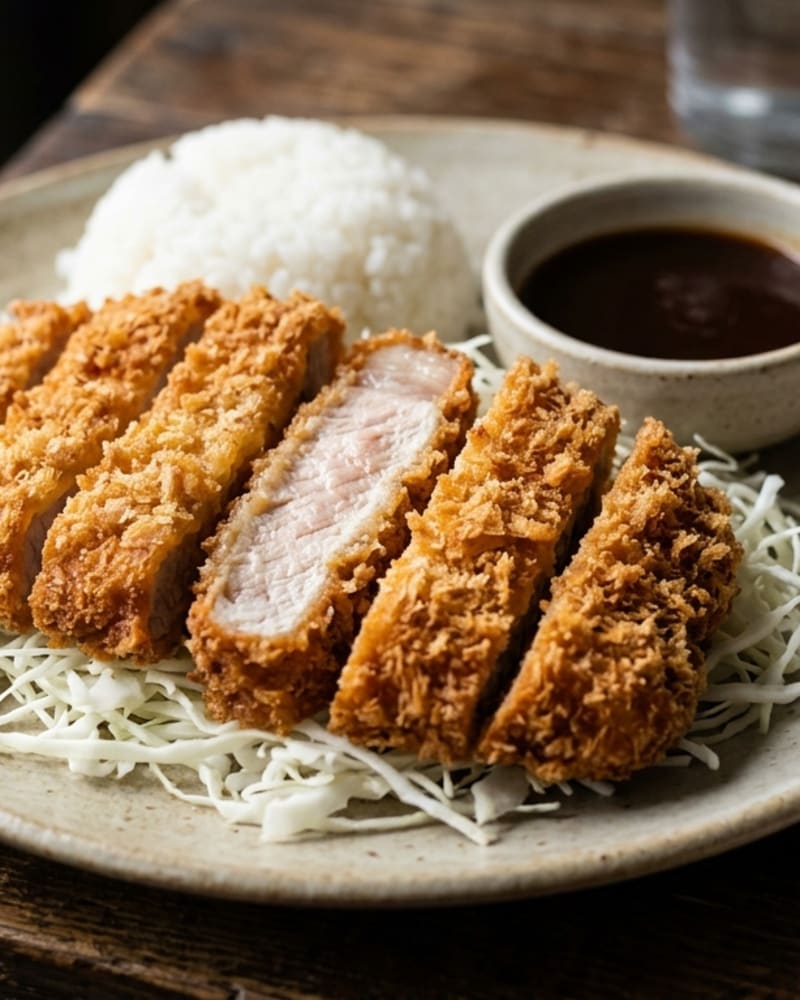
The rice cooker clicks over at 6:10 on a Tuesday, and from the other side of the kitchen comes a sound you cannot get from a delivery bag: the crackle of panko hitting hot oil. This pork tonkatsu recipe takes about 33 minutes, and it is the one where you get to be quietly, insufferably smug about frying something properly. We will not tell.
Crisp outside, juicy inside, and a bowl of sauce for dunking.
Pork loin is sliced into four cutlets about 1/2 inch thick, pounded lightly so they cook evenly, then dredged in flour, dipped in egg, and pressed hard into panko. They fry two at a time in about 1/2 inch of oil until deep golden, rest on a wire rack, and get sliced into strips over rice with a pile of shredded cabbage. The sauce is three ingredients stirred together in a bowl, which is the right amount of effort for something this good.
What you need
- 1.25 lb pork loin
- ½ cup all-purpose flour
- 2 eggs
- 1½ cups panko breadcrumbs
- 1½ cups vegetable oil
- 4 cups green cabbage
- 1½ cups jasmine rice
- 3 tbsp worcestershire sauce
- 3 tbsp ketchup
- 1 tsp soy sauce
- 1 tsp salt
- ½ tsp black pepper
How to make it
- Rinse 1.5 cups jasmine rice until the water runs clearer, then cook with 2.25 cups water according to package directions, about 18 minutes. Finely shred 4 cups green cabbage while the rice cooks, about 5 minutes.
- Slice 1.25 lb pork loin into 4 cutlets about 1/2 inch thick. Pound lightly to even thickness, then season both sides with 1 tsp salt and ½ tsp black pepper.
- Set up three shallow bowls with ½ cup all-purpose flour, 2 beaten eggs, and 1.5 cups panko breadcrumbs. Dredge each cutlet in flour, dip in egg, then press firmly into panko.
- Pour 1.5 cups vegetable oil into a large skillet to about 1/2 inch depth and heat over medium-high to 340 F. Fry 2 cutlets at a time for 3 to 4 minutes per side until deep golden and cooked through.
- Drain the cutlets on a wire rack for 2 minutes, then slice into strips. Stir together 3 tbsp worcestershire sauce, 3 tbsp ketchup, and 1 tsp soy sauce for the dipping sauce.
- Plate each tonkatsu over rice with a pile of shredded cabbage and serve the sauce on the side for dunking.
Notes
Cooked leftovers from this pork tonkatsu recipe keep three to four days refrigerated, per USDA FSIS. The crust softens in the fridge, and that is just how fried food behaves.
To bring the crunch back, reheat the cutlets on a wire rack in a hot oven, not in the microwave. The microwave steams the coating and gives you a damp, bready disappointment.
It is best eaten the minute it is cut, and it does not improve on day two the way a stew does. The cabbage and rice keep fine on their own.
Whole cuts of pork have a USDA safe minimum of 145°F plus a 3-minute rest. The 2 minutes on the wire rack in the method gets you partway into that rest, and the slicing and plating take care of the remainder. If you own a probe thermometer, this is the dish to use it on.
Press the panko on firmly, with the flat of your hand. A coating that is only laid on slides off in the oil and leaves you with a bald cutlet and a floating crust.
Keep the oil at 340 F. Too cool and the coating drinks oil and goes heavy, too hot and it browns before the pork cooks through. A thermometer clipped to the pan is a small purchase that fixes this.
Fry two cutlets at a time. Crowding the pan drops the oil temperature, and then you are back to a heavy crust.
Swaps that actually work
The panko is the point of this pork tonkatsu recipe. Its coarse, airy flakes are what give tonkatsu that jagged, shattering crunch, and regular breadcrumbs pack tighter and fry up denser. Leave it alone.
Pork loin can become pork tenderloin, sliced into medallions and pounded thin, and the frying time may shorten. Boneless thin-cut chops work if you pound them to the same thickness as the recipe. A cutlet of chicken breast turns this into a different dish, and a good one, but call it chicken katsu and do not argue about it.
The sauce is Worcestershire, ketchup and soy sauce. That is the quick version of the thicker bottled tonkatsu sauce, and if you have that bottle, use it and skip the stirring. A drop of honey rounds the sauce if you want it sweeter.
Short on jasmine rice? Any short or medium grain rice sits better under a cutlet, and a bowl of plain steamed rice is a perfectly good partner to it.
Skip the cabbage and the dish loses the thing that cuts through the oil. Shredded lettuce is a distant second, and it makes a polite date, not a great one.
If it goes wrong
The coating fell off. The cutlet was damp when it hit the flour, or the panko was only patted on. Dry the pork well, press the crumbs in with your palm, and let the breaded cutlets sit on a plate for a couple of minutes before they go into the oil.
It is greasy. The oil was not hot enough, or the pan was crowded. Bring it back to 340 F before the next batch, and drain the finished cutlets on the wire rack, not on paper towels, so the underside stays crisp.
The pork is dry. The cutlet was too thin in places or overcooked. Pound to an even thickness, pull the cutlets at 3 to 4 minutes per side when deep golden, and let them rest before slicing so the juices stay in.
It is flat. Salt the pork on both sides before the flour, 1 tsp for the four cutlets, then taste the sauce and adjust. A splash more soy sauce brings the sauce into focus.
If you drop a cutlet and the coating falls off, you have fried pork and a story, and the sauce hides a multitude of sins.
What to serve with it
The default is the plate the recipe describes: tonkatsu over rice, with a heap of shredded cabbage and the sauce on the side.
The better version of the default is the cabbage dressed with a little lemon juice, so it stays crisp and sharp against the fried pork. If you have toasted sesame seeds, scatter them on top.
From the fridge, a few pickled vegetables, or a bowl of miso soup if you want to turn dinner into a small production.
It is a decent lunch cold in a sandwich, between two slices of soft white bread with cabbage and sauce, a combination known in Japan as a katsu sando.
Why this one earns its place
Some dinners you eat, and some dinners you make a decision about. This is the second kind: four cutlets, two to a batch, and a short fry that rewards your attention. You swipe right on it because you want a night with a little technique in it and a payoff you can hear.
This pork tonkatsu recipe feeds four, and the shopping is a short, honest list: pork loin, panko, eggs, cabbage, rice. When the agent shops it, there is not a lot to argue about.
If you are choosing between tonight's options and cannot pick, decision fatigue and what to eat is for you. For another crispy Japanese-style fry, chicken karaage is a natural match. And gyoza Japanese dumplings is what you cook the next time you want to feel clever.
More like this: all Japanese recipes in Crave Corner.