Beef Pho That Smells Like It Simmered All Day
Jump to recipe ↓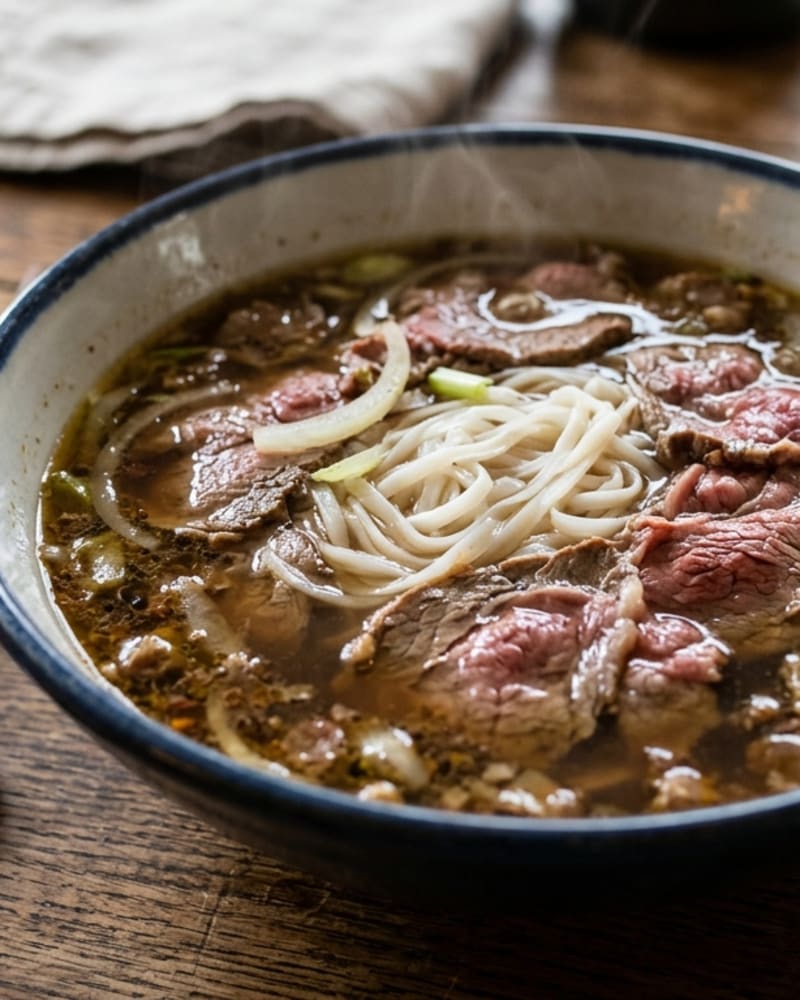
It is 6:47 on a Thursday, the day has not been kind, and the only thing you want is a bowl with both hands around it. This beef pho takes about 36 minutes, and the broth smells like it has been on since morning. Let your guest believe you started at noon. A good bowl keeps a secret better than most people do.
Char the onion and ginger first, and the broth does the rest of the talking.
Blackened onion and ginger go into the pot with the beef broth, then star anise and a cinnamon stick give it the warm, perfumed backbone of a bowl that usually takes hours. Twenty minutes of simmer and a few spoonfuls of fish sauce later, you are in business. The beef goes in the bowl, not the pot: raw slices wait there, and the hot broth cooks them gently.
What you need
- 14 oz rice noodles
- 1 lb sirloin steak
- 8 cups beef broth
- 1 yellow onion
- 2 oz fresh ginger
- 3 star anise
- 1 cinnamon stick
- 3 tbsp fish sauce
- 1 tsp sugar
- 2 cups bean sprouts
- 1 cup Thai basil
- 2 lime
- 4 green onion
- 1 jalapeño
- 1 tsp salt
- ½ tsp black pepper
How to make it
- Thinly slice 1 lb sirloin steak against the grain, halve 1 yellow onion, slice 2 oz fresh ginger into coins, thinly slice 4 green onions and 1 jalapeño, and cut 2 limes into wedges (about 8 minutes).
- In a large pot over medium-high heat, char the halved onion and ginger slices for 3 to 4 minutes per side until lightly blackened, then pour in 8 cups beef broth.
- Add 3 star anise and 1 cinnamon stick, bring to a boil, then reduce heat and simmer uncovered for 20 minutes so the broth turns fragrant.
- Stir in 3 tbsp fish sauce, 1 tsp sugar, salt to taste, and black pepper to taste, then keep the broth at a gentle simmer.
- Cook 14 oz rice noodles according to package directions, drain, and divide among 4 bowls.
- Lay the raw sliced sirloin over the noodles, then ladle the steaming hot broth over the top so the beef cooks gently in the bowl.
- Top each bowl with 2 cups bean sprouts (divided), 1 cup Thai basil leaves, the sliced green onions, jalapeño, and lime wedges, and serve right away.
Notes
Store the beef pho broth on its own, and keep the noodles and the fresh toppings out of it. Noodles left sitting in broth keep drinking it and swell, so a bowl assembled fresh will taste better than one that has been waiting. Cooked leftovers keep three to four days refrigerated, per USDA FSIS, and the broth can also go in the freezer in a container with a little headroom.
The broth settles into itself overnight. Cinnamon and star anise round out, the fish sauce stops sitting at the front of the line, and day two can taste more cohesive than day one. Warm it to a steaming simmer before it meets the beef, and cook fresh noodles rather than reheating old ones.
Do not skip the char. It is the one technique in this recipe, and it is what separates a bowl of seasoned broth from one with a smoky, faintly sweet depth. You want the onion and ginger lightly blackened, about 3 to 4 minutes per side, with a few dark patches and a sweet smell. Any further and it can turn bitter.
Raw beef in a bowl is how this works, so a safety word. USDA lists 145°F with a 3-minute rest as the safe minimum for whole cuts of beef, and you cannot put a thermometer in a paper-thin slice. If you want to be sure, drop the slices into the simmering pot for a few seconds before they go in the bowl, and you will still have a good bowl, just a more cautious one.
Soup is a hard sell on a swipe deck, because a card cannot show you the smell. Swipe right anyway. The agent shops the star anise, the fish sauce and the Thai basil, and you skip the walk down the spice aisle with a list you wrote in a hurry.
Swaps that actually work
The charred onion and ginger, the star anise and the cinnamon, and the fish sauce are the point. The rest can move.
In place of sirloin, flank works, thinly sliced against the grain, and so does tenderloin if you are feeling generous. Leftover steak, sliced thin and warmed in the broth, is a fair second date for last night's dinner. If you swipe this card and the sirloin is out at the store, flank is the rebound, and a good one. If you want chicken pho instead, use chicken broth and poached chicken, and cook the chicken to 165°F.
Thai basil is what the recipe wants, with its faint anise bite. If your store does not have it, regular basil and a few mint leaves give you the herbal lift without pretending to be the same thing. Bean sprouts can give way to thin shredded cabbage for crunch. A serrano can step in for the jalapeño when you want the heat a notch higher.
Different widths of rice noodles all work, so long as you follow the package directions on your pack.
The swap that costs you the dish is soy sauce in place of fish sauce. It is salty, but it does not bring the savory depth, and the broth ends up tasting like seasoned stock rather than pho. If a fish allergy is in the picture, accept that you are making a different, still tasty soup.
If it goes wrong
The broth tastes thin or flat. The pot probably needs seasoning, and the fix lives in the pot. Add fish sauce a teaspoon at a time, taste, then add salt. A pinch more sugar rounds out the edges if it has gone sharp. Give it five more minutes at a gentle simmer so the new flavors blend before you ladle.
The beef is still raw in the middle. The slices were thick, or the broth had cooled on the way to the bowl. Pour the broth from the bowl back into the pot, bring it back up to a boil, and ladle it over again. If you want to be extra sure, lift the beef out and dip it into the pot for a few seconds.
The noodles are mushy or clumped. They were overcooked or left sitting. Rinse clumped noodles under hot water to loosen them, and next time cook them a minute short of the package time if the bowls are going to wait. Divide the noodles among the bowls right before the broth goes on.
The broth tastes bitter or burnt. The onion and ginger charred past lightly blackened. Fish out the darkest pieces, add a pinch of sugar, and keep simmering. If it is only slightly off, extra lime at the table covers a lot.
What to serve with it
The default is a bowl of beef pho with the lime wedges and the jalapeño beside it, and it is a complete dinner.
The better version of the default is a plate of Thai basil, bean sprouts, lime and sliced jalapeño in the middle of the table, so you add things as you go. The first sip should taste like broth, and the herbs come in afterward.
The thing in the fridge that lifts it is any chili sauce on the side.
Beef pho makes a decent next-day lunch if you pack the broth separately and assemble in a bowl at work: hot broth over fresh noodles and fresh beef.
If you are cooking for two, this is a very good date-night soup. It is an honest bowl of comfort, and it gets two people to put the phones down.
Why this one earns its place
On a day that has gone sideways, this beef pho gives you something warm, fragrant and finished in about 36 minutes, with the only real skill being a pot with a charring onion in it. It does not ask you to plan three days ahead. Store-bought broth gives you a lighter bowl than a pot that has gone all day, but the char and the spices do real work.
It also answers "what's for dinner" when your brain has nothing left. If you are stuck in that loop, what's for dinner tonight is for exactly those evenings. For another noodle bowl with a deep broth, the miso ramen is a good neighbor, and the chicken noodle soup is the familiar comfort version.
More like this: all Vietnamese recipes in Crave Corner.