Chicken Noodle Soup Where the Noodles Are Not Bloated
Jump to recipe ↓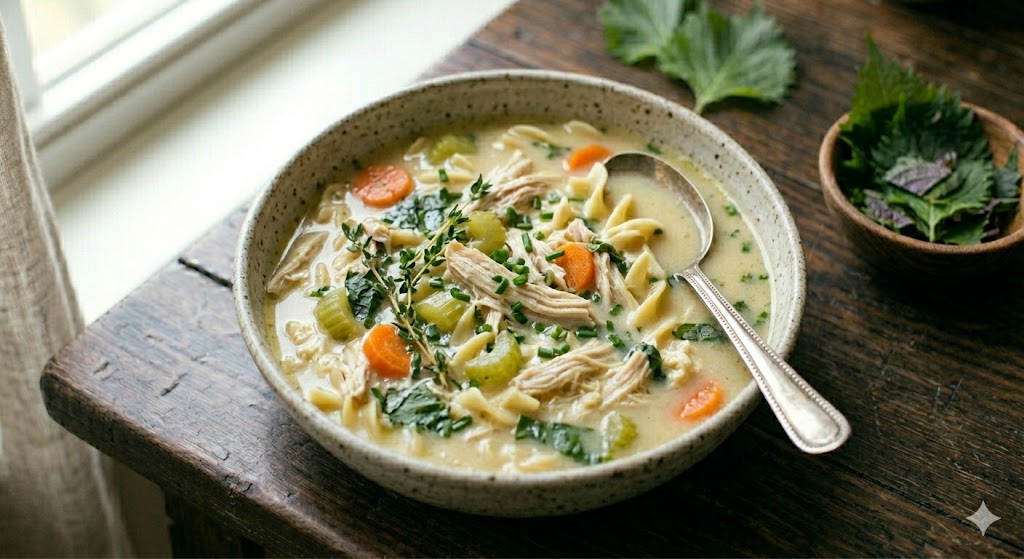
About 341 calories per serving, estimated from the ingredient list.
The first genuinely cold evening of the year, or the second day of a cold. Either way this chicken noodle soup recipe is forty minutes and it is worth making rather than opening.
Soup with noodles in it is not the same thing as noodle soup, and the difference is where you cook them.
Noodles simmered in the broth keep absorbing it long after the heat is off. They are pleasant at dinner, swollen by bedtime, and by the following afternoon they have drunk the soup and turned to mush. Cook them separately, combine them in the bowl, and both the noodles and the leftovers survive intact.
What you need
- 600g chicken thighs, bone in if you have them
- 1.5 litres chicken stock
- 2 carrots, sliced
- 2 sticks celery, sliced
- 1 onion, diced
- 150g egg noodles
- 2 tbsp olive oil, bay leaf, parsley, salt and black pepper
How to make it
- Soften the onion, carrot and celery in the oil with a pinch of salt for eight minutes, until the onion is translucent and the celery has lost its squeak.
- Add the stock, the bay leaf and the chicken, bring to a bare simmer, and hold it there for twenty minutes. A rolling boil makes the broth cloudy and the chicken stringy.
- Lift the chicken out, shred it with two forks, and return the meat to the pot.
- Cook the noodles separately in salted water, one minute short of the packet time, then drain.
- Taste the broth and salt it properly. This is the step that decides the soup.
- Put a nest of noodles in each bowl and ladle the hot soup over the top.
- Finish with parsley and more black pepper than feels reasonable.
Notes
Cooked leftovers keep three to four days refrigerated, per USDA FSIS. Store the broth and the noodles in separate containers and it genuinely holds up rather than merely surviving.
The broth alone freezes well for three months. Noodles do not freeze at all usefully, so add fresh ones when you reheat, which takes four minutes and is the whole reason this approach is worth the extra pan.
Skim the surface once during the simmer if you want a clear broth. It is not essential and it makes a visible difference.
Keeping the pot at a bare tremble rather than a simmer matters more than it sounds. Agitation emulsifies fat into the liquid and clouds it, and it also tightens the chicken. If you can see the surface moving vigorously, the heat is too high.
The most common disappointment is a broth that tastes thin and slightly sweet from the vegetables. That is almost always underseasoning, and the fix is salt at the end, tasted properly, rather than more vegetables at the start.
Cut the carrot and celery thicker than you would for anything else. They are in the pot for nearly half an hour, and thin slices disintegrate into the broth, leaving you with cloudy liquid and nothing to chew on. Thick coins survive and still give up their flavour.
Salt the noodle water properly even though the noodles are going into a seasoned broth. Pasta and noodles only take on salt while they are absorbing water, and a noodle boiled in plain water stays bland in the middle no matter how well seasoned the soup around it is. This is the same reason the separate pan is worth the washing up.
Swaps that actually work
Thighs are the point. Breast poaches into something dry and stringy across twenty minutes, while thighs stay soft and give the broth considerably more body from the collagen. Bone in is better again if you can be bothered with the extra minute of shredding.
Shop bought stock is completely fine and is what most people will reasonably use. If it is the low salt kind, expect to season noticeably harder at the end, and taste before you commit.
Egg noodles can become any short pasta, orzo, or rice. Rice is a good swap for gluten free, though it absorbs even faster than noodles do, so keeping it separate stops being optional.
Carrot, celery and onion are the backbone and they are doing more than they appear to. Leek in place of the onion is a genuine improvement. Skipping the celery is the swap that costs you the dish, because it carries most of the savoury bottom note and its absence reads immediately as something missing.
If it goes wrong
The noodles are bloated. They were cooked in the broth, or stored in it. Separate pot, separate container, no exceptions.
The broth is cloudy. It boiled rather than simmered. Keep it at a bare tremble and skim once.
The chicken is stringy. Breast rather than thigh, or too hard a boil. Both are fixable next time and neither is fixable now.
It is flat. Almost always salt. After salt, acid. A small squeeze of lemon at the very end lifts a dull broth more reliably than any additional herb or aromatic will.
What to serve with it
The default is bread and butter, and there is genuinely nothing wrong with the default.
The better version of the default is a slice of bread rubbed with a cut garlic clove and toasted hard, then floated on top so it half dissolves into the broth while you eat.
The thing in the fridge that lifts it is a parmesan rind dropped into the simmering broth and fished out before serving. It adds a savoury depth that tastes like the soup cooked for far longer than it did.
It is one of the best next day lunches there is, provided you stored the noodles separately, and it is arguably better on day two once the flavours settle.
Why this one earns its place
It is the dish that makes a cold week manageable. One pot on a Sunday gives you dinner and two lunches, and unlike a lot of batch cooking it does not degrade into something you are grimly working through by Wednesday.
It is also built almost entirely from things that keep. Stock, an onion, a couple of carrots, a bag of noodles and chicken from the freezer is not a shopping trip, it is a cupboard, and that makes it the meal you can produce on the evening when going out again is not happening.
For building a week around a single pot like this, meal prep for the week. If the aim is spending less without eating worse, average grocery budget for a family of four. And meal planning and food waste covers the half bag of limp carrots problem that this recipe quietly solves every time you make it.
More like this: all American recipes in Crave Corner.