Pork Shogayaki With a Ginger Sauce That Glazes Instead of Pooling
Jump to recipe ↓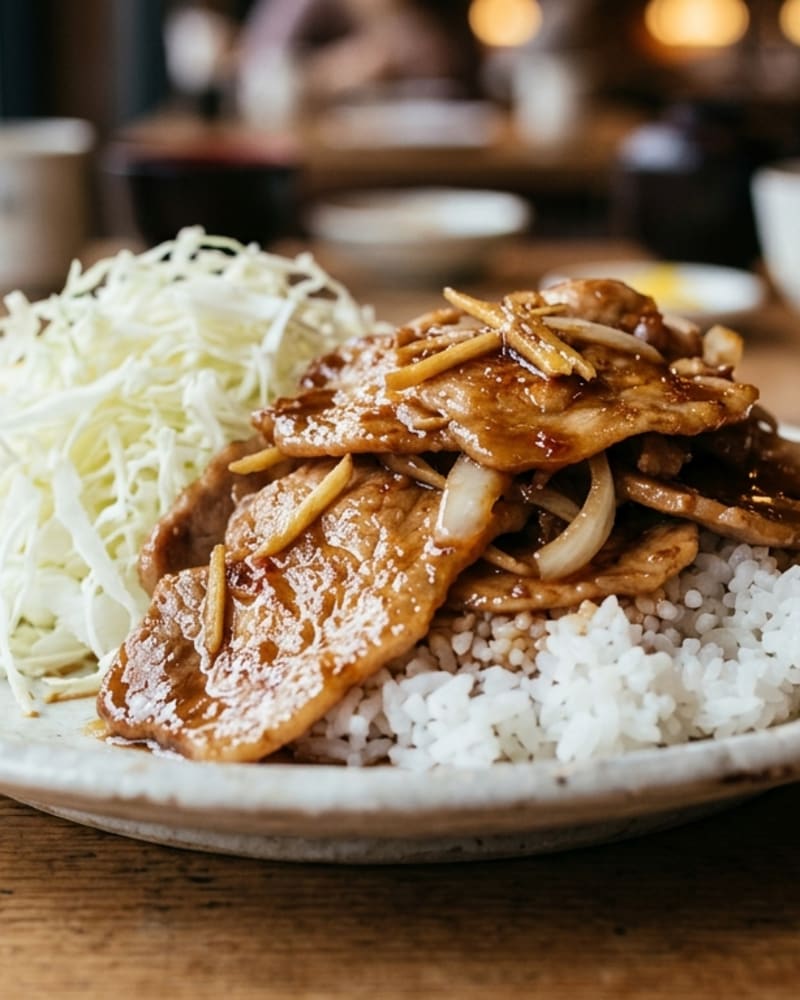
It is 6:40 on a Tuesday, the rice is already steaming, and a pound and a quarter of thin pork is about to meet a hot skillet. Pork shogayaki is the fastest way we know to make a weeknight feel like someone asked you out: fresh ginger does the flirting, sharp, a little sweet, and very hard to say no to.
Ginger, soy, a hot pan, and about two minutes of your full attention.
The idea behind pork shogayaki is simple. You grate ginger into a quick soy, mirin, sake and sugar sauce, sear thin slices of pork loin in a single layer, soften an onion in the same pan, and toss everything together until the sauce turns glossy. The rice does the quiet work underneath, the shredded cabbage on the side keeps it cold and crisp against the hot pork, and the whole plate reads like something you would order and then pretend you had made yourself.
What you need
- 1.25 lb pork loin
- 2 tbsp fresh ginger
- 3 tbsp soy sauce
- 2 tbsp mirin
- 2 tbsp sake
- 1 tbsp sugar
- 1 yellow onion
- 2 tbsp vegetable oil
- ½ green cabbage
- 2 cups short-grain rice
- ½ tsp salt
- ¼ tsp black pepper
How to make it
- Rinse 2 cups short-grain rice and cook according to package directions, about 20 minutes, then keep warm.
- Grate 2 tbsp fresh ginger, thinly slice 1 yellow onion, and shred 0.5 green cabbage, about 8 minutes of prep.
- Slice 1.25 lb pork loin as thinly as you can across the grain. Season lightly with salt and black pepper to taste.
- Whisk together 3 tbsp soy sauce, 2 tbsp mirin, 2 tbsp sake, 1 tbsp sugar, and the grated ginger for the sauce.
- Heat 1 tbsp of the vegetable oil in a large skillet over medium-high. Cook half the pork in a single layer for 1 to 2 minutes per side until just cooked, then transfer out. Repeat with remaining 1 tbsp oil and pork.
- Add the sliced onion to the skillet and cook 2 to 3 minutes until softened. Return all pork to the pan.
- Pour in the ginger sauce and toss 1 to 2 minutes until glossy and slightly thickened.
- Serve the pork and onion over the rice with a big pile of shredded cabbage on the side.
Notes
Cooked leftovers keep three to four days refrigerated, per USDA FSIS. Pack the pork and rice in separate containers and keep the cabbage raw and apart, because cabbage wilts the moment it touches warm sauce.
The pork is better on day one than on day two, when the thin slices firm up a little in the cold. Reheat it in a skillet with a splash of water rather than in the microwave, which tends to turn thin slices rubbery. It freezes acceptably, but the cabbage does not, so freeze only the pork and sauce.
Slicing is the whole game with pork shogayaki. Thin pork loin is easy to cut when it is firm, so give the pork a short stretch in the freezer before you slice, or ask the butcher counter to do it. Cut across the grain, and keep the slices thin enough that they curl a little when they hit the oil.
The grated ginger goes into the sauce, not onto the pork. That is deliberate: raw ginger on a screaming-hot pan scorches and turns bitter in under a minute, while ginger whisked into the sauce meets the pan only at the very end, when it needs to do nothing but smell wonderful.
When you pour the sauce in and the whole kitchen suddenly smells like a restaurant, you will feel very smug for about ninety seconds. We recommend enjoying every one of those seconds. Your swipe history is not the only place you are allowed to have good taste.
Swaps that actually work
Leave the ginger alone. Fresh, grated, and at the full two tablespoons is the point of this dish, and jarred paste or ground ginger gives you the heat without the bright, almost citrusy edge that makes shogayaki taste like itself.
Everything else can move. If you cannot find sake, use a little more mirin plus a splash of water, or a dry white wine if that is what is open. If mirin is missing, a pinch more sugar in the sauce gets you most of the way, though the glaze will be slightly less glossy. Short-grain rice is the traditional bed and it clumps just enough to catch sauce, but any rice you like works fine; just cook it according to its package.
Pork shoulder, sliced thin, works in place of loin and tastes richer, but it has more fat and takes slightly longer to cook through, so give each side a little extra time. Boneless pork chops sliced thin are a perfectly good stand-in for loin. If you have napa cabbage instead of green cabbage, shred that, and it will be softer and sweeter.
The swap that costs you the dish is skipping the thin slicing. Thick pork cooked in this window comes out tough and gray, and no sauce rescues it.
If it goes wrong
The pork is gray and tough. The pan was crowded, so the slices steamed in their own juices, or the slices were too thick. Pull everything out, wipe the pan, heat it properly, and sear the rest in smaller batches. If the first batch is already tough, slice the cooked pieces smaller and toss them in the sauce longer so they pick up moisture.
The sauce is thin and runs onto the rice. It has not reduced yet. Keep tossing over medium-high heat for another minute or so until it coats the back of a spoon and clings to the pork. Pulling the pork out first and reducing the sauce on its own is a neat way to control it.
It tastes harsh or bitter. The ginger or the sugar caught on a pan that was too hot. Pour in a spoonful of water, turn the heat down, and stir to dissolve whatever stuck. A pinch of sugar rounds a sharp sauce back out.
It tastes flat. Usually salt, or the sauce needing a little more time. Taste the sauce on a spoonful of rice, since that is how you will eat it, and add soy a teaspoon at a time.
What to serve with it
The default is exactly what is in the recipe: rice, onion and pork on one side, and a big pile of shredded cabbage on the other. The cabbage is not garnish. It is the cold, clean crunch that makes each bite of hot, salty pork feel lighter.
For a better version of the default, tuck a quick miso soup alongside, or add a small dish of pickles if there are any in the fridge. A fried egg on top, yolk running into the sauce and rice, is the move for the kind of night where you want the plate to feel a bit indulgent.
It works as lunch the next day if you pack the cabbage separately and reheat the pork gently. Cold, thinly sliced leftovers in a rice bowl are also perfectly respectable.
Why this one earns its place
Some dinners ask you to make a plan, shop for it, and then rise to the occasion. Pork shogayaki asks you to grate some ginger. It is quick, it is forgiving as long as you slice thin and cook in batches, and it tastes like it came from a place with a little paper lantern over the door.
If you swipe this pork shogayaki recipe into your week, the agent shops the pork loin, the ginger, and the cabbage in one pass, so the only thing left to decide is who gets the last slice. That is the nice kind of problem to have.
If you are building out a few more fast dinners, start with quick weeknight dinner ideas, then try chicken teriyaki for another glossy sauce over rice, or Korean beef bulgogi bowls when you want something similar with a little more heat.
More like this: all Japanese recipes in Crave Corner.