Korean Beef Bulgogi Bowls With a Real Sear and Snappy Quick Pickles
Jump to recipe ↓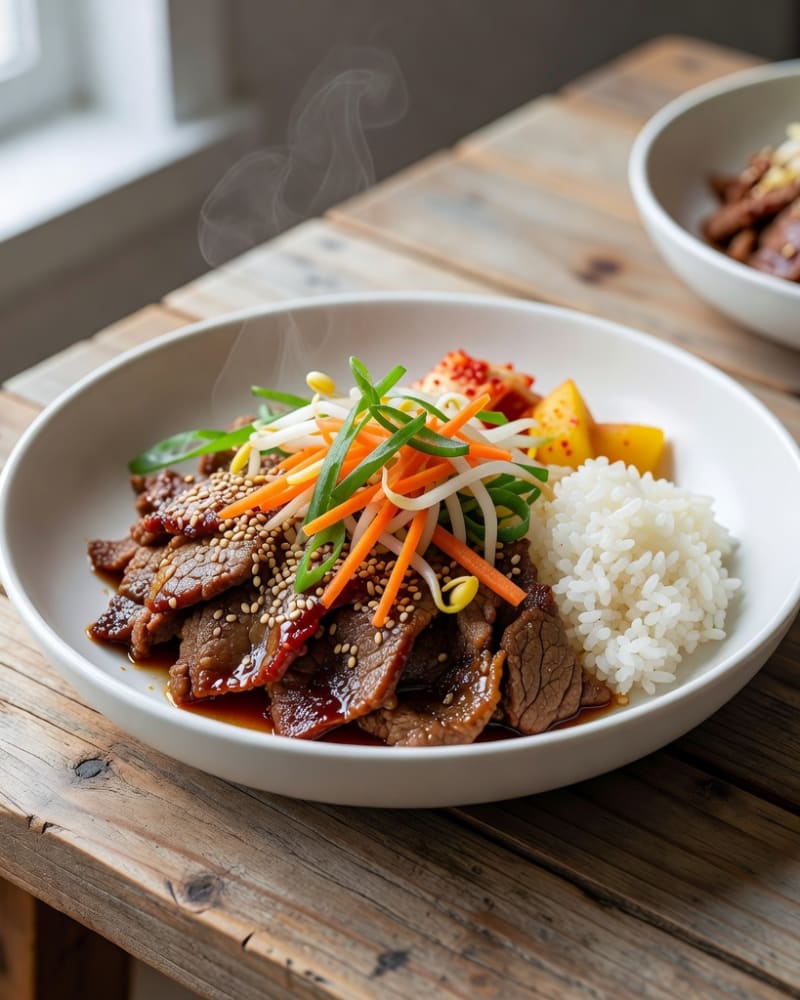
About 784 calories per serving, estimated from the ingredient list.
It is 6 p.m., the fridge door is still beeping, and the beef for tonight's beef bulgogi bowls slides into its marinade. Let it get acquainted with the pear; it is only a first date, so thirty minutes is plenty. By the time the rice is fluffed and the cucumber and carrots have had their fifteen minutes in vinegar, dinner is just a hot skillet and a row of bowls waiting to be filled. The Asian pear you have never once bought on purpose came in the cart you swiped together at lunch.
The marinade does the slow part, and the skillet does the loud part.
Bulgogi means "fire meat" in Korean, and it is traditionally grilled over high heat so the sugar in the marinade chars at the edges. A skillet stands in for the grill well enough at home. The marinade does the rest: soy sauce for salt, brown sugar for caramelization, sesame oil for a toasty depth, garlic, and grated Asian pear, which adds a gentle sweetness and helps soften the meat. Over jasmine rice with sharp quick pickles and a drizzle of gochujang, these beef bulgogi bowls taste like a lot more work than they are.
What you need
- 1½ lb thinly sliced beef sirloin
- ¼ cup soy sauce
- 2 tbsp brown sugar
- 8 oz asian pear
- 2 cups jasmine rice
- 2 tbsp gochujang paste
- 1 tbsp sesame oil
- 3 cloves garlic
- 1 cucumber
- 2 carrots
- 4 tbsp rice vinegar
- 2 tbsp sugar
- 2 tbsp sesame seeds
- 4 stalks scallions
- ¼ tsp salt
- ¼ tsp black pepper
How to make it
- Rinse 2 cups jasmine rice and cook it with 4 cups water and a pinch of salt until tender, about 15 minutes. Fluff and keep warm.
- Grate the Asian pear and mince the 3 garlic cloves. Slice the cucumber and carrots into thin matchsticks.
- Mix 1/4 cup soy sauce, 2 tbsp brown sugar, 1 tbsp sesame oil, the grated pear, minced garlic, and black pepper in a bowl. Add 1.5 lbs thinly sliced beef sirloin and marinate for 30 minutes.
- Quick-pickle the cucumber and carrots by tossing them with 1/4 cup rice vinegar, 2 tbsp sugar, and salt. Let sit 15 minutes.
- Heat a large skillet over high heat. Cook the marinated beef in batches for 2-3 minutes until caramelized and cooked through.
- Divide the rice among 4 bowls. Top with the beef, pickled vegetables, and a drizzle of 2 tbsp gochujang.
- Finish each bowl with 2 tbsp sesame seeds and sliced scallions.
Notes
Cooked leftovers keep three to four days refrigerated, per USDA FSIS. Store the beef, rice and pickles separately. The pickles keep their crunch, the beef reheats in a minute in a hot skillet, and you can rebuild the bowls fresh.
The raw beef freezes well in its marinade. Bag it flat, freeze, and thaw overnight in the fridge, and it marinates as it thaws. Cooked bulgogi can be frozen too, though it is best fresh.
If you are slicing the sirloin yourself, put it in the freezer until it is firm but not solid. Partially frozen beef slices paper thin with a sharp knife, which is what you want here. Slice against the grain. Many stores also sell beef already sliced for bulgogi or hot pot.
Thirty minutes in the marinade is the right amount for this. The pear keeps working on the beef, and if you leave it far longer the texture can turn soft and mealy rather than tender.
Grate the pear on the fine side of a box grater so it melts into the marinade. Big shreds of pear stick to the beef and burn in the pan.
Shake off excess marinade before the beef goes in. A puddle of liquid in the pan steams the meat, and the sugar in it scorches before the beef browns.
The timing of beef bulgogi bowls works out neatly if you follow the order in the method. Start the rice, then grate, slice and mix while it cooks. The beef marinates and the vegetables pickle at the same time, so when the rice is done, everything else is ready for the skillet and the bowls.
Toast the sesame seeds in a dry pan for a minute before you scatter them, if you have the time. They turn golden and smell nutty, and they taste noticeably better than seeds straight from the jar.
Swaps that actually work
The pear is the point of the marinade. It brings sweetness that sugar alone does not, and it is part of what makes the beef tender. If you cannot find Asian pear, a ripe Bosc pear or a sweet apple works nearly as well. Skip kiwi or pineapple, which tenderize so aggressively the beef can go mushy.
Sirloin is the sensible match, a good balance of price and tenderness. Ribeye is the traditional choice, richer, and the one you swipe on when you are trying to impress someone. Flank steak works if it is sliced very thinly against the grain. Boneless chicken thighs make a good chicken version and should reach 165°F.
Jasmine rice can be swapped for short-grain rice, which is stickier and closer to what you would get in Korea, or for brown rice if that is what you keep.
The quick pickles are flexible. Radish, red onion or thinly sliced cabbage all pickle well in the same rice vinegar and sugar mix.
Gochujang is thick, so it does not drizzle straight from the tub. Loosen it with a little water, a splash of rice vinegar or sesame oil until it pours.
Use low-sodium soy sauce if you are sensitive to salt, since the marinade reduces as the beef caramelizes.
If it goes wrong
The beef is gray and watery. The pan was crowded or not hot enough. Pour off the liquid, turn up the heat, and cook the rest in smaller batches. Return the first batch to the pan at the end for a minute to pick up some color.
The marinade burned before the beef browned. Too much marinade went into the pan, or the slices were too thick. Wipe out the skillet between batches and shake off excess marinade.
It is too salty. The soy sauce reduced more than expected. Serve with more rice and extra pickles, which balance it, and use low-sodium soy next time.
It tastes flat. Usually acid and salt. A splash of the pickling liquid over the bowl or a pinch of salt fixes it.
What to serve with it
The bowls are a complete meal as written: rice, beef, pickles, gochujang, sesame seeds and scallions.
The better version of the default is a fried egg with a runny yolk on top of each bowl. The yolk becomes a sauce and turns the whole thing richer.
The thing in the fridge that lifts it is kimchi. A spoonful on the side adds funk and crunch.
Leftovers make a good next-day lunch, with the beef warmed and the pickles cold.
Why this one earns its place
Beef bulgogi bowls hit sweet, salty, spicy and sour in one bowl, and almost all the effort is hands-off marinating and pickling time. The cooking part is a few minutes in a hot pan.
It is also a great way to get comfortable with a couple of ingredients you might not buy often, like Asian pear and gochujang. Swipe it into your week, and the Asian pear stops being a mystery.
If you like the build-your-own bowl format, carnitas burrito bowls work the same way. How to shop for a new recipe helps when the list has an ingredient or two you have never bought. And meal prep for the week shows how components like these turn into several lunches.
More like this: all Asian recipes in Crave Corner.