Chicken Teriyaki With a Glaze That Clings Instead of Pooling
Jump to recipe ↓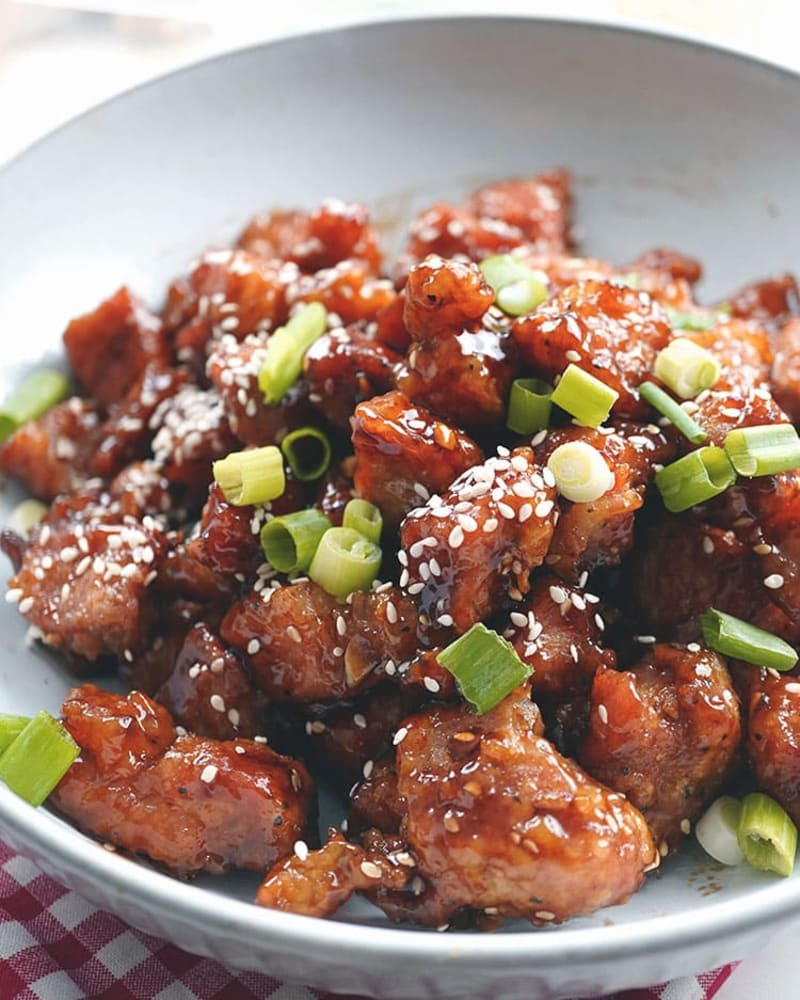
It is 6:25 on a Monday, you have thought about ordering in twice already, and the rice is steaming on the back burner. This chicken teriyaki takes about 25 minutes, and it tastes like takeout with one difference: you know exactly who made it. Takeout is a fling. This is the one you can introduce to people.
Soy sauce, mirin and sugar: a three-part glaze that does the flirting.
Thighs are the right cut here. They tend to forgive a minute of inattention, and when the skin renders it gives the glaze something crisp to grip. The rice and broccoli are already part of the plan, so the whole plate comes together without a side dish negotiation.
Chicken teriyaki is a sauce you mix yourself, and there is something quietly satisfying about that. It is four ingredients in a measuring cup, and when it hits the pan it turns glossy and sticky on contact.
What you need
- 1½ lb chicken thighs
- ¼ cup soy sauce
- 2 tbsp mirin
- 2 tbsp sugar
- 2 cups rice
- 1 head broccoli
- 1 tbsp sesame seeds
- 1 tbsp cornstarch
- ¼ tsp salt
- ¼ tsp black pepper
How to make it
- Score the chicken thighs and season with salt and black pepper.
- Cook 2 cups rice in a pot with water according to package directions until tender.
- Cut the broccoli head into florets.
- Pan sear the chicken thighs skin side down in a hot skillet for 5 to 6 minutes until crispy. Flip and cook 3 more minutes.
- Mix ¼ cup soy sauce, 2 tbsp mirin, 2 tbsp sugar, and 1 tbsp cornstarch for the sauce.
- Pour the sauce into the skillet. Simmer 3 to 4 minutes until the chicken is glazed and cooked through.
- Steam the broccoli florets until tender. Slice the chicken and serve over the cooked rice with the broccoli. Garnish with 1 tbsp sesame seeds.
Notes
Cooked leftovers keep three to four days refrigerated, per USDA FSIS. Store the chicken, rice and broccoli together or apart, whichever suits your lunch routine, and reheat until steaming hot.
Chicken teriyaki is a fine day-two dinner, and it also packs well. The glaze keeps clinging to the chicken as it cools, which can make the pieces a little tacky, but the flavor holds. We have not tested freezing, so we will not promise it.
The number that matters is 165°F, the USDA safe minimum for poultry. Thighs are often juicier than breast, which means a thermometer reading is a better guide than the color of the juices. Slide it into the thickest part, away from the bone.
Stir the sauce again right before it goes into the pan. The cornstarch settles to the bottom of the cup, and the glaze only thickens evenly if it is mixed in properly. A quick stir is the difference between a glossy coat and a thin puddle.
While the broccoli steams, the chicken gets a natural rest before it is sliced, which keeps the juices where they belong. Slice it so each piece carries some of the glaze.
If mirin is the one thing your pantry does not own, that is what the agent is for. On a SwipeCart week it lands on the cart without you having to remember it, and it is a bottle you will use again.
Swaps that actually work
The glaze is the point of chicken teriyaki, so leave the soy, mirin, sugar and cornstarch alone. Bottled teriyaki is the swap that costs you the dish. It is the easy ex: familiar, sticky, a little too sweet, and rarely as good as you remember.
If you have no mirin, a splash of rice vinegar with a pinch more sugar gets part of the way there. It will not be the same, and the glaze will taste a little sharper, so taste before the chicken goes back in.
Boneless, skinless thighs work, and you lose the crisp skin that gives the glaze its grip. Times may shift, so go by the 165°F reading rather than the clock. Chicken breast also works, though it tends to dry out sooner, so be quick with it.
Low-sodium soy sauce is a sensible swap if you are watching salt, and it lets you season the glaze yourself. Green beans, bok choy or snap peas can take the place of the broccoli.
A pinch of grated ginger or a clove of garlic is a classic addition in many kitchens. It is not in this version, so it counts as a bonus rather than a requirement. Scallions on top make a nice finishing touch next to the sesame seeds.
If it goes wrong
The glaze is thin and pooling. The cornstarch settled in the cup and did not make it into the pan. Pour a spoonful of cold water into a small bowl with a pinch of cornstarch, stir, and add it to the skillet while it simmers. Give it another minute.
The glaze is gluey. It simmered too long, and the sugar and cornstarch tightened up. Splash in water a spoonful at a time until it loosens.
The skin is soft. The pan was not hot enough, or the thighs got nudged before the skin released. Next time, let them sit untouched for the full 5 to 6 minutes. For tonight, a minute under the broiler brings some of it back.
The chicken is still pink near the bone. Put it back in the glaze, lower the heat, and simmer a minute or two more until a thermometer reads 165°F.
The glaze burned on the pan. Sugar catches fast, and it shares that trait with many of our bad decisions. Pull the skillet off the heat, lift out the chicken, and stir in a splash of water to dissolve what is stuck, then spoon it over. Next time, keep the heat at a simmer rather than a roar.
What to serve with it
The default for chicken teriyaki is rice and broccoli, which is what the recipe already gives you. Spoon any extra glaze from the skillet over the rice.
The better version of the default is sesame seeds, sliced scallions and a quick cucumber salad with a splash of rice vinegar. Cool, crunchy and sharp against sticky and sweet.
The thing in the fridge that lifts it is chili crisp or a squeeze of sriracha. A little heat against the sweetness turns a nice dinner into one you remember.
As lunch the next day, pack it cold or warm it through. The rice firms up, so a splash of water before reheating helps.
Why this one earns its place
You can order dinner, or you can make dinner that looks like you ordered it. This chicken teriyaki is the second option, and it costs less drama than the first. There is no waiting by the door, no wrong order, and no guessing how long the driver is going to be.
It is also a dish that holds up when you are tired. The steps are short, the glaze is forgiving, and the payoff arrives while the broccoli is still bright. Swipe it into the week, let the agent shop the mirin, and keep the delivery app for a night you earn it.
Round out the week with Chicken Over Rice, Korean Beef Bulgogi Bowls, and what to eat when you are tired of deciding.
More like this: all Japanese recipes in Crave Corner.