Pho Ga With a Rotisserie Shortcut and a Broth That Tastes Like You Tried
Jump to recipe ↓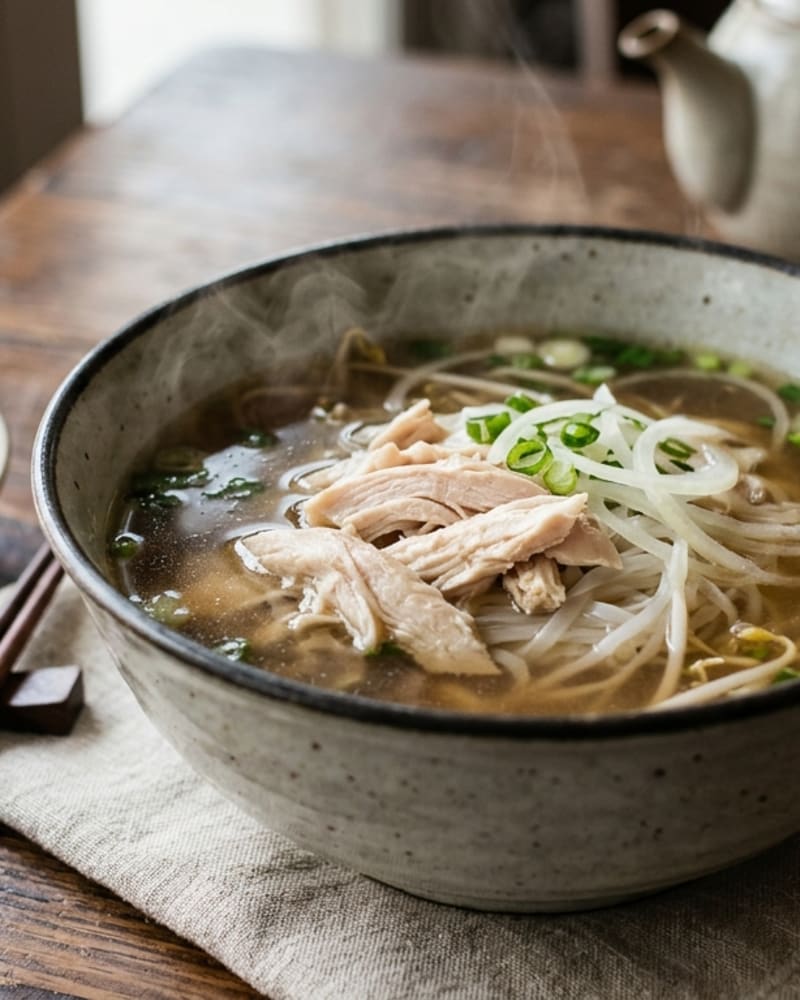
It is 5:50 on a Sunday, you have a scratchy throat and a rotisserie chicken from the store on the counter. This pho ga is 23 minutes from there to a steaming bowl, and it is the kind of soup that makes a bad week feel like it is someone else's problem. It does not look like a shortcut, and we will not mention it at the table.
The chicken is already cooked; the broth is where the effort goes, and it is mostly waiting.
You pull the meat from a rotisserie chicken, then simmer eight cups of chicken broth with a sliced onion, smashed ginger and two star anise. Fish sauce goes in near the end, rice noodles cook separately, and everything meets in the bowl under a pile of bean sprouts, scallions, cilantro, jalapeno and lime. Most of the cooking is the broth quietly simmering while you slice.
What you need
- 1 rotisserie chicken
- 8 cups chicken broth
- 8 oz rice noodles
- 1 yellow onion
- 2 oz fresh ginger
- 3 tbsp fish sauce
- 2 star anise
- 2 cups bean sprouts
- 1 cups cilantro
- 4 green onion
- 2 lime
- 1 jalapeño
- 1 tsp salt
- ½ tsp black pepper
How to make it
- Slice 1 yellow onion into thick rounds, smash and slice 2 oz fresh ginger, thinly slice 4 green onions and 1 jalapeño, pick 1 cup cilantro leaves, and cut 2 limes into wedges (about 8 minutes).
- Pull all the meat from 1 rotisserie chicken into bite-size shreds, discarding the skin and bones, and set the meat aside.
- In a large pot over medium-high heat, combine 8 cups chicken broth, the sliced onion, ginger, and 2 star anise. Bring to a boil, then lower to a simmer for 15 minutes.
- Stir in 3 tbsp fish sauce and season the broth with salt and black pepper to taste. Keep the broth at a gentle simmer.
- Cook 8 oz rice noodles in boiling water according to package directions until tender, then drain well.
- Divide the drained noodles among 4 bowls, top with the shredded rotisserie chicken, and ladle the hot strained broth over each bowl.
- Pile on 2 cups bean sprouts, the sliced green onions, cilantro, and jalapeño. Serve with lime wedges for squeezing.
Notes
Cooked leftovers keep three to four days refrigerated, per USDA FSIS. Store the broth, the noodles and the chicken in separate containers. Noodles left sitting in broth keep drinking it and turn soft, and by day two the bowl is more porridge than soup.
The broth is the part that improves overnight. The ginger and star anise keep working while it sits in the fridge, so day two is a rounder soup than day one. Reheat it to a simmer and cook fresh noodles to go with it. It freezes well on its own, without the noodles or the fresh toppings.
The method asks you to ladle the hot strained broth over each bowl, so lift out or strain the onion, ginger and star anise before serving. The slices are there to flavor the broth, not to eat, and star anise in particular is not something you want to bite into.
Add the fish sauce after the simmer, as the method says, and taste before you add the salt and black pepper. Fish sauce is salty, and the broth you start with may be too. Season a little at a time, and taste again.
Pour the broth over the noodles while it is still hot. A lukewarm bowl is a disappointing one, and the heat is what softens the chicken and wakes up the herbs on top. Warm the bowls first if you want to be fussy about it. Candlelight is optional, but nobody has ever complained about steam fogging up a pair of glasses across the table.
On SwipeCart, the pho ga card is the one you swipe when the plan was a salad and the day had other ideas. Your agent puts the rotisserie chicken, the noodles and the herbs in the cart, and you put the pot on to simmer.
Swaps that actually work
The star anise, the ginger and the fish sauce are the point. They are a big part of what separates pho from chicken noodle soup, and the broth is only as good as they are. Leave them alone, and nobody at the table needs to know the chicken came from the deli case.
The rotisserie chicken can be any cooked chicken. Poached breast, leftover roast, or thighs simmered in the broth for the full time all work. If you start with raw chicken, cook it in the broth until it reaches 165 F inside, the USDA safe minimum for poultry, then shred it. That takes longer than the recipe as written.
Chicken broth can be low sodium, and that is a better starting point. It lets you decide how much fish sauce the soup needs. A boxed bone broth gives the soup more body.
Rice noodles can be dried or fresh. Dried are what the method uses, cooked in boiling water to the package directions. Fresh ones need less time, so follow the package. Thin rice vermicelli works if the flat noodles are not in the store.
Fish sauce can be swapped for soy sauce in a pinch, and the soup is good, though it tastes different and a little less deep. Cilantro can be basil if you have it, and bean sprouts can be skipped. Jalapeno is mild, so use a hotter chili if you want more of a kick. The swap that costs you the dish is skipping the star anise: without it the soup tastes like a good chicken soup, but not like pho.
If it goes wrong
The broth is bland. It did not get the full fifteen minutes, or the fish sauce has not gone in yet. Let it simmer a few more minutes, then add fish sauce a spoonful at a time and taste after each one. A squeeze of lime helps too.
The noodles are mushy. They were overcooked or sat in the hot broth. Cook them separately, drain them well, and add the broth to each bowl just before serving.
It is too salty. The fish sauce went in heavy and the broth was already seasoned. Add a splash of water or unsalted broth to the pot, and squeeze in some lime. Next time, start with less and add the rest at the end.
It tastes flat. Lime, then salt. Squeeze a wedge into the bowl and taste, because acid is often what is missing, and add a pinch of salt only if lime did not do it.
What to serve with it
The default is the bowl as written, with all the toppings on the side, so each person builds their own.
The better version is a plate of extra herbs, a few lime wedges and a bottle of chili sauce at the table. Pho is a soup you adjust as you eat it, and having the extras within reach is what makes it fun.
The thing in the fridge that lifts it is a few slices of fresh chili or a spoon of hoisin and sriracha for dipping the chicken. Neither needs cooking.
A pho ga bowl works as lunch the next day if you keep the parts separate and heat the broth to a simmer before pouring.
If you are cooking for someone on a bad day, this is the bowl to make. It is warm, it smells like you have been taking care of them for hours, and the only thing it asks of them is to sit down.
Why this one earns its place
You want comfort food on the days that feel hard, and this pho ga is comfort food that does not take over your evening. It begins with a store-bought chicken and ends with a bowl that has depth and heat, and you can do most of the slicing while the broth works. It is a good swipe for a night when you want to look after yourself.
If you want more soup in your week, weekly meal planning is how a pot like this lands on a Sunday on purpose. For another noodle soup, chicken noodle soup is the familiar version, and beef pho is the one to try when you want a richer broth.
More like this: all Vietnamese recipes in Crave Corner.