Oyakodon With Silky Egg and No Rubbery Chicken in Sight
Jump to recipe ↓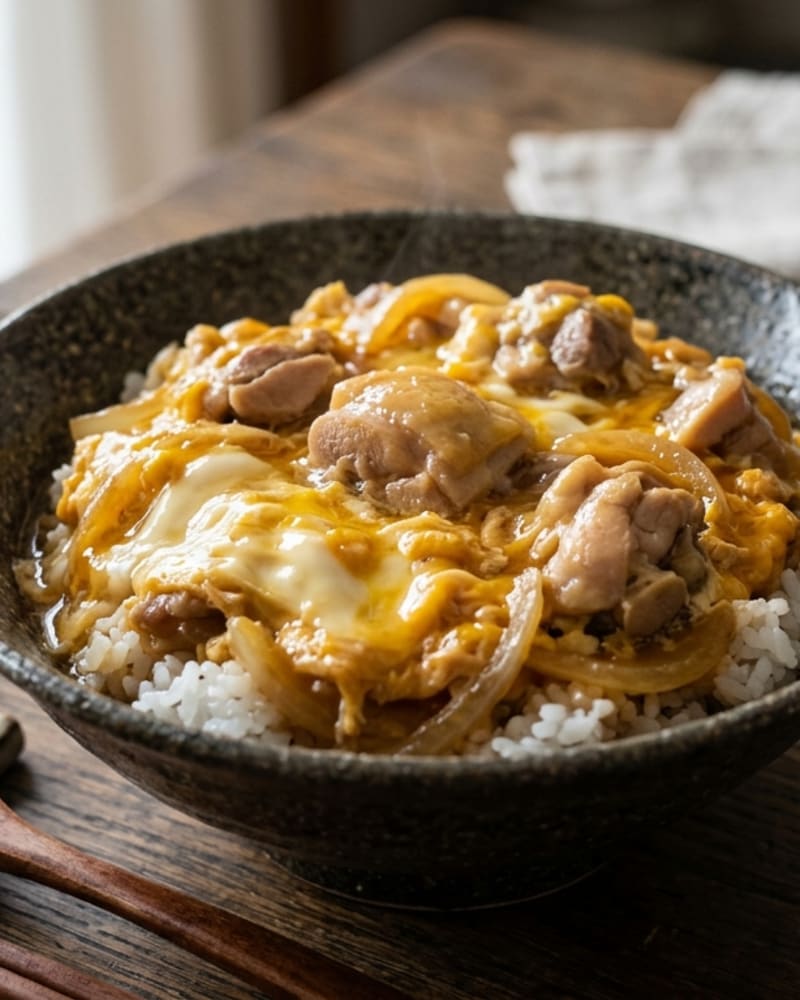
It is 12:20 on a rainy Saturday, the rice is steaming, and you have been rewarded for doing laundry with the thought of something warm in a bowl. This oyakodon recipe takes 28 minutes of prep, including the rice, and 9 minutes of actual cooking, and it ends with egg that falls over rice like a soft blanket. It is a bowl that makes you want to put your phone down and look at whoever is across the table.
Chicken and egg, a name that means parent and child, and a bowl that fits in both hands.
Oyakodon is a Japanese rice bowl, and the name refers to the chicken and egg that share it. You simmer onion and chicken thighs in a sauce of broth, soy sauce, mirin and a little sugar, then pour beaten egg over the top and cover the skillet. The egg sets gently while the sauce pools around it, and you slide the whole thing over hot rice, sauce and all. It is cozy, it is quick once the rice is going, and it feels more considered than it is.
What you need
- 1 lb boneless chicken thighs
- 1½ cups short-grain rice
- 1 yellow onion
- 4 eggs
- ¾ cups chicken broth
- 3 tbsp soy sauce
- 3 tbsp mirin
- 1 tbsp sugar
- 2 green onions
- ¼ tsp salt
- ¼ tsp black pepper
How to make it
- Cut 1 lb boneless chicken thighs into bite-size pieces, thinly slice 1 yellow onion, and chop 2 green onions (about 6 minutes).
- Rinse 1.5 cups short-grain rice and cook according to package directions until sticky and tender, about 20 minutes. Keep warm.
- In a wide skillet combine 0.75 cup chicken broth, 3 tbsp soy sauce, 3 tbsp mirin, and 1 tbsp sugar. Bring to a simmer over medium heat.
- Add the sliced onion and simmer 3 minutes until starting to soften, then add the chicken pieces and cook 5 to 6 minutes until opaque and cooked through. Season lightly with salt and black pepper to taste.
- Lightly beat 4 eggs in a bowl, then pour them evenly over the chicken and onion. Cover and cook 1 to 2 minutes until the eggs are softly set but still glossy.
- Scoop hot rice into bowls and slide the chicken-egg mixture over each portion, sauce and all.
- Scatter the chopped green onions on top and serve immediately while the eggs are still silky.
Notes
Cooked leftovers keep three to four days refrigerated, per USDA FSIS. Store the rice and the chicken-egg topping in separate containers so the rice does not go soggy.
This oyakodon recipe is best fresh, because the egg is at its silkiest in the first few minutes. Leftovers are fine, but the egg will firm up. Reheat the topping gently in a small skillet with a splash of water, and warm the rice in the microwave with a damp paper towel over it.
Freezing is not a good fit. Eggs that have been cooked in sauce tend to turn spongy once thawed, so eat this one within the fridge window.
Start the rice first, because it takes about 20 minutes and the rest comes together in less than ten. By the time the rice is ready, the skillet is nearly done. If you time it well, everything lands hot at the same moment.
Cut the chicken into pieces of about the same size, so they cook through together. The method asks for 5 to 6 minutes until the chicken is opaque and cooked through, and the safe minimum internal temperature for poultry is 165°F. A quick check with a thermometer on a larger piece settles it.
Swaps that actually work
In any oyakodon recipe, the egg and the sauce are the point, so leave them as they are. The balance of soy sauce, mirin and sugar is what makes the bowl taste like itself.
Chicken thighs stay juicy in the simmer, and they are the better choice here. Chicken breast works if you slice it thin and watch the time, because it dries out faster. Either way, keep the pieces small.
Short-grain rice gives you the sticky, tender base the bowl wants, and it clings to the egg like a date who has decided to stay for dessert. If you only have medium-grain rice, it will work, and if the cart comes back with it, the agent was not wrong, just a little too open-minded. Long-grain will taste fine but will not cling together in the same way.
If you are out of mirin, a spoonful of extra sugar and a splash of water can fill in, but the sauce will taste a little flatter. If you are out of green onions, a pinch of sliced chives or a few chopped cilantro leaves will do. A handful of shredded nori on top is a good use for the seaweed snacks in the cupboard.
A swap that costs you the dish is scrambling the eggs before they hit the pan, or cooking them until firm. Oyakodon depends on eggs that are only just set, and a hard egg turns it into a different bowl.
If it goes wrong
The egg is overcooked and dry. It stayed on the heat too long. Cover the skillet for 1 to 2 minutes and take it off when the egg is still glossy. If it has gone too far, spoon extra sauce over the top and serve it quickly.
The chicken is tough. It was cut too large or cooked too hard. Cut the pieces smaller, keep the simmer gentle, and take them off as soon as they are opaque and cooked through. Thighs forgive more than breast does.
The sauce is too salty or too sweet. Soy sauce brands vary. Add a splash of broth or water to the skillet, taste, and balance with a tiny pinch of sugar or a few drops of soy sauce.
It tastes flat. Salt is the first fix, and the recipe asks for a light touch, so taste at the end and add a small pinch at a time. A little black pepper helps, and so do sliced green onions on top.
What to serve with it
With this oyakodon recipe, the default is rice and nothing else, because the bowl is already a meal. It asks for a spoon or a pair of chopsticks and a quiet minute.
The better version has a small side of pickled cucumbers or a few slices of cucumber dressed with rice vinegar, which cut the sweetness of the sauce. A cup of miso soup or hot green tea makes the meal feel like a proper Japanese lunch.
For something from the fridge, a spoonful of kimchi or a few shreds of pickled ginger adds a sharp contrast. A little sesame oil drizzled over the top adds a toasty note.
It works for lunch the next day if you keep the rice and topping apart and reheat them gently. Reassemble the bowl and add fresh green onions.
Why this one earns its place
Because this oyakodon recipe is a bowl that feels special and costs you less than an hour. It uses a short list of ingredients, it comes together in one skillet and a rice pot, and it makes a regular weekday feel a little more intentional.
Swipe it into your week when you want comfort with a bit of polish, and let the agent shop the chicken, the eggs and the mirin. You show up with a hungry person and a pair of bowls.
For more bowls like this one, try chicken over rice, the chicken teriyaki for another soy-and-sugar glaze, or whats for dinner tonight when you need a decision made.
More like this: all Japanese recipes in Crave Corner.