Nikujaga Beef and Potato Stew That Tastes Like Someone Waited Up
Jump to recipe ↓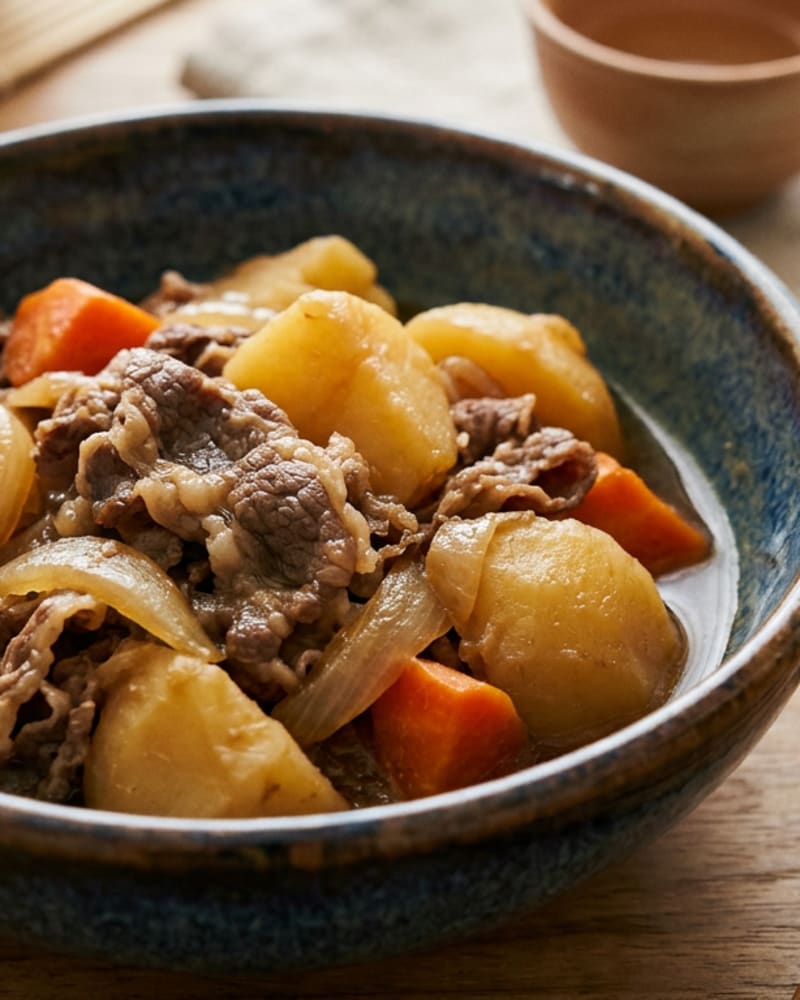
It is 6:30 on a gray evening, the soy sauce is out, and the kitchen window is fogging up from the pot. This nikujaga recipe takes about 33 minutes, and it fills the room with a smell that makes the whole apartment feel lived in. It is a beef and potato stew that tastes like someone waited up for you, with the porch light on and a little too much interest in how your day went.
Some dinners are for impressing people. This one is for being missed.
Nikujaga is beef chuck, potatoes and carrots simmered together in a sweet, salty soy broth until the vegetables go tender and take on the color of the sauce. You brown the beef for five minutes, add the vegetables, pour in the soy sauce, sugar and water, and let it simmer covered for 20 minutes. Then you ladle it over hot white rice. It is a quiet dish that asks little and gives back warmth, the kind you serve when you want someone to feel looked after.
What you need
- 12 oz beef-chuck
- 4 potato
- 2 carrot
- 1/4 cup 0.25 cups soy-sauce
- 2 tbsp sugar
- 2 cups white-rice
How to make it
- Cut 4 potatoes and 2 carrots into chunks about 8 minutes prep.
- Brown 12 oz beef chuck pieces in a pot 5 minutes.
- Add potatoes and carrots then pour in 1/4 cup soy sauce mixed with 2 tbsp sugar and 2 cups water.
- Simmer covered 20 minutes until potatoes are tender.
- Taste and adjust seasoning if needed.
- Ladle over 2 cups cooked white rice.
Notes
Cooked leftovers keep three to four days refrigerated, per USDA FSIS. That is worth knowing before you commit to this nikujaga recipe. The stew holds up well, and the potatoes keep soaking up the broth as it sits. Reheat gently with a splash of water if the sauce has thickened too much.
This is a dish that tastes more settled on day two. The sugar and soy have time to work into the beef and potatoes, and the flavor goes from bright to deep. If you can make it a day ahead, it is worth the plan.
Browning the beef is the step that builds flavor. The recipe gives 5 minutes for 12 ounces of chuck, and you are looking for color on the edges, not a gray, steamed look. Give the pieces room in the pot and let them sit for a minute before you stir them.
The beef is a whole cut, so the USDA safe minimum is 145°F with a 3-minute rest. After 20 minutes of simmering, chuck is well past that temperature, though it may still be a little short of tender, and the fix below covers it.
Potatoes are done when a fork slides in without pushing. The recipe says to simmer covered for 20 minutes until tender, and the size of your chunks decides whether that is exactly right or a few minutes off. Cut them roughly the same size so they cook together.
The recipe ends with a taste and adjust step, and you should take it seriously. Soy sauce brings salt, sugar brings sweetness, and your pot of water decides how strong they taste. If it is too salty, add a splash of hot water. If it is too sweet, a few more drops of soy sauce will balance it.
Swaps that actually work
Before you change anything in this nikujaga recipe, know which part is holding it up. The soy sauce and sugar broth is the point. It is what makes this nikujaga and not just beef stew, so keep the proportions and taste at the end. A low sodium soy sauce works if you want to control the salt.
Beef chuck is a good choice because it turns tender with a long simmer. Thinly sliced beef cooks faster, and some cooks prefer it. If you swap it in, shorten the simmer for the beef and keep the time for the potatoes. A cut with some fat gives a richer broth.
Potatoes can be any waxy or all purpose type. Floury potatoes break down into the broth and thicken it, which some people like. If you want them to hold their shape, choose waxy ones and keep the heat gentle.
Onion often joins this dish; slice one and add it with the other vegetables. The recipe here does not call for it, so it is optional.
On SwipeCart this is the swipe for the night you want to be missed: right on the beef, and the agent handles the potato aisle while you pretend you never left.
Mirin or a splash of sake adds depth if you have either one. A tablespoon is plenty. They are extras rather than requirements.
The swap that costs you the dish is boiling it hard. A hard boil breaks the potatoes apart and toughens the beef. Keep the simmer low and the lid on.
If it goes wrong
The potatoes are falling apart. The pot boiled too hard or the chunks were too small. Turn the heat to low, and stir gently. Next time cut them larger.
The beef is tough. It needs more time. Chuck gets tender as it simmers, so give it another 10 minutes with the lid on, and check again.
The broth is too salty. Add a splash of hot water and a pinch of sugar, then taste. Serving it over plain rice also softens the salt.
It tastes flat. Salt is the first thing to try, or a touch more sweetness. Add a few drops of soy sauce and taste, then a pinch of sugar if the balance feels off.
What to serve with it
The default for this nikujaga recipe is white rice, which is how the recipe ends. Two cups of cooked rice gives you a base for the broth.
The better version has a bowl of miso soup alongside, or a small dish of pickled cucumbers or radish for a sharp contrast.
The thing in the fridge that lifts it: a handful of sliced scallions on top, or a soft egg on the side.
It works as lunch the next day. Pack it with rice, and heat it until it is steaming through.
Why this one earns its place
Some nights you want to cook something to impress, and some nights you want to be quietly taken care of. This nikujaga recipe is for the second kind, and it keeps its promise in 33 minutes. It is made from beef, potatoes, carrots and a few pantry staples, and it ends up tasting like a home that has been cooking for hours. Swipe it into your week when you want comfort that does not need an audience.
If you are building a few cozy dinners into the same week, Weekly Meal Planning can help you spread them out. For a similar beef and potato comfort, try Beef Stew, and for another Japanese dinner, Chicken Katsu Curry is a good change of pace.
More like this: all Japanese recipes in Crave Corner.