Beef Stew for the Night You Want Something That Stays
Jump to recipe ↓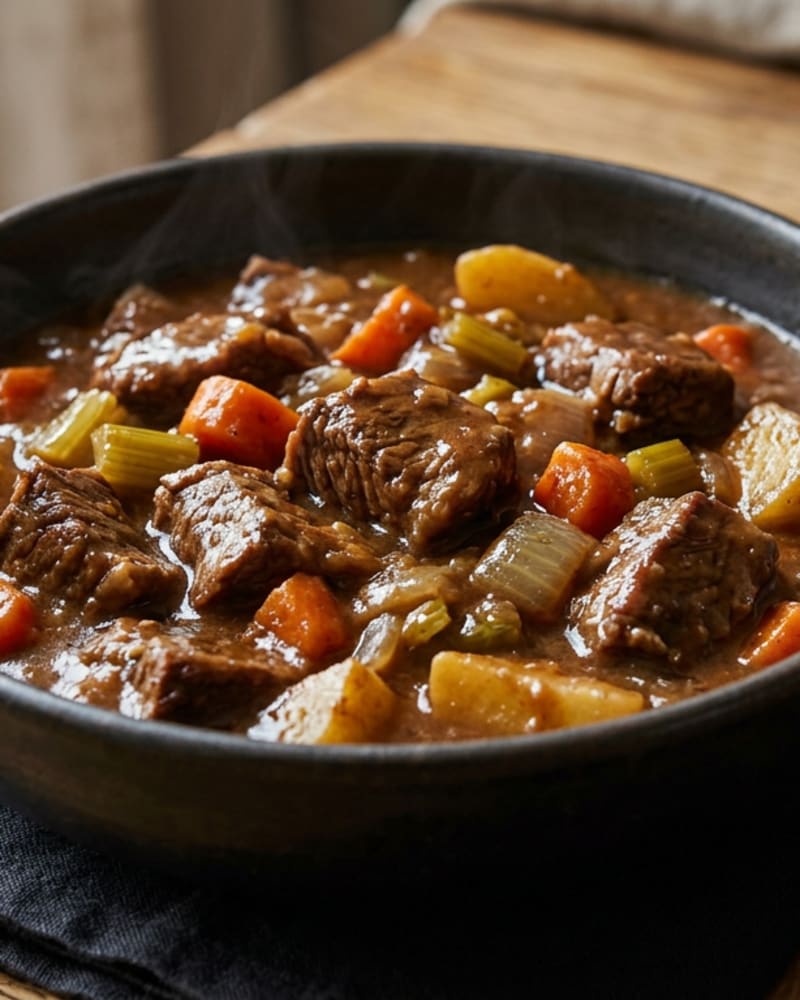
This beef stew recipe runs 131 minutes on the card, so start at 4:30 and you are sitting down at 6:41 with the whole place smelling like you have your life together. It gives you two hours of low, steady attention and never once asks where this is going.
Nothing here is hard. It is slow, and slow mostly means you get to leave the room.
Eight ingredients and one large pot. The beef chuck takes the heat first, 6 minutes of browning in the oil, then the 4 cups of broth go in and the lid goes on for a 90 minute simmer. While it ticks over you peel 4 potatoes into 1 inch cubes and cut 3 carrots into 1 inch pieces. Those join the pot for 30 minutes. The flour comes in last, stirred with water into a slurry, and the broth turns to gravy without a lump in sight.
What you need
- 2 lb beef chuck, cubed
- 4 potatoes
- 3 carrots
- 2 tbsp cooking oil
- 4 cups beef broth
- 2 tbsp all-purpose flour
- 1 tsp salt
- 1 tsp black pepper
How to make it
- Pat the 2 lb cubed beef chuck dry and season with salt and black pepper.
- Heat the 2 tablespoons cooking oil in a large pot over medium high heat and brown the beef cubes for 6 minutes, turning occasionally.
- Add the 4 cups beef broth to the pot, cover, and simmer for 90 minutes until the beef is tender.
- While the beef simmers, peel and cut the 4 medium potatoes into 1 inch cubes and cut the 3 large carrots into 1 inch pieces.
- Add the potatoes and carrots to the pot and cook for 30 minutes until tender.
- In a small bowl mix the 2 tablespoons all purpose flour with 2 tablespoons water to form a slurry and stir it into the stew.
- Simmer the stew uncovered for 5 minutes until thickened and adjust salt and black pepper to taste.
Notes
Cooked leftovers keep three to four days refrigerated, per USDA FSIS. Let the pot cool a little, then get it into the fridge in a shallow container instead of leaving it on the stove overnight.
Cold from the fridge, the gravy sets up thick. Add a splash of water or broth as it warms and it loosens back to how it left the stove. If you want to freeze it, scoop out the beef and gravy and cook fresh potatoes when you reheat, because potatoes can turn soft and a little grainy after thawing.
Use the largest pot you own. Two pounds of beef, 4 cups of broth and a pile of vegetables fill it quicker than you expect, and a lid that actually fits keeps the simmer steady. Keep that simmer lazy, with a bubble breaking the surface now and then, because a hard boil is how chuck turns chewy.
Cut the potatoes and carrots to 1 inch, as the method says, so they finish together. Mixed sizes give you mush on one side of the spoon and pebbles on the other.
Taste at the very end, after the gravy has thickened. The recipe starts you at 1 teaspoon each of salt and black pepper, and the final adjustment belongs to the person holding the spoon.
A beef stew recipe like this one is a natural make-ahead dish. Many stews taste better the next day, so cooking it a day early and reheating it for dinner is a fair plan, and the long clock stops being a problem.
On SwipeCart this is the card you swipe right on when the week has been rough and you want something that stays. The agent puts the chuck in the Kroger or Walmart cart, and you bring the 131 minutes.
Swaps that actually work
The beef chuck is the point. Over a long simmer its connective tissue melts into the broth and the cubes go soft, while leaner cuts tend to turn dry and stringy in the same pot. Leave it alone.
Everything else is open to offers. Parsnips or turnips can take the place of the potatoes or carrots, and the stew will not take it personally. A handful of frozen peas stirred in during the last few minutes adds a green note without anyone asking.
No beef broth in the cupboard? Chicken broth works, and the gravy comes out a shade lighter. A spoonful of tomato paste or a splash of Worcestershire brings some depth back if you have either.
If gluten is a problem, about 1 tablespoon of cornstarch whisked with water can stand in for the flour slurry.
That is the logic of this beef stew recipe: one cut that earns its place, and a pot of vegetables that can flex.
The swap that costs you the dish is a shorter simmer. Chuck cut short is chewy, and no amount of gravy covers for that.
If it goes wrong
The beef is tough. It has not had its time. Keep it covered and simmering, and test a cube every 15 minutes before the potatoes and carrots go in. Tender means it gives without a fight.
The gravy is thin. Mix another spoonful of flour with a spoonful of water, stir it in, and simmer uncovered a few more minutes. Give it the full 5 minutes before you decide it has failed.
The potatoes fell apart, or fought back. Falling apart means the cubes were too small or the pot cooked too hard. Resistance means they need longer, so give a fork another 10 minutes and try again. Next time cut to a true 1 inch.
The beef browned gray. The cubes went in wet. Pat them dry and keep the pan from crowding, and turn them only occasionally.
It is too salty. The broth or the hand got heavy. Stir in a splash of water, simmer a few minutes longer, and if the gravy loosens, thicken it again with a small flour and water slurry.
It tastes flat. Salt, almost every time. It is the smallest commitment you can make to a pot of stew, and the stew notices the moment you finally pay attention.
What to serve with it
The default is a heel of crusty bread and a lot of butter, used to chase the gravy around the bowl.
The better version of the default is a green salad with a sharp mustard vinaigrette on the side. The stew is rich and soft all the way through, and something cold with an edge wakes the table up between spoonfuls.
The thing in the fridge that lifts it is a spoonful of horseradish or whole grain mustard stirred into your own bowl, so everyone can decide how bold to be.
A warm bowl matters more than it sounds. Stew cools fast in a cold one, so run the bowls under hot water first.
It makes a good lunch the next day, reheated slowly with that splash of broth.
Why this one earns its place
Some dinners are a first date: nervous, a little much, over by nine. This is the one you have been seeing for years. It does not need dressing up, and it is exactly the same on a Tuesday as it is on a Sunday.
Make this beef stew recipe once and it becomes the one you reach for when the forecast turns. Swipe it into the week on a day you already know will wear you out, let the agent shop the chuck, and the only job left is standing near the stove. Pick that day with weekly meal planning. On the evenings when choosing is the hard part, decision fatigue and what to eat is worth a read, and chicken noodle soup is the same kind of comfort on a shorter clock.
More like this: all American recipes in Crave Corner.