Mofongo With Garlic and Pork Rinds, Mashed Hot and Piled High
Jump to recipe ↓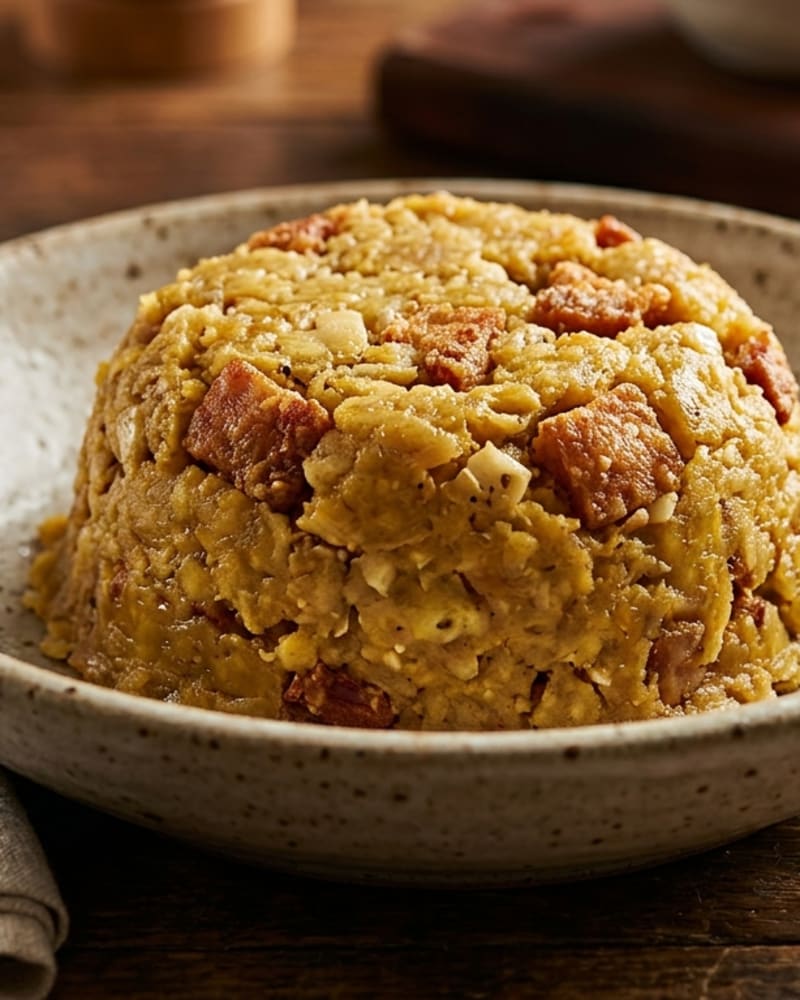
It is 7:30 on a Thursday night, the pan is already hot, and the whole kitchen is about to smell like garlic. This mofongo recipe takes 15 minutes, a pile of green plantains and a mortar, and it comes out looking like a dish with a long family history. Garlic is a commitment, so make sure whoever is across the table is eating it too.
Fried green plantains, smashed with garlic and pork rinds, and nothing left to hide behind.
Mofongo is a Caribbean dish built around fried green plantains pounded with garlic and something salty and crunchy. Here that something is pork rinds, which break into the mash in savory little pieces. You fry, you mash, you shape four mounds, and you serve it hot as the main plate. If you are the kind of person who likes a dinner with some heft and a bit of swagger, this mofongo recipe is the one to swipe.
What you need
- 4 green plantains
- 4 oz pork rinds
- 4 garlic cloves
- 3 tbsp olive oil
- 1 tsp salt
- ½ tsp black pepper
How to make it
- Peel and slice the 4 green plantains into 1 inch pieces about 5 minutes.
- Fry the plantain pieces in 3 tbsp olive oil over medium heat for 8 minutes until golden.
- Mash the fried plantains with 4 garlic cloves and 4 oz pork rinds in a mortar.
- Season the mash with 1 tsp salt and 0.5 tsp black pepper to taste.
- Shape the mash into 4 mounds and serve hot as the main plate.
Notes
Cooked leftovers keep three to four days refrigerated, per USDA FSIS. This mofongo recipe tastes best straight from the pan, because the plantain firms up as it cools and the pork rind pieces soften. If you have leftovers, warm them in a skillet with a splash of water, covered, until they loosen and steam.
Leftover mofongo can be shaped into small patties and crisped in a lightly oiled pan for a second dish with a crusty outside.
Choose plantains that are truly green and firm. A yellow or black plantain is sweeter and softer, and it makes a different dish, one closer to a sweet side than to a savory starch. Green plantains are starchy, and that starch is what lets them mash into a dense, hearty dome.
Peel them with a knife, not your thumbs. Cut off the ends, slice through the skin lengthwise along a ridge, and pry the skin away. Then slice the plantains into 1-inch pieces. Keep the pieces about the same size so they fry evenly, since small ones go dark while large ones are still pale in the middle.
Fry the pieces in the three tablespoons of olive oil over medium heat for 8 minutes until they are golden. They should be tender when pierced with a fork, not hard in the center. The oil should shimmer without smoking, and if it starts to smoke, turn the heat down.
Here is the SwipeCart take on it: mofongo is the dish for a date who does not want to be handled with tongs. It is messy to make, warm to eat and a little indulgent, and it dares you to enjoy yourself. Put the bowl in the middle of the table and let the table find its own way in.
Mash the plantains with the garlic and pork rinds in the mortar, working in batches if the mortar is small. Press and pound until the mixture holds together, and leave some texture rather than making it smooth. The bits of pork rind should still show.
Swaps that actually work
The plantains and the garlic are the point, so leave them alone. Green plantains give the dish its starchy body, and the garlic gives it its voice. Without either, you have mashed something else.
If you do not own a mortar, use a sturdy bowl and the back of a heavy spoon or a potato masher. It is not as pretty, but it does the same work. Mash in two or three batches so each portion is hot when it gets worked.
Pork rinds can be swapped for crumbled crisp bacon, which gives you a smoky, savory note, or for crushed fried chicharrón if you can find it at a Latin market. Plain salted pork rinds are fine, so taste before you add more salt, since they already carry plenty. Whichever crunch you pick, keep the bag out of reach of the cook, who will tell you it was quality control.
Olive oil can be replaced with another neutral frying oil, such as vegetable or canola. Olive oil gives a little fruitiness, which goes well with the garlic, so use it if you have it. If you want a moister mofongo, a spoonful of chicken or vegetable broth stirred into the mash loosens it.
Garlic can be raw or lightly softened in the pan. Raw garlic is sharp and bold, and cooked garlic is mellower. The recipe uses four cloves, so choose the intensity that suits the people at your table.
The swap that costs you the dish is boiling the plantains in place of frying them. Frying gives you the golden edges and the deep flavor, and boiled plantain turns out pale and damp.
If it goes wrong
The mash is dry and crumbly. It cooled too much before you worked it, or the plantains were fried too long. Stir in a spoonful of warm broth or a small drizzle of olive oil, press it back together with your hands and shape it while it is still warm.
The mash is gummy or heavy. The plantains were underfried and still raw in the center, or the pieces were uneven. Return the mash to the pan with a little more oil and warm it through, then pound it again.
It tastes flat. Flat mofongo is just mofongo that has not been properly introduced to the garlic. Salt is the first thing to try. Pork rinds vary in saltiness, so taste a forkful and add a pinch of salt and a little more garlic if it needs it.
The garlic is too sharp. Raw garlic can be bold. Mash in a little extra oil to soften the bite, or soften the garlic in the hot pan for a minute before it goes into the mortar, and next time use fewer cloves.
What to serve with it
The default is mofongo on its own, as the recipe says, a hot mound as the main plate. It is heavy and needs little alongside.
The better version adds something bright and fresh, such as a simple salad with lime juice or sliced avocado. The sharp, cool flavors cut through the richness of the fried plantain, and the plate looks livelier.
If you have a bowl of broth in the fridge, serve a little in a cup on the side. Dipping spoonfuls of mofongo into it softens the mash and gives you another flavor to play with.
As lunch the next day, reheat the leftovers in a covered skillet and eat them with a fried egg on top. It is a hearty midday meal that holds you through the afternoon.
Why this one earns its place
Some dinners are polite. This mofongo recipe is not. It is garlicky, hot and generous, and it turns a bunch of green plantains into something worth sitting down for.
Swipe it into your week for the evening you want a plate with some personality, and let the agent shop the plantains, the pork rinds and the garlic.
If you want more dishes with that kind of heat and depth, try Chicken Mofongo or Jerk Pork, and What's for Dinner Tonight helps when you are deciding between this and something easier.
More like this: all Caribbean recipes in Crave Corner.