Jerk Pork Bites With a Blackened Edge and a Juicy Middle
Jump to recipe ↓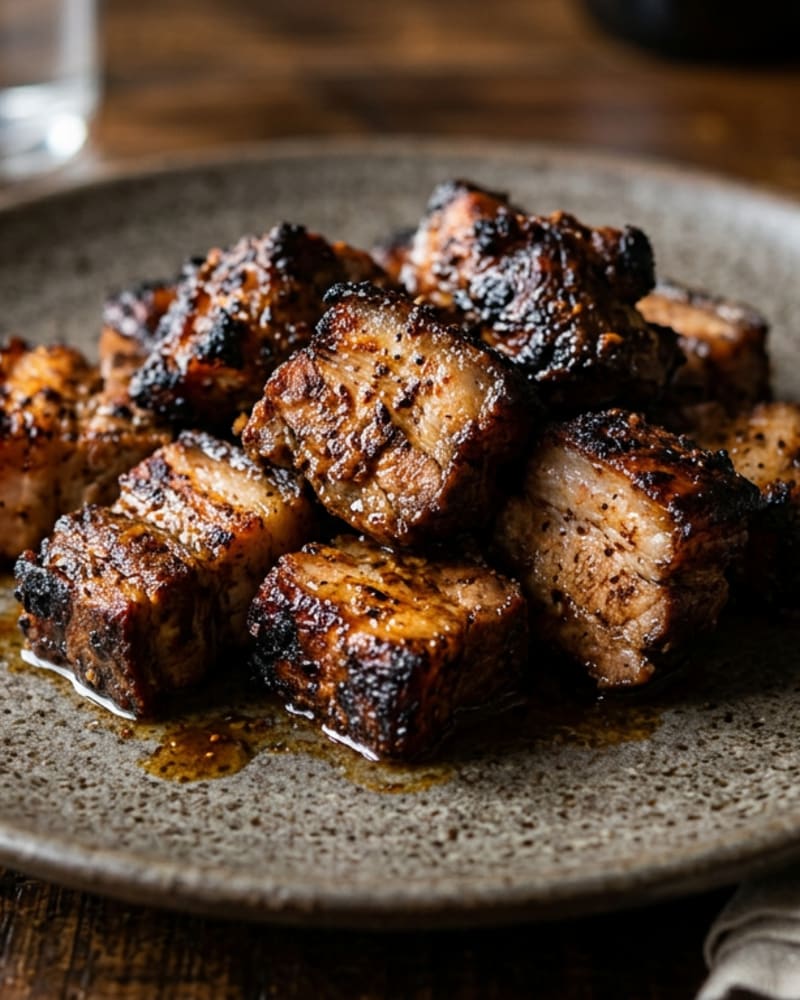
About 490 calories per serving, estimated from the ingredient list.
It is 6:45 on a Wednesday, the kitchen window is fogging up, and the skillet has just started to smoke. This jerk pork recipe is for the night you want dinner with a little danger in it: the kind of heat that has the person across the table reaching for your water glass, and you are allowed to look pleased about it.
Char hard first, then lower the heat, cover it, and leave it alone.
Pork shoulder gets cut into chunks, rubbed with jerk seasoning, salt and pepper, and left to sit for ten minutes while the pan heats. Eight minutes over medium-high heat, turning often, builds the dark, crusty edge. Then the heat comes down, the lid goes on, and twelve covered minutes finish the inside while the spice settles into the crust. Three minutes of rest, a few slices, and the plate looks like it came off a backyard grill rather than a stovetop.
What you need
- 2 lb pork shoulder
- 3 tbsp jerk seasoning
- 2 tbsp vegetable oil
- 1 tsp salt
- 1 tsp black pepper
How to make it
- Cut 2 lb pork shoulder into chunks and season with 3 tbsp jerk seasoning, 1 tsp salt and 1 tsp black pepper.
- Let the pork sit for 10 minutes to absorb flavors.
- Heat 2 tbsp vegetable oil in a skillet over medium high heat.
- Cook the pork chunks for 8 minutes turning often until charred.
- Lower heat and cover for 12 minutes until cooked through.
- Rest the pork for 3 minutes then slice and serve.
Notes
Cooked leftovers from this jerk pork recipe keep three to four days refrigerated, per USDA FSIS. Reheat them in a hot skillet for a couple of minutes rather than the microwave, which softens the crust you worked for. Cold leftovers, sliced thin, are very good tucked into a wrap with something crunchy.
USDA puts whole cuts of pork at 145°F with a 3-minute rest, and the method's rest lines up with that. If your chunks are on the large side, check the thickest one with a thermometer before you take the lid off for good.
Cut the shoulder into chunks that are roughly the same size. Uneven pieces cook unevenly, and you end up with some bites that are perfect and some that are still catching up. Shoulder has seams of fat running through it; trim off any thick, hard pieces, and keep the thinner marbling, which is what keeps every bite juicy.
Turn on the fan or crack a window before the pork goes in. A properly hot skillet and a spice crust make smoke, and the smoke alarm is not invited to this dinner.
Five ingredients makes this the low-maintenance match in your week: it shows up hot, it does not ask much of you, and it does not make you buy a spice you will use once and lose at the back of the cupboard.
Check the label on your jerk seasoning. Some blends lean salty and some lean sweet, and with a teaspoon of salt already in the mix, a salty blend makes the crust assertive. That is what rice is for.
Swaps that actually work
The jerk seasoning is the point of this jerk pork recipe, and the one thing to leave alone. A good blend tastes of allspice, thyme and Scotch bonnet heat, warm and fruity rather than simply hot. Dry rubs and wet pastes both work here. A wet paste clings better and can scorch faster, so keep turning the chunks during the first eight minutes.
The cut can move a little. Boneless country-style pork ribs come from the shoulder end and behave almost identically. Pork tenderloin is leaner and cooks faster, so check it at 145°F early rather than trusting the twelve minutes. Boneless chicken thighs take jerk seasoning beautifully; cook them to 165°F.
Vegetable oil can be any neutral oil that handles high heat, such as canola or peanut. Extra-virgin olive oil starts smoking well before you have any char, so save it for the salad.
If you have a grill, chunks threaded onto skewers pick up even more of the backyard-party flavor this dish is chasing. Swipe right on that idea when the weather allows.
The swap that costs you the dish is a pan that is not hot enough. Without real heat at the start, the spice cooks into a damp coating instead of a crust, and no amount of seasoning fixes texture.
If it goes wrong
It is gray instead of charred. The pork was wet, the pan was crowded, or the oil was not hot yet. Pull half the chunks out, let the skillet get properly hot again, and sear in two batches. Pat the rest dry with a paper towel before they go back in.
The spice is burning before the inside is cooked. The heat is too high for a sweeter blend or a wet paste. Lower the heat now, add a small splash of water to the pan, and get the lid on early. Scrape off any truly black, bitter bits before serving.
It is chewy. Shoulder is a hard-working cut and a quick cook keeps a little chew. Slice it thin across the grain as the method says, which shortens every fiber, and serve it with something saucy.
It is not cooked through. The chunks were bigger than the timing expects. Put the lid back on over low heat for a few more minutes and check the thickest piece reaches 145°F before the rest.
What to serve with it
The default is white rice, which soaks up the spiced fat and cools the heat between bites.
The better version of the default is rice and peas cooked with coconut milk, the classic Caribbean partner for jerk, with a crisp, lime-dressed slaw on the side for crunch.
The thing in the fridge that lifts it is fruit: a few slices of fresh pineapple or mango next to the pork, or a squeeze of lime over everything at the end.
It makes a strong next-day lunch, sliced into a wrap or over a rice bowl with whatever greens you have.
Why this one earns its place
It is the dinner for the bad day that needs something loud. One skillet, a short list, and a plate that tastes like you spent the afternoon at a cookout instead of answering emails. This jerk pork recipe also scales without fuss, so it works whether you are cooking for yourself or for someone you would like to keep around for dessert.
Swipe it into the week when you want heat on the menu, and let the agent grab the shoulder and the seasoning.
If pork shoulder is becoming a habit, carnitas burrito bowls take the same cut somewhere slower and richer. For another hard-seared, spice-forward main, carne asada is a natural next swipe. And when you need more ideas with this kind of momentum, quick weeknight dinner ideas has you covered.
More like this: all Caribbean recipes in Crave Corner.