Korean Bulgogi With Sticky Edges and a Lettuce Wrap Finish
Jump to recipe ↓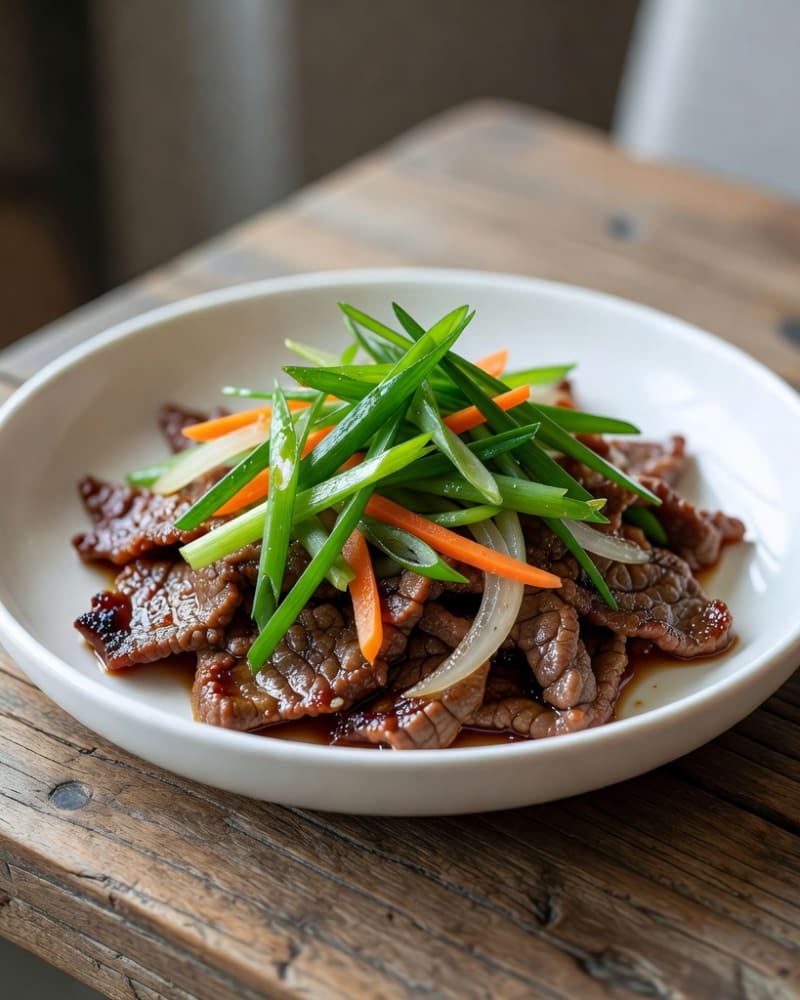
It is 6:40 on a Tuesday, the beef is marinating, and for once nobody is asking you what is for dinner. This korean bulgogi takes about 31 minutes from the cutting board to the plate, and 20 of them are the beef sitting in its bath while you do nothing. Sunday you bought ribeye with good intentions; tonight you get to find out whether the two of you are still on speaking terms.
Sweet, salty, a little smoky, and wrapped in a leaf you can eat with your hands.
The marinade is a short list: soy sauce, sugar, sesame oil, garlic, ginger and grated Asian pear, which brings sweetness and juice without needing a pantry full of syrups. Thin ribeye soaks it up fast, then hits a hot skillet and picks up dark, sticky edges. You build each bite yourself: a butter lettuce leaf, a spoonful of rice, a slice or two of beef, pickled radish, scallion, and a dab of gochujang if you like a little trouble.
What you need
- 1½ lb beef ribeye, thinly sliced
- ¼ cup soy sauce
- 6 oz asian pear, grated
- 1 head butter lettuce
- ½ cup pickled radish
- 2 cups rice, cooked
- 2 tbsp gochujang
- 2 tbsp sugar
- 1 tbsp sesame oil
- 4 cloves garlic
- ½ oz fresh ginger, grated
- 4 stalks green onions
- ¼ tsp salt
- ¼ tsp black pepper
How to make it
- Grate 1 Asian pear and mince 4 garlic cloves along with 1 tbsp fresh ginger. Slice 4 green onion stalks.
- In a bowl, combine 0.25 cups soy sauce, 2 tbsp sugar, 1 tbsp sesame oil, the minced garlic, grated ginger, and grated Asian pear. Add 1.5 lbs thinly sliced beef ribeye and marinate for 20 minutes.
- Heat a large skillet over high heat. Cook the marinated beef in batches for 2 to 3 minutes per side until caramelized and cooked through.
- Wash and separate the leaves from 1 head butter lettuce. Slice 0.5 cups pickled radish if needed.
- Cook 2 cups cooked rice according to package directions if not already warm, then serve alongside the beef.
- Assemble by placing beef slices in lettuce leaves with rice, pickled radish, sliced green onions, and a dab of 2 tbsp gochujang.
Notes
Cooked leftovers keep three to four days refrigerated, per USDA FSIS. Pack the beef separately from the rice and lettuce, and keep the lettuce dry in a towel-lined container so it still has some crunch when you come back for round two.
Korean bulgogi reheats well in a hot skillet for a minute or two, which also gets the edges sticky again. The microwave works but softens the caramelized bits, so use it only when you are in a hurry. Freezing the cooked beef is possible, though lettuce wraps are the point of this one, so leave the greens fresh.
The grated pear and the marinade both make a lot of liquid. Spoon the beef out of the bowl rather than tipping the whole thing into the pan, and let the extra drip off. That is a small move, and it is the difference between a seared slice and a boiled one.
A tip that costs nothing: if your butcher has not already sliced the ribeye thin, firm it in the freezer for a short while first. Cold meat slices into cleaner, thinner strips, and thin strips are what make the whole dish cook in two or three minutes a side.
Swaps that actually work
For korean bulgogi, leave the thin-sliced beef and the soy-sugar-sesame backbone alone. That is the dish. The rest can move around.
No Asian pear? A grated Bosc pear or a sweet apple stands in for the fruit, and the marinade will still taste like itself. Butter lettuce is the soft cup the recipe asks for; red leaf, green leaf or romaine hearts all hold a spoonful. Pickled radish can become quick-pickled cucumber or carrots if that is what the fridge is offering. Brown rice is fine, and so is cauliflower rice if you want it lighter.
The swap that costs you the dish is the cut. Ribeye is fatty, which is why it stays tender in a screaming hot pan. A lean cut sliced just as thin will cook, but it dries out fast, so if you switch, pull it from the pan a touch earlier than you think. Another change worth skipping: stretching the marinade past the 20 minutes the method gives you. Fruit and soy keep working on thin slices, and you do not need to find out how far.
SwipeCart move: swipe this one on a night you suspect your dinner plans will go sideways. It is a good first date for a skillet, high effort-to-reward ratio, and it does not talk about itself.
If it goes wrong
The beef is gray and watery. The pan was crowded or not hot enough, and the marinade pooled. Pour off the liquid, turn the heat up, and cook the remaining beef in small batches, a single layer at a time, so each slice touches the metal.
It is too salty. Soy sauce concentrates in the pan. Serve it with extra rice and lettuce, and skip any added salt when you build the wraps. Next time, let the extra marinade drain off before the beef goes in.
The edges burned before the middle cooked. The sugar in the marinade browns fast. Lower the heat a notch after the first batch, and keep slices thin, so two to three minutes per side stays enough.
The wraps fall apart. Wet lettuce tears. Dry the leaves well, overlap two if one is weak, and go lighter on the sauce and rice in each wrap.
What to serve with it
The default is what the recipe already gives you: butter lettuce, warm rice, pickled radish and sliced green onion on the side. Put everything on the table and let people assemble their own, which is a kind of low-pressure dinner party where you cooked one thing.
To go further, add a bowl of steamed greens or a simple cucumber salad with a little rice vinegar and sesame oil. Cold and crunchy next to the hot, sweet beef makes each bite more interesting. The gochujang dab is the finishing move, so put it on the plate in a small spoonful and let people decide how brave they feel.
The next day, it does very well as a rice bowl for lunch: warm the beef, add whatever raw vegetables are around, and skip the lettuce wraps if they have gone limp.
Why this one earns its place
Some recipes ask for a whole evening and a lot of your patience. This korean bulgogi asks for a bowl, a hot pan and about half an hour, then hands you dinner that looks like you made an effort. It is dinner that feels a little bit like a night out, and the only reservation you need is a skillet.
If you want to find out whether korean bulgogi fits your week, swipe it in and let the agent shop the cart, ribeye and Asian pear included. Then you get to focus on the part that matters: the sizzle, the wrap, the second wrap.
More Korean favorites to swipe next: Beef Galbi, Korean Beef Bulgogi Bowls, and What's for Dinner Tonight.
More like this: all Korean recipes in Crave Corner.