Beef Galbi With a Sticky Marinade That Does the Flirting for You
Jump to recipe ↓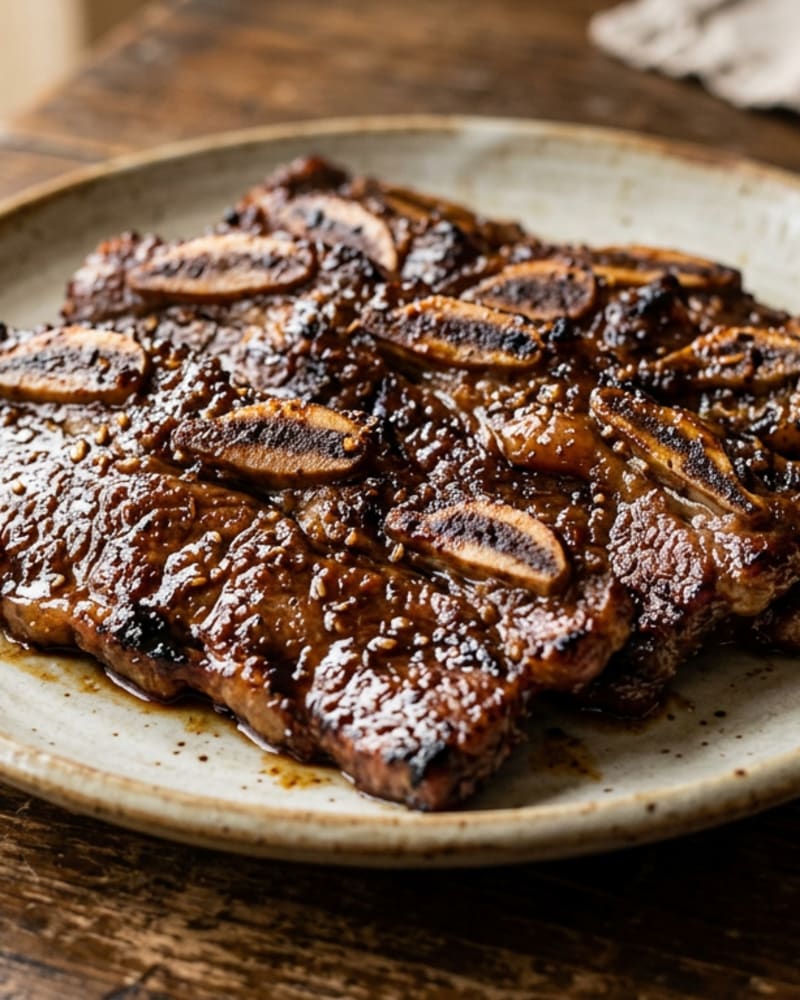
It is 7:30 on a Friday, the pan is smoking a little, and the kitchen smells like soy, garlic and caramelizing sugar in a way that makes the neighbors reconsider their takeout plans. This beef galbi recipe takes 40 minutes and a marinade that does all the flirting for you, so you can look relaxed and mysterious while the ribs do the work.
Sweet, salty, sticky short ribs, charred at the edges and served over rice.
Galbi is Korean marinated short rib, and the grated pear in the marinade is the detail that gives it that mellow sweetness without tipping into candy. A grill pan or skillet is all it takes. Thirty-odd minutes later you have the sort of dinner that makes a person say "wait, you made this?" with a look that is not about the beef.
What you need
- 2 lb beef short ribs
- ½ cup soy sauce
- 1 asian pear
- ½ yellow onion
- 5 cloves garlic
- 4 green onion
- 2 tbsp sesame oil
- 3 tbsp brown sugar
- 1 tbsp sesame seeds
- 1 tbsp vegetable oil
- 2 microwavable short-grain rice pouch
- ½ tsp black pepper
- ¼ tsp salt
How to make it
- Peel and grate 1 asian pear into a bowl. Finely chop 0.5 yellow onion, mince 5 garlic cloves, and thinly slice 4 green onions, keeping the white and green parts separate. This takes about 8 minutes.
- Whisk the grated pear with ½ cup soy sauce, 3 tbsp brown sugar, 2 tbsp sesame oil, the minced garlic, chopped onion, white parts of the green onions, and black pepper to taste. Add 2 lb beef short ribs and toss to coat. Marinate at least 20 minutes (or up to overnight in the fridge).
- Heat a grill pan or large skillet over medium-high heat and brush with 1 tbsp vegetable oil. Working in batches, cook the short ribs 3 to 4 minutes per side until caramelized and cooked through. Rest on a plate for 2 minutes.
- Microwave 2 short-grain rice pouches according to package directions.
- Sprinkle the galbi with 1 tbsp sesame seeds and the green onion greens. Serve immediately with the rice. Season plates with a pinch of salt if needed.
Notes
Cooked leftovers keep three to four days refrigerated, per USDA FSIS. Keep the ribs and the rice in separate containers, and warm the ribs in a skillet over medium heat so the glaze loosens again.
This beef galbi recipe is flexible on timing: at least 20 minutes, or up to overnight in the fridge, as the method says. Twenty minutes is plenty on a night that fell apart. Overnight is the move if you like planning ahead, and it is a rare case where doing the work the day before feels like a love letter to your future self.
The method has you cook the ribs in batches over medium-high heat for 3 to 4 minutes per side. That timing assumes thin-cut short ribs, the kind often sold as flanken style, sliced thin across the bones. Thicker, English-style ribs will not cook in that window, so if that is what your store has, ask the butcher to cut them thin or pick a different cut.
The sugar in the marinade builds the dark, sticky crust, which needs a hot pan with room around each rib.
Watch the heat. That same sugar can go from caramelized to burnt in the time it takes to answer a text, so stay at the stove and turn the ribs when they look deeply browned, not black.
Rest the ribs for two minutes on a plate before serving, as the method says. It gives the juices a moment to settle so they stay in the beef and not on the cutting surface. Then finish with sesame seeds and the green parts of the green onions for freshness and a little crunch, and season the plates with a pinch of salt if needed.
Swaps that actually work
The short ribs and the marinade are the point of any beef galbi recipe. Keep the grated pear, the soy, the brown sugar, the garlic and the sesame oil together, because that combination is the flavor, and changing more than one at a time gets you something else.
If you cannot find an Asian pear, any ripe, juicy pear will do a similar job, though the flavor will shift a touch. The pear is there for sweetness and moisture in the marinade, so use the ripest one you have and grate it finely.
Yellow onion is written in, and a sweeter onion works too. The white parts of the green onions go into the marinade and the green parts finish the plate, so you get two different levels of onion flavor from one bunch. Keep them separate as the method says.
The rice is the easy part. Microwavable pouches are what is listed, and a pot of freshly cooked short-grain rice is a perfectly good swap if you have the time. Either way, you want something plain and warm to soak up the sticky glaze.
The swap that costs you the dish is skipping the grated pear or swapping the soy for a lighter, sweeter sauce. You lose the balance of salt and sweetness that makes galbi taste like galbi, and the ribs end up either harsh or cloying.
If it goes wrong
The ribs are tough. They were cut too thick for the cooking time, or the pan was not hot enough. Slice the ribs thinner, or lower the heat slightly and cook a minute or two longer per side until they are tender when pressed with tongs.
The outside is burnt and bitter. The sugar in the marinade scorched. Turn the heat down to medium, wipe the pan if it is blackened, and cook the remaining batches a little more gently. A bit of char is welcome, but a bitter black crust is not.
The ribs are gray and watery, not browned. The pan was crowded or not hot enough, so they steamed. Cook in smaller batches, let the pan come back to heat between them, and pat off excess marinade before the ribs hit the pan.
It tastes flat. This marinade is already sweet, so reach for salt, not more sugar. A pinch on the plate, as the method suggests, or a splash more soy over the rice will bring it back into focus.
What to serve with it
The default is rice, and the method already does that for you. A bowl of plain short-grain rice is the right backdrop for a sticky, sweet glaze.
The better version of the default is something crisp, cold and sour on the side: quick-pickled cucumbers, a simple salad with a sharp vinegar dressing, or a pile of lettuce leaves to wrap the ribs in. The galbi is rich and sweet, and a cold crunchy bite makes every forkful taste as good as the first.
The thing in the fridge that lifts it is kimchi, if you have it, and extra sesame seeds and sliced green onion scattered over the rice.
It works as lunch the next day. Warm the ribs and rice in a skillet with a splash of water, or eat them cold over rice if that is your kind of lunch.
Why this one earns its place
This beef galbi recipe is for the night you want to impress someone without looking like you tried too hard. The marinade does its work while you set the table, the pan does the rest, and the result looks like a lot more effort than it was. That is the best kind of showing off.
It feeds four, so it works equally well as a date-night dinner with leftovers to spare or a table of friends. If you swipe it into your week, SwipeCart's agent can shop the cart, and you can concentrate on the pan.
If you like marinated, grilled beef, carne asada comes from a very different tradition with the same idea at its heart. For a Korean beef dish in bowl form, try Korean beef bulgogi bowls. And if you are cooking for someone you are trying to impress, meal planning for couples is where a good Friday becomes a regular habit.
More like this: all Korean recipes in Crave Corner.