Korean Bibimbap With a Runny Yolk and a Sauce You Control
Jump to recipe ↓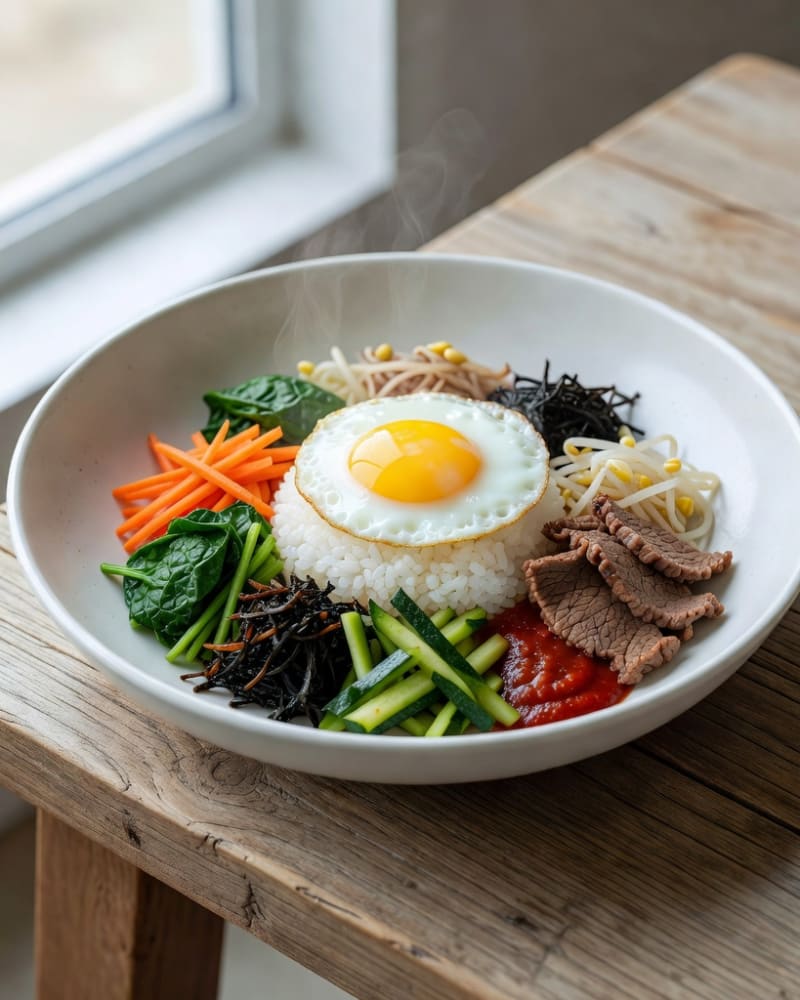
It is 6:50 on a Tuesday, the plan fell over at lunch, and you want a dinner that looks like you meant it. This bibimbap recipe takes about 23 minutes, and it ends in a bowl so colorful that it feels like a first date you actually dressed for. The sauce goes on the side, so everyone controls how much heat they are in for.
Everything gets its own pile. Then you ruin it on purpose.
Bibimbap is Korean mixed rice: a bowl of rice topped with separate piles of seasoned vegetables, soy and garlic beef, and a fried egg. You bring it to the table, add a spoon of gochujang sauce, and stir until everything turns red and glossy. The pretty part is for a few seconds. The good part is the mix.
What you need
- 2 cups rice
- 2 microwavable short grain rice pouch
- 1 lb thinly sliced sirloin steak
- 1 lb thinly sliced beef sirloin
- 2 cups spinach
- 2 shredded carrots
- 2 carrot
- 1 sliced zucchini
- 1 zucchini
- 3 tbsp gochujang
- 4 eggs
- 2 cups bean sprouts
- 3 tbsp sesame oil
- 3 tbsp soy sauce
- 2 tbsp sugar
How to make it
- Rinse 2 cups rice under cold water, then cook it in a pot with 3 cups water and a pinch of salt. Bring to a boil, reduce heat, cover, and simmer for 15 minutes until tender. Keep warm.
- Mince 3 garlic cloves. In a bowl, mix 3 tbsp soy sauce, 2 tbsp sugar, 1 tbsp sesame oil, and the minced garlic. Add 1 lb thinly sliced beef sirloin and toss to coat.
- Heat 1 tbsp sesame oil in a skillet over medium heat. Add 2 cups spinach and cook for 2 minutes until wilted. Remove and repeat separately with 2 cups bean sprouts, 2 shredded carrots, and 1 sliced zucchini, seasoning each with salt.
- Stir-fry the marinated beef in the same skillet over high heat for 3 minutes until cooked through.
- In a small bowl, stir together 3 tbsp gochujang, 1 tbsp sesame oil, 1 tbsp rice vinegar, and 1 tbsp sugar to make the sauce.
- Fry 4 eggs sunny side up in a skillet. Divide the cooked rice among 4 bowls and top each with portions of the vegetables and beef.
- Place one fried egg on each bowl and serve with the gochujang sauce on the side.
Notes
Cooked leftovers keep three to four days refrigerated, per USDA FSIS. Keep the components in separate containers, and the bowl comes back together easily. Reheat the rice and beef, and fry a fresh egg for the top.
We would not freeze the vegetables, since they go soft. The cooked beef and the rice both freeze reasonably well on their own.
The method takes the vegetables one at a time: spinach for 2 minutes, then bean sprouts, shredded carrots and zucchini, each in the same skillet with a little sesame oil and a pinch of salt. It feels fussy, and the payoff is real. Each vegetable keeps its own texture and color, instead of melting into one pot of beige.
Marinate the beef as soon as you start. The soy, sugar, sesame oil and minced garlic work while the rice cooks, and thin slices of sirloin pick up flavor quickly. Cook the beef over high heat for the 3 minutes the method gives it, until cooked through. Thin slices go from tender to tough fast, so stay close.
The sauce is a separate bowl, and that is a feature. Stir the gochujang with sesame oil, rice vinegar and sugar, and let people add as much as they like. You will meet someone who uses all of it, and someone who uses a teaspoon. Both are right.
A fried egg with a runny yolk is part of the picture. If you prefer your yolk fully cooked, give the egg a bit longer in the pan. Either way, it sits on top like it earned the spot.
A bibimbap recipe is a prep-ahead friend. The vegetables and beef can be cooked earlier in the day and kept in containers, so dinner is just rice, a fried egg and an assembly line.
Swaps that actually work
The gochujang sauce is the point. It is what makes this bibimbap and not just rice with toppings. If you swap it, use another fermented chili paste, and taste before pouring.
The vegetables can move. Cucumber, mushrooms, kimchi, or a handful of bean sprouts all work. Use what you have, and keep the piles separate so each one stays distinct.
Beef sirloin can become ground beef, thin pork, chicken, or crumbled tofu. Cook ground beef to 160 F. For a vegetarian bowl, press tofu dry, marinate it in the same soy mixture, and sear it.
The rice can come from the pot or from a microwavable pouch. Short-grain is the better choice, since it clumps lightly and holds the toppings.
If you want crispy rice at the bottom, press it into a hot, oiled skillet or heavy bowl for a few minutes before you add the toppings. It is not in the method, and it is a very good idea.
If you need to adapt this bibimbap recipe, change the toppings and keep the sauce. The gochujang mixture ties everything together, and the toppings can be whatever you have.
If it goes wrong
The bowl is bland. Almost always salt in the vegetables. Season each one as it comes out of the pan, and add a little soy sauce at the end if it still tastes quiet.
The vegetables are soggy. They cooked too long or sat in a wet pile. Cook them quickly over medium heat, pull them as soon as they are tender, and drain any extra liquid before they go in the bowl.
The beef is tough. It cooked too long or the slices were thick. Slice thinner next time, cook it at high heat for just the 3 minutes, and pull it off promptly.
The sauce is too hot or too sweet. Thin it with a little water or a drop more sesame oil, and add a pinch of sugar or a splash of vinegar to balance. Serve it on the side so everyone adjusts.
What to serve with it
The default is the bowl, a spoon, and the sauce on the side.
The better version adds a small dish of kimchi and a cup of broth or soup. The tang and the warmth make the bowl feel like a full meal.
The thing in the fridge that lifts it is sesame seeds, a sheet of seaweed cut into strips, or a spoon of the sauce stirred through the rice.
It works as lunch the next day. Pack the rice and toppings together, and add the sauce at the last second.
This bibimbap recipe is also a good way to use up small amounts of vegetables. Anything that can be cut thin and cooked quickly belongs in the lineup.
Why this one earns its place
A dish where you pick what goes in the bowl is the closest thing to choosing between options without the stress. Every pile is a different personality, and you get to be the one who brings them together. Not bad for 23 minutes.
A bibimbap recipe is a good fit for the days you cannot decide what you want. Every bite can taste different, depending on what you scoop.
Swipe it into your week and the agent can shop the beef, vegetables, eggs and gochujang, and you can enjoy the part where you stir.
If you want more bowls: Korean Beef Bulgogi Bowls, Gimbap, and Beef Galbi.
More like this: all Korean recipes in Crave Corner.