Kimchi Jjigae With Pork Belly and Tofu in a Fiery Red Broth
Jump to recipe ↓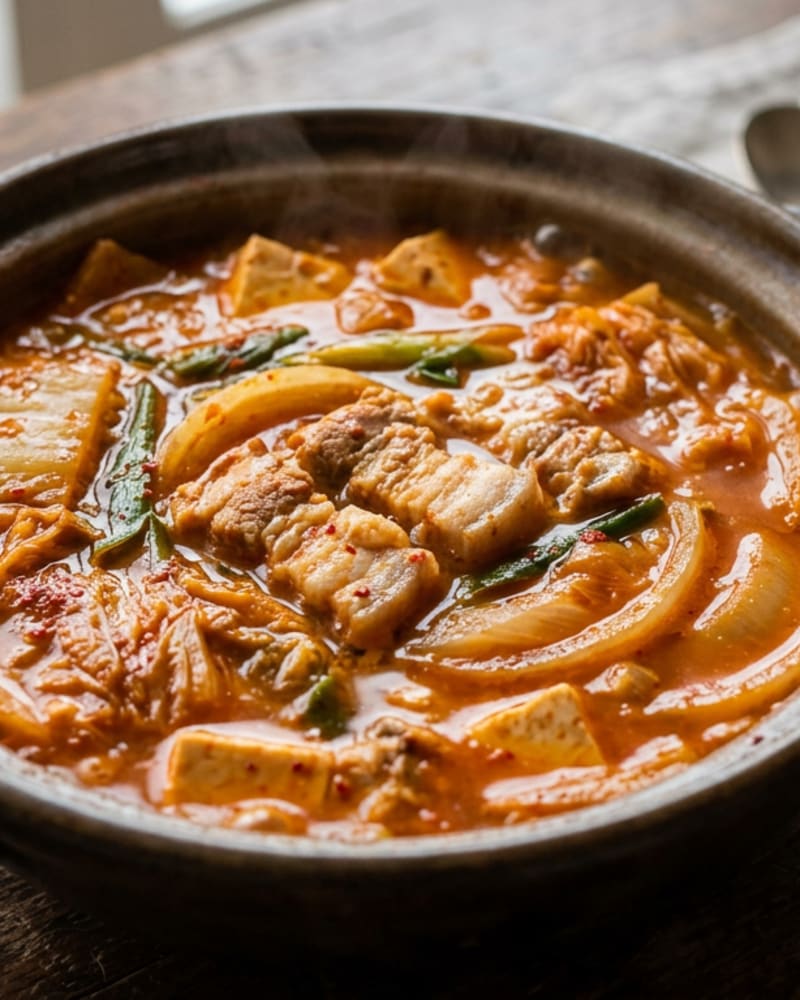
It is 6:40 on a freezing evening, the window is steamed over, and you want a pot that bubbles at you while you wait. This kimchi jjigae recipe is about 27 minutes of pork belly, kimchi and tofu in a pot, spooned over rice for three. It is the dish you make when you need warmth and a little heat, and you are not interested in making small talk with a recipe.
Sour, spicy and a little greasy in the way that works.
Kimchi jjigae is a Korean stew built on kimchi that has some age to it. The pork belly browns, the kimchi cooks into the fat, water goes in, and everything simmers until the broth turns red and rich. Tofu joins late so it keeps its shape. You carry the pot to the table, ladle it over rice, and let the steam fog your glasses. It is comfort food for the night someone left you on read.
What you need
- 2 cups kimchi
- 8 oz pork belly, bite-size pieces
- 8 oz tofu, cubed
- 2 cups white rice
- 1 tsp salt
- ½ tsp black pepper
How to make it
- Slice 8 oz pork belly into bite-size pieces and cube 8 oz tofu, about 4 minutes.
- Brown the pork belly in a pot over medium heat for 5 minutes.
- Add 2 cups kimchi and cook 3 minutes more.
- Pour in 3 cups water and simmer 15 minutes.
- Add the tofu cubes and cook 5 final minutes.
- Season with salt and black pepper to taste.
- Serve bubbling hot with 2 cups white rice.
Notes
Cooked leftovers keep three to four days refrigerated, per USDA FSIS. Stew like this settles and deepens overnight, so a reheated bowl on day two often tastes rounder. Reheat it gently on the stove until bubbling and add a splash of water if it has thickened.
It freezes well without the tofu, which gets spongy after thawing. Add fresh tofu when you reheat.
The method lists the cooking steps in order: 5 minutes browning the pork, 3 minutes with the kimchi, 15 minutes of simmering in 3 cups of water, then 5 final minutes with the tofu. Respect the order. Browning first is not optional if you want depth, and the long simmer is what turns kimchi from sharp to savory.
Pork belly is fatty, and that is good news. It browns in its own fat, so you do not need extra oil. If the pot looks greasy at the end, skim a little from the surface with a spoon.
Season at the end, with the salt and black pepper. Kimchi brings salt of its own, and the amount varies a lot between jars, so taste before you add any. The stew gets saltier as it reduces.
Think of the old kimchi in your fridge as the ex who got better with age: sour, complicated, and suddenly worth another look.
A kimchi jjigae recipe depends on its kimchi, so taste it raw before you start. If it is sharp and very sour, you are in for a deep stew, and if it is mild you may want a spoon of brine to wake it up.
Swaps that actually work
The kimchi is the point, and the older and sourer it is, the better the stew. If your jar is fresh and mild, the stew will taste lighter and a little shy. A spoon of the brine from the jar adds back some tang.
Pork belly can become pork shoulder sliced thin, or even bacon, though bacon is smokier and saltier, so go easy on the salt.
Firm tofu holds its shape in the pot, and soft tofu is silkier and more fragile. Either is fine. Stir gently after it goes in.
For heat, add a spoon of gochugaru or gochujang if you want more punch. For depth, a splash of soy sauce or a pinch of sugar rounds out sour kimchi.
Rice is the partner. White rice is what the method serves, and short-grain is the best at soaking up the broth. Leftover rice works great.
If you need to adapt this kimchi jjigae recipe for a bigger group, double everything but use a wider pot. More surface area helps the pork brown, and it keeps the stew from simmering unevenly.
If it goes wrong
The broth is too sour. Your kimchi was very ripe. Add a pinch of sugar, a splash more water, and a little more simmering. A spoon of cooked rice stirred in will also soften it.
It is watery and thin. The pot was too wide or the simmer too gentle. Boil it hard for a few minutes, uncovered, to concentrate. Next time, use a smaller pot.
It tastes flat. Almost always salt, though sometimes it needs more kimchi brine. Taste, add a pinch of salt or a spoon of brine, and taste again.
The pork is tough. It simmered hot without enough fat, or the slices were thick. Cut thinner next time, and cook until it is tender. Pork belly forgives a long simmer better than lean cuts do.
What to serve with it
The default is the stew spooned over a bowl of white rice, which is how the method does it.
The better version adds a fried egg on top, a few sheets of roasted seaweed, or a plate of simple sides like blanched greens. A soft egg melting into the red broth is a good move.
The thing in the fridge that lifts it is sliced green onion, a spoon of sesame oil, or a little extra kimchi on the side for crunch.
It works as lunch the next day, because the flavors keep deepening. Reheat it in a pot, not a microwave, and bring it back to a bubble.
This kimchi jjigae recipe serves three, and it stretches easily with extra rice and a fried egg. Put the pot in the middle of the table and let everyone ladle their own.
Why this one earns its place
Not every night is a candlelit dinner. Some nights you need something red, hot and loud that does the talking for you. Six ingredients, one pot, and a broth that tastes like it has been working on you for hours.
A kimchi jjigae recipe earns its place on cold nights. It is the one pot that makes the kitchen smell like someone is cooking for you.
Swipe it into your week and the agent can shop the kimchi, pork belly, tofu and rice, so you can spend your energy on the part where you stand over the pot and breathe in.
More bubbling bowls: Budae Jjigae, Beef Pho, and Miso Ramen.
More like this: all Korean recipes in Crave Corner.