Budae Jjigae With Spam, Kimchi and Ramen in One Shameless Pot
Jump to recipe ↓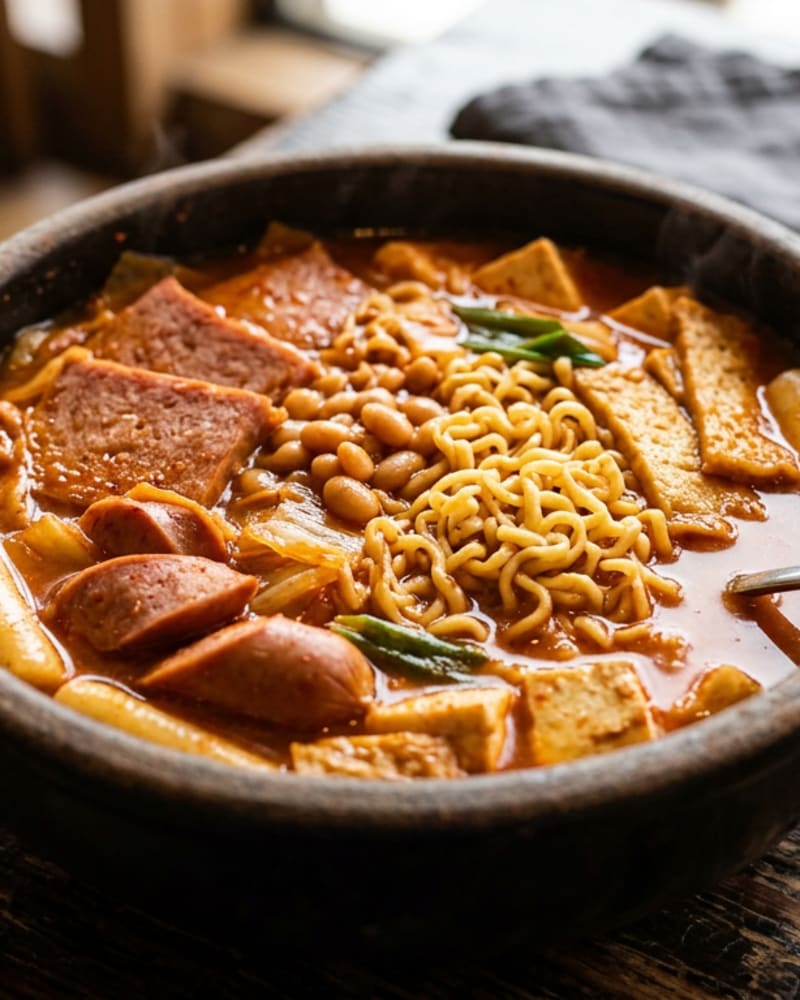
It is 9:40 on a Friday, the fridge light is the only light on, and your options are a can of Spam, a jar of kimchi and a deeply unserious attitude. This budae jjigae recipe puts all three in one pot and has it on the table in 32 minutes. Spam and kimchi are the pairing your friends warned you about, and you are going to swipe right anyway.
Salty, sour, spicy and a little shameless, which is the whole appeal.
The name translates to army base stew, a nod to the canned and processed meat it is built on. Here that means sliced Spam, sausages and tofu simmering in a kimchi broth until the pot looks like a dare. Two packs of ramen go in for the last four minutes, and a bowl of rice waits on the side to catch whatever the spoon misses.
The order is simple. Kimchi sizzles in the hot pot for three minutes, then six cups of water come in and the pot heads for a boil. The Spam, sausages and tofu simmer for 10 minutes, the ramen takes 4 more, and the soy sauce and gochugaru go in last, so you decide how hot the pot gets.
What you need
- 1 can spam, sliced
- 2 cups kimchi
- 2 ramen noodles
- 8 oz sausages, sliced
- 14 oz tofu, sliced
- 4 stalks green onions, sliced
- 2 oz green onions
- 1 tbsp gochugaru
- 2 tbsp soy sauce
- 2 cups rice
- 2 rice
- ¼ tsp salt
- ¼ tsp black pepper
How to make it
- Slice the 1 can Spam, 4 links sausages and 1 block tofu into bite sized pieces, about 5 minutes, and slice the 4 stalks green onions.
- Heat a large pot over medium heat for 2 minutes and add 2 cups kimchi to saute 3 minutes.
- Pour in 6 cups water and bring to a boil over high heat, about 8 minutes.
- Add the sliced Spam, sausages and tofu to the pot and simmer 10 minutes.
- Stir in the 2 packs ramen noodles and cook 4 minutes more until the noodles soften.
- Stir in 2 tbsp soy sauce, 1 tbsp gochugaru, salt and black pepper to taste.
- Garnish with the sliced green onions and serve hot with 2 cups rice on the side.
Notes
Cooked leftovers keep three to four days refrigerated, per USDA FSIS. The broth reheats well. The noodles are another story: left overnight they swell and go soft, so if you are cooking for tomorrow, ladle out a share of stew before the ramen goes in and boil a fresh pack when you reheat.
Season at the very end, the way the method does. Spam, sausages, kimchi and soy sauce are salty ingredients, and the pot cannot tell you it has had enough until you taste it. Stir in the gochugaru first, taste, then decide how much of the 2 tablespoons of soy sauce the pot actually wants.
Slice everything to a size that fits on a spoon alongside a bit of noodle. Thick slabs of Spam look like a dare. Bite-size pieces look like dinner.
Tofu is the quiet member of the cast. Sliced, it soaks up the broth, so each piece tastes like the stew it sat in. Add it with the Spam and the sausages, then leave it alone while it simmers so it keeps its shape.
Swipe this one into your week and the agent puts the Spam in the cart, no eye contact with the cashier required.
Swaps that actually work
This budae jjigae recipe forgives most substitutions, with one exception.
The kimchi is the point, so leave it alone. The sour, fizzy kind that has lived in the fridge a while is the one that gives the broth something to say. Swap it for coleslaw and what you have is hot dog soup with ambitions.
Everything around it can move. Any luncheon meat can stand in for the Spam, and hot dogs or a smoked sausage for the sausages. Firm tofu holds its shape best, and soft tofu works if you slide it in gently and stop stirring. If your spice cupboard is thin, use a little less gochugaru and add a spoonful of brine from the kimchi jar for the sour kick.
A slice of American cheese melted on top is a popular addition. It makes the broth rounder and richer, and it is entirely your call.
The swap that costs you the dish is skipping the sauté. The kimchi gets three minutes in the hot pot before any water arrives. Skip that and you get hot water that has briefly met kimchi, instead of a stew.
If it goes wrong
A budae jjigae recipe has a short list of ways to wobble, and each one has a fix you can do in the pot.
It tastes flat. Add soy sauce a teaspoon at a time and taste between each. If salt alone does not wake it up, a spoonful of brine from the kimchi jar adds the missing sourness.
It is too salty. Spam, sausages, soy sauce and kimchi are salty ingredients, so the pot can overshoot while you are not looking. Stir in a cup of hot water, add a few more slices of tofu, and lean on the rice to soak up the rest. The pot is a little dramatic. The rice is how you calm it down.
The noodles went soft. They sat in the broth past the four minutes. Serve right now, spoon the noodles into bowls first, and ladle the broth over rice, where soft is the point.
It is too hot. Your gochugaru hand got ambitious. Add a cup of water, let it come back to a simmer for a minute, and serve over a generous scoop of rice, which takes the edge off every spoonful.
What to serve with it
Eat a budae jjigae recipe like this at the table, straight from the pot, with spoons coming from several directions. The default is already built in: a bowl of rice on the side. It is not decoration. Spoon some of it into the broth at the table and each bite catches Spam, kimchi and sauce at once.
The better version of the default is a small dish of extra kimchi on the table for anyone who wants the volume turned up. The thing in the fridge that lifts it is a soft fried egg slid on top, so the yolk runs into the broth.
It works as lunch the next day, as long as you remember the noodle rule above and reheat the broth gently.
Why this one earns its place
Some dinners are for impressing someone. This one is for the night you do not want to impress anyone, and the only person to please is the one holding the spoon. One pot, a handful of things you can pick up on the way home, and nothing to apologize for.
It is also forgiving about timing. The method asks for 10 minutes of simmering and 4 for the noodles, and the pot does not mind if the kitchen around it is a mess. The green onions go on at the end, a fresh, sharp finish against the richness.
It is also a good answer when the question is "what do we even have?" The can, the jar and a couple of packs of ramen turn into something that smells like a plan.
For another noodle bowl that lands on the table fast, try miso ramen. For a bigger Korean braise on a night with more time, there is andong jjimdak. And for the evenings when nothing is planned at all, what's for dinner tonight is where to start.
More like this: all Korean recipes in Crave Corner.