Kalguksu, the Knife-Cut Noodle Soup That Warms You Up Fast
Jump to recipe ↓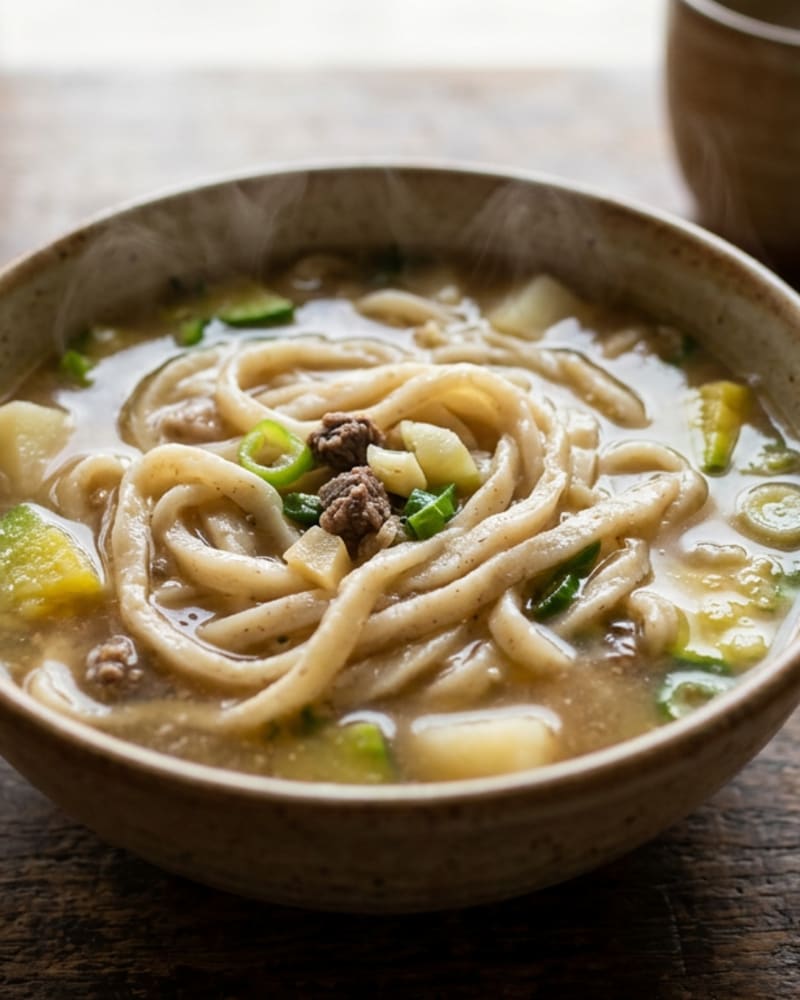
It is 6:15 on a cold Tuesday, the windows are fogging, and you want something warm that asks very little of you. This kalguksu recipe is 22 minutes of matchsticks, broth and noodles, and it will make you feel looked after by a person who happens to be you.
Hot soup, soft noodles, zero small talk.
Kalguksu is a Korean noodle soup built around thick wheat noodles. Here the broth is chicken, the vegetables are zucchini and carrot cut into thin matchsticks, and the seasoning is garlic, soy sauce and a drizzle of sesame oil at the end. It is comfort food for the night you want to be taken care of and do not want to discuss it.
What you need
- 8 oz flour noodles
- 6 cups chicken broth
- 1 zucchini, sliced into thin matchsticks
- 1 carrot, sliced into thin matchsticks
- 3 cloves garlic, minced
- 2 tbsp soy sauce
- 1 tsp sesame oil
- ¼ tsp salt
- ¼ tsp black pepper
How to make it
- Slice the 1 whole zucchini and the 1 whole carrot into thin matchsticks, about 5 minutes of work.
- Mince the 3 whole garlic cloves.
- Bring the 6 cups chicken broth to a boil in a large pot over high heat.
- Add the sliced zucchini and carrot and simmer for 8 minutes.
- Stir in the minced garlic and the 2 tbsp soy sauce and cook 3 minutes more.
- Add the 1 pack flour noodles and boil 6 minutes until they are tender.
- Drizzle the 1 tsp sesame oil over the soup and stir gently.
- Ladle into bowls and season with salt and black pepper before serving.
Notes
Cooked leftovers keep three to four days refrigerated, per USDA FSIS. Store the broth and the noodles together only if you plan to eat it the next day: noodles keep drinking the broth as they sit, so the soup thickens and the noodles go soft. If you want a better second round, keep the noodles in a separate container and add them to reheated broth.
We would not freeze it. Noodles that sat in liquid tend to turn mushy once thawed, and this is a dish where texture matters.
The matchsticks are the one part of the recipe that rewards a little patience. The method says about five minutes of work, and that is a good pace. Thin, even strips cook at the same speed, so every spoonful has the same bite. If you cut them in chunks the carrot will lag behind the zucchini, and you will be stuck choosing between mush and crunch.
Season at the end, with the salt and black pepper listed. Chicken broth varies a lot in how salty it is, and the soy sauce goes in earlier, so taste before you add anything. This is the step where a soup stops being fine and starts being yours.
Do not skip the sesame oil. It is one teaspoon and it goes on last, and it is the smell that walks into the room before the bowl does. Bring a spoon. Bring someone, if you have somebody to impress.
A kalguksu recipe is only as good as its broth, so taste it before the noodles go in. If it tastes thin, a little more soy sauce or a pinch of salt now is easier than fixing it once the noodles have soaked up the liquid.
Swaps that actually work
The noodles are the point, so keep them. Fresh or dried wheat noodles, the thick, chewy kind labeled for kalguksu or for knife-cut noodle soup, are the right fit. If your store carries udon, it is a sensible stand-in, since both are thick wheat noodles. Cook them for the time on the pack when it differs from the method, and trust the pack over our minutes.
The broth is the base, so choose one that tastes good on its own. Vegetable broth works for a meatless bowl. Low-sodium chicken broth gives you more room to season at the end, which is helpful if your soy sauce runs salty.
Zucchini and carrot can trade places with other quick-cooking vegetables. Thin strips of potato, a handful of spinach or sliced mushrooms all fit the mood. Add tender vegetables near the end so they do not dissolve.
If you want more protein, a few strips of cooked chicken or an egg stirred in at the end will work. Stir the egg slowly so it forms ribbons instead of clouding the broth.
If you have to adapt this kalguksu recipe to what is in the pantry, change the vegetables before you change the noodles or the broth. Those two carry the dish, and the vegetables are the easiest to trade. Swipe right on the swaps you like and the agent shops them; swipe left on the zucchini you secretly resent and the cart goes on without a word.
If it goes wrong
The soup tastes flat. It is almost always salt, because a flat bowl is just good broth that has not been introduced to it. Add a splash more soy sauce or a pinch of salt, taste, and repeat. A few grinds of black pepper add warmth if it still sits too quiet.
The noodles are gummy or the broth is cloudy. The noodles released starch, which is natural for this dish and more noticeable if the pot is crowded. Use a large pot, stir gently, and serve right away, because noodles that sit around waiting for a date get clingy. A quick rinse of the noodles under hot water before they go in is a rescue if the cloudiness bothers you.
The vegetables are mushy. They cooked too long or were cut too thick. Next time cut thinner and keep the timing to what the method says. Tonight, pull what you can into the bowls and let the rest become part of the broth.
It is too salty. Add a splash of hot water or unsalted broth to the pot, and a few extra noodles if you have them. The salt spreads across more volume and the bowl evens out.
What to serve with it
The default is just a bowl and a spoon. It is a complete lunch for the amount of effort it takes.
The better version puts a small dish of kimchi on the side, for sharp, cold contrast with the warm soup. A spoon of chili paste stirred in at the table gives anyone who wants more heat a way to get there.
The thing in the fridge that lifts it is a soft egg or a handful of scallions, thinly sliced and scattered over the top. Thin scallion rings give the bowl its green and make it look finished.
It works as lunch the next day if you keep the noodles apart and reheat the broth separately. Pour hot broth over noodles at your desk and you will be the only person in the building who is not eating a sandwich.
This kalguksu recipe makes a good lunch for one with the right planning: portion the matchsticks and the broth ahead of time, and the next day only the noodles need cooking.
Why this one earns its place
Some dinners are a performance. This one is a hug that does not need a plan. Nine ingredients, one pot, and a steamy bowl that does the talking.
A kalguksu recipe this quick belongs on the list for the weeks that feel long. It does not need prep days or special equipment, only a large pot.
Swipe it into your week for the nights you crave something warm and not complicated, and the agent can shop the broth, noodles and vegetables while you decide what to watch.
More soups and noodles to keep in rotation: Chicken Noodle Soup, Miso Ramen, and Beef Pho.
More like this: all Korean recipes in Crave Corner.