Jjamppong With Seafood That Stays Tender and a Broth That Bites
Jump to recipe ↓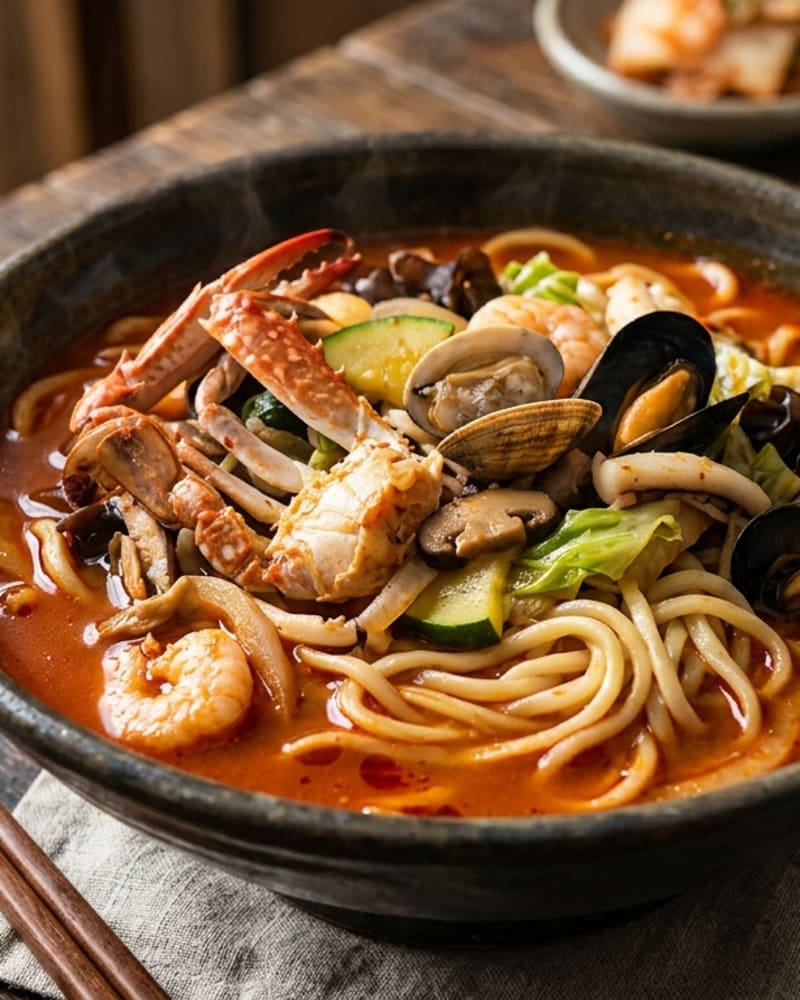
It is 9:50 on a Friday night, the fridge door is beeping at you, and what you want is a bowl with a pulse. Jjamppong arrives red, steaming and a little bit dangerous, which is the only acceptable way for a Friday to arrive, and it takes 18 minutes from the first slice to the first slurp.
Spicy seafood noodle soup, minus the restaurant wait.
This bowl comes out of Korean-Chinese cooking, and it delivers on its looks: a broth with real chili heat, noodles that soak up the color, and shrimp and squid tucked into the broth like they are showing off. The vegetables matter more than they look, because the cabbage and zucchini tend to turn sweet in the broth and take some of the edge off the heat. A bowl of jjamppong is a dinner with a bit of drama and no reservation required.
What you need
- 8 oz shrimp
- 6 oz squid
- 4 cups napa cabbage
- 1 zucchini
- 1 yellow onion
- 1 carrot
- 3 green onions
- 5 garlic
- 3 tbsp gochugaru
- 2 tbsp vegetable oil
- 2 tbsp soy sauce
- 6 cups chicken broth
- 12 oz fresh wheat noodles
- 1 tsp salt
- 1 tsp black pepper
How to make it
- Peel and devein 8 oz shrimp, slice 6 oz squid into rings, shred 4 cups napa cabbage, slice 1 zucchini into half-moons, thinly slice 1 yellow onion and 1 carrot, mince 5 garlic cloves, and cut 3 green onions into 1-inch pieces (about 10 minutes).
- Heat 2 tbsp vegetable oil in a large pot over medium-high heat. Add the onion, carrot, and garlic and stir-fry 2 minutes. Stir in 3 tbsp gochugaru and cook 30 seconds until the oil turns red.
- Add the cabbage and zucchini and toss 2 minutes. Pour in 6 cups chicken broth and 2 tbsp soy sauce. Bring to a boil.
- Add the shrimp and squid and simmer 3 to 4 minutes until the shrimp turn pink and the squid is just opaque. Season with salt and black pepper to taste.
- Meanwhile, boil 12 oz fresh wheat noodles in a separate pot according to package directions, then drain.
- Divide the noodles among four bowls, ladle the spicy seafood broth and vegetables over the top, and finish with the green onions.
Notes
Cooked leftovers keep three to four days refrigerated, per USDA FSIS. If you know you will have some left, keep the noodles and the broth in separate containers, because noodles left sitting in broth keep drinking it and end up soft and swollen.
Seafood tends to be at its best the day you cook it. On day two the broth of leftover jjamppong still tastes good, though the shrimp and squid are more likely to have turned firm, so reheat gently and only until steaming rather than leaving it at a rolling boil. We have not tested freezing this soup, and soups with seafood and noodles are not the strongest candidates, so we would eat it within a few days instead.
Some dinners you swipe right on for the looks. This jjamppong you swipe right on for the broth, and the looks are a bonus that comes free with the chili.
The gochugaru is doing the seasoning and the coloring at once, so taste before you add more salt. The soy sauce and the chicken broth are already salty, which means you may need less than you expect, and it is easier to add a pinch than to take one out.
If you are cooking for people with different heat thresholds, ladle theirs first and let your own bowl sit with a spoonful of extra gochugaru stirred through. Each person gets a version of the soup they can finish, and you get to be the brave one at the table.
Swaps that actually work
The gochugaru is the point. It is what gives jjamppong its color and its smoldering heat, and cayenne or chili flakes from the spice rack will not taste the same, since gochugaru is fruitier and a little smoky. If you must substitute, use a smaller amount of a hotter chili, taste as you go, and accept that the broth will taste a different kind of spicy.
If heat is a negotiation at your table, start with less gochugaru and add more at the end. A first date is no time to show off, and neither is a first pot. You can always turn it up in a ladle of broth, and you cannot turn it down once the whole pot has gone red.
Seafood can move. Mussels or clams make a fine addition if you have them: cook them until the shells open and discard any that stay shut. Thinly sliced white fish would also work, and it will cook through quickly. If you do not eat squid, extra shrimp keeps the bowl honest.
For the vegetables in jjamppong, green cabbage can replace napa, and bok choy, mushrooms or a handful of bean sprouts fit in without trouble. Chicken broth carries the jjamppong, and a good seafood stock would make it taste more oceanic if you can find one.
The swap that costs you the dish is the noodles. Fresh wheat noodles are springy and chewy, and dried spaghetti will change the texture so much that the bowl turns into a different dinner.
If it goes wrong
The seafood is rubbery. It simmered past the point where the shrimp turned pink. The shrimp are done when they turn pink and the squid is just opaque, and a ring that has gone tough will not soften again. Pull the pot from the heat sooner next time. If it has already gone tough, ladle the broth over the noodles and eat the seafood last, because it will not recover.
The broth is flat. Usually it wants salt or a little more soy sauce. Taste it, add a pinch of salt or a splash of soy sauce, and add a little black pepper. If it still tastes thin, let it simmer a minute or two longer to concentrate.
It is too hot to enjoy. You flirted with the gochugaru and it called your bluff. Add a ladle of hot chicken broth or water to dilute it, and serve the noodles with extra cabbage and zucchini to soak up the heat. A quarter teaspoon of sugar, stirred in and tasted before you add more, may soften the burn.
The noodles are gummy. They sat too long before they met the broth. Rinse them briefly in hot water if you can, drain well, and divide them straight into the bowls. Next time, time the noodle pot to finish just as the soup does.
What to serve with it
The default is jjamppong as it comes, with chopsticks and a spoon and nothing else needed. This is a full meal on its own.
The better version of the default is a small dish of kimchi or something pickled on the side, which gives you a sharp, cold bite between mouthfuls of hot, spicy soup. A bowl of plain rice also helps if you want something to dunk, and it takes the edge off the chili.
The thing in the fridge that lifts it is a soft-boiled egg or a few extra sliced green onions. Either one adds a layer of richness or freshness that makes the whole bowl feel more finished.
Jjamppong tends to be better as dinner than as next-day lunch, because the noodles and seafood do not love waiting around. If you are packing it for lunch, send the broth in one container and the noodles in another, and combine them at the desk.
Why this one earns its place
You do not need a plan to cook jjamppong, only a pot and an appetite for something louder than the usual Friday. It looks like effort, and it asks for about 18 minutes of your attention.
Swipe it into the week and let the agent shop it, and the cart does the remembering for you. The only thing left to decide is how brave you are with the chili.
If you like your noodle bowls with a bit of fire, budae jjigae is the other Korean pot worth putting on the list. Miso ramen is the gentler cousin for the night you want warmth without the burn, and jjajangmyeon is the Korean-Chinese favorite that sits right alongside this one.
More like this: all Korean recipes in Crave Corner.