Japchae With Chewy Glass Noodles and a Dinner-Party Look
Jump to recipe ↓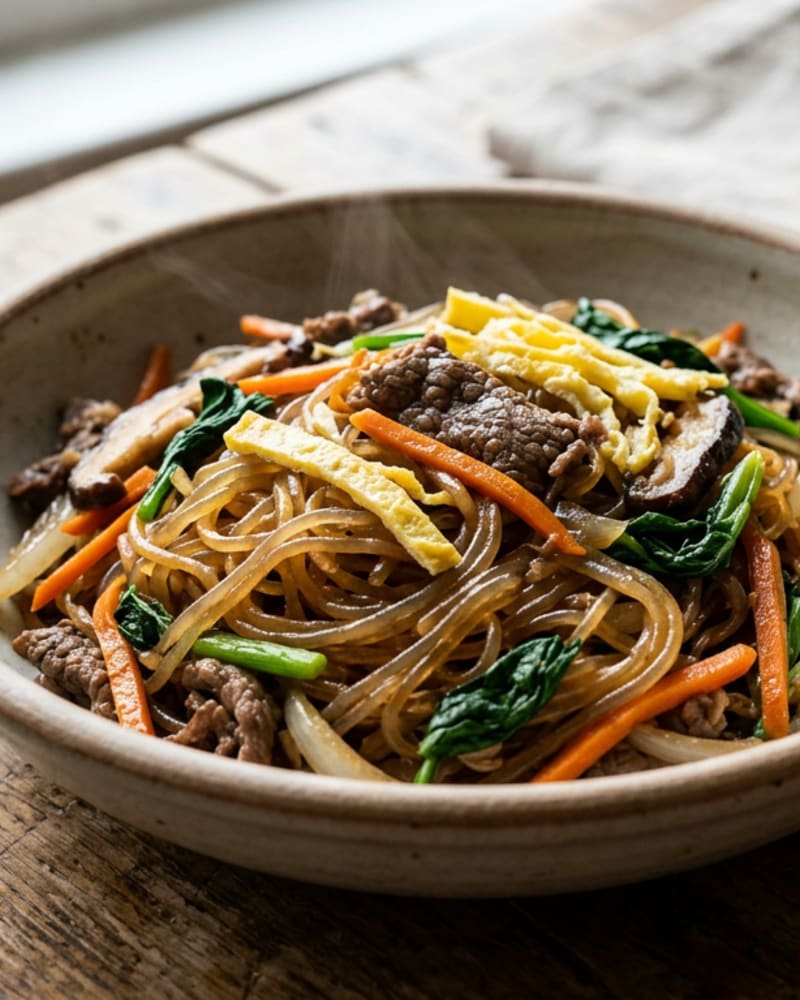
It is 6:50 on a Monday, the group chat wants to know what you are bringing on Saturday, and you want to arrive as someone who has their life together. This japchae recipe is eighteen minutes of chopping and stir-frying that looks like three hours of care. Glossy noodles, bright carrot, dark beef, and the quiet confidence of someone who did not stress about it.
Chewy noodles, thin beef, a salty-sweet gloss.
Japchae is a Korean dish of sweet potato noodles tossed with vegetables and beef. The noodles are the star: translucent, slippery and springy, nothing like wheat pasta. You boil them for six minutes, rinse them, and the rest is a quick stir-fry and a toss in soy sauce and sesame oil.
It is the kind of dish people photograph before they eat it. It is also forgiving, since it tastes good warm, at room temperature and the next day.
What you need
- 8 oz sweet potato noodles
- 6 oz beef, sliced thin
- 1 carrot, julienned
- 3 cups fresh spinach
- 3 tbsp soy sauce
- 1 tbsp sesame oil
- 1 tsp salt
- 1 tsp black pepper
How to make it
- Slice 6 oz beef into thin strips and julienne 1 medium carrot, which takes about 5 minutes.
- Cook 8 oz sweet potato noodles according to package directions for 6 minutes, then rinse and drain.
- Heat a skillet over medium-high heat and stir-fry the beef slices for 4 minutes.
- Add the julienned carrot and 3 cups fresh spinach, cooking for 3 minutes until wilted.
- Toss everything with 3 tbsp soy sauce and 1 tbsp sesame oil.
- Season with salt and black pepper to taste and serve warm.
Notes
Cooked leftovers keep three to four days refrigerated, per USDA FSIS. This japchae recipe makes a sensible batch for the week. Sweet potato noodles firm up when they are cold, so let a portion sit out for a short while before eating or warm it in a skillet with a splash of water. The microwave also works, in short bursts.
It does not freeze especially well. The noodles turn rubbery after thawing, so make a batch you plan to eat inside the week.
The order of work is short and clear. Slice the beef into thin strips and cut the carrot into matchsticks, which takes about five minutes. Boil the noodles according to the package, around six minutes, then rinse and drain. Stir-fry the beef in a hot skillet over medium-high heat for four minutes. Add the carrot and spinach for three minutes until the spinach is wilted. Toss everything with the soy sauce and sesame oil, then season with salt and black pepper.
Sweet potato noodles are slippery, so use tongs or chopsticks to toss, and keep a pair of kitchen scissors nearby. Cutting the noodles a few times makes them easier to serve.
Thin strips of beef cook in about four minutes in a hot pan, so cut into the thickest piece and check there is no pink left before you add the vegetables.
Season at the end. The soy sauce is already salty, so add salt a pinch at a time and taste.
SwipeCart cannot tell the group chat you chopped everything in five minutes, but it will put the dangmyeon, the beef and the sesame oil in one cart, and the rest stays between you and the agent.
Swaps that actually work
The sweet potato noodles are the point of any japchae recipe. They are made from starch, and few other noodles have that chew. Look for dried noodles labeled dangmyeon, usually in the Asian aisle of many grocery stores. Leave them alone, because rice noodles and wheat noodles will give you a different dish.
The beef can be swapped for thin pork, chicken or tofu. Chicken needs to reach 165°F, so slice it thin and cook it through. Firm tofu, pressed and cubed, makes a tidy vegetarian version.
The vegetables can move. Onion, mushroom and thin strips of egg are classic additions. If you add mushrooms or onion, give them a few minutes in the pan before the carrot goes in. Peppers and scallions work too.
Spinach can be swapped for another soft green, such as chard or baby kale. Spinach is quick, so if you swap it, give heartier greens an extra minute.
Sesame oil is the finishing touch. A little goes a long way, and a toasted one has more flavor than a pale one. If you only have a neutral oil, the dish will still taste fine but less rounded.
The swap that costs you the dish is overcooking the noodles. Past the package time they lose their bounce and go soft, so test one near the end.
SwipeCart angle: if you are asked to bring something to a dinner and want to be the one who gets asked back, this is a good one to swipe right on.
If it goes wrong
The noodles are mushy. They boiled too long, the kind of mistake the group chat never has to hear about. Pull them at the package time, rinse them under cold water right away, and drain well.
The noodles are clumped together. They sat before they were tossed. Add a teaspoon of sesame oil and loosen them with tongs. Next time, toss them with the soy sauce and sesame oil as soon as the stir-fry is ready.
It tastes flat. Most likely salt. The soy sauce brings some, but the noodles drink it up. Add a splash more soy, a pinch of salt and a crack of pepper, and taste again.
The beef is tough. It was cut thick or crowded in the pan. Slice thinner next time, and give the strips space so they sear instead of steam.
What to serve with it
The default is a bowl of japchae on its own. It has the noodles, protein and vegetables in it, so it is a full dish.
The better version of the default is a side of rice with a few spoonfuls of kimchi if you have it. The sour crunch cuts through the sweetness, and the rice lets you eat a larger plate.
The thing in the fridge that lifts it is toasted sesame seeds or sliced scallion on top. A squeeze of lime is not in the recipe, but it wakes up the sesame and the soy if the bowl feels heavy.
This japchae recipe works as lunch the next day, at room temperature or warmed. People tend to ask what you are eating.
Why this one earns its place
This japchae recipe costs eighteen minutes and gets you a table full of compliments. It travels well, it works for a potluck, and it fits the kind of week where you want something that feels special on a Tuesday.
If you are trying a dish with unfamiliar ingredients, how to shop for a new recipe is the one to read. Gimbap is another Korean dish that travels, and chicken lo mein is the more familiar noodle option on the same night.
More like this: all Korean recipes in Crave Corner.