Chicken Lo Mein for the Night the Delivery App Is Tempting You
Jump to recipe ↓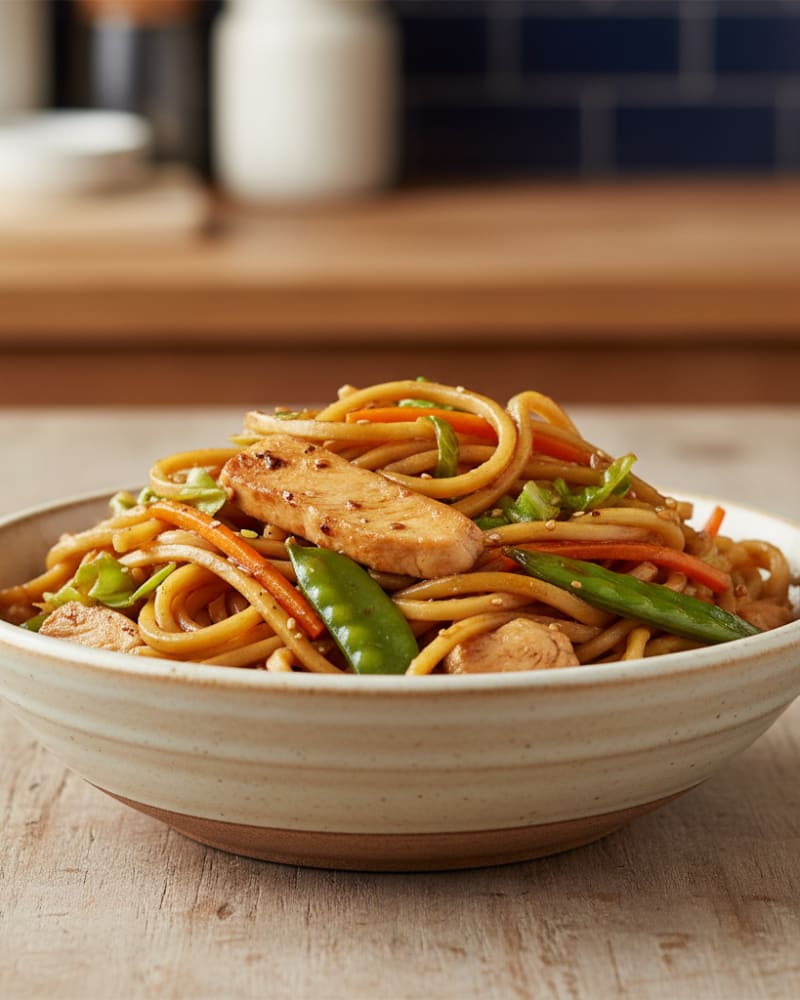
It is 6:40 on a Tuesday, the delivery app is open on your phone, and the estimated wait is longer than your patience. This chicken lo mein is about 20 minutes, and it asks less of you than the tracking map does. Swipe left on the delivery fee, right on the noodles, and let the app wonder where you went.
Takeout-style noodles, no doorbell required.
Lo mein is the soft, glossy member of the Chinese-American noodle family: noodles tossed in sauce rather than fried until crisp. The cabbage, carrots and snap peas bring a crunch that arrives in pieces instead of all at once, and the oyster sauce gives the sauce a savory backbone that soy sauce alone tends to lack. A good chicken lo mein is glossy rather than greasy, with each strand coated and nothing pooled at the bottom of the bowl. It suits a hot pan and a short attention span, and it fits neatly into the gap between a salad and a stack of takeout boxes. The whole dish is built for a weeknight brain: nothing needs marinating, nothing needs a second pan, and nothing is precious.
What you need
- 12 oz lo mein noodles
- 1 lb sliced chicken breast
- 2 cups shredded cabbage
- 2 shredded carrots
- 1 cup snap peas
- 3 tbsp soy sauce
- 2 tbsp sesame oil
- 2 tbsp oyster sauce
- 1 tsp sugar
- ½ tsp salt
- ½ tsp black pepper
How to make it
- In a small bowl whisk together 3 tbsp soy sauce, 2 tbsp oyster sauce, 1 tsp sugar, and 1 tbsp sesame oil to make the sauce, then set it aside.
- Bring a large pot of salted water to a boil and cook 12 oz lo mein noodles until tender, about 4 minutes, then drain and toss with the remaining 1 tbsp sesame oil.
- Heat a large wok or skillet over high heat and stir-fry 1 lb sliced chicken breast until cooked through and lightly browned, about 5 minutes, then remove to a plate.
- Add 2 cups shredded cabbage, 2 shredded carrots, and 1 cup snap peas to the same wok and stir-fry for 3 minutes until the vegetables are crisp-tender.
- Return the cooked chicken to the wok along with the drained noodles, pour in the prepared sauce, and toss everything over high heat for 2 minutes until evenly coated.
- Taste and add salt and black pepper as needed before serving.
Notes
Cooked leftovers keep three to four days refrigerated, per USDA FSIS. Pack the noodles and the chicken together, and reheat them in a skillet with a splash of water, which tends to wake the sauce up better than a microwave does.
Day two is a lunchbox affair, not an improvement. The cabbage and snap peas lose their snap in the fridge, and thawed noodles can turn soft, so freezing is not where this chicken lo mein shines. Plan to finish it inside the fridge window.
The sauce is just four bottles and a spoon, so it can be mixed a day ahead and kept in a jar in the fridge. Shake it before you use it, since the sugar and sesame oil settle. Chicken breast is also easier to slice thin when it is partly frozen, so a short stint in the freezer before you pick up the knife pays off.
A wok gives you more browning on the chicken, but a large skillet does the job if you keep the heat high and resist crowding it. The flat sides of a skillet also mean less sauce flung onto the backsplash, which your future self will appreciate.
Swipe this into your week and the agent shops the oyster sauce for you, which is the bottle that is easy to forget you do not own. Discovering that at 6:40 with the noodles already boiling is a special kind of heartbreak.
Swaps that actually work
Leave the oyster sauce alone. It is a large part of what separates this from noodles that merely taste of soy, and swapping in extra soy sauce usually gets you a saltier, thinner coat. A vegetarian oyster sauce made from mushrooms is the swap that holds up.
This chicken lo mein is forgiving about its supporting cast. The noodles are flexible. Fresh lo mein noodles are the target, but dried egg noodles or even spaghetti can stand in; spaghetti runs chewier and less springy, so follow the package time instead of the clock here.
Chicken thighs work in place of breast, sliced thin. They are more forgiving if you get distracted, and you still want to see them cooked through to 165°F, per USDA guidance.
For the vegetables, anything crisp that cooks in a few minutes will do: bok choy, bell pepper, small broccoli florets. The sad half-bag of something in your crisper drawer is an ex you have been avoiding, and this is a low-stakes way to see it again.
If you want more bite, minced garlic or fresh ginger fits in alongside the vegetables. Keep the pieces small and the pan moving so they perfume the noodles instead of scorching.
The swap that costs you the dish is skipping the sesame oil. It carries the toasted, nutty note people tend to expect from takeout lo mein, and without it you get plain, oily noodles.
If it goes wrong
The noodles clumped into a brick. They sat bare after draining and the starch glued them together. Splash a little hot water into the wok, add the noodles back and toss over high heat until they let go of each other, like a slow dance that finally ended.
It tastes flat. It is often salt, and sometimes the sauce was simply drowned by the vegetables. Add a pinch of salt and some black pepper at the end, then a few drops of soy sauce if it still feels shy.
The vegetables went limp and the wok is wet. The pan was crowded or not hot enough, so everything steamed instead of searing. Return the wok to high heat for a minute to drive off the moisture, and cook in a single layer next time.
It is too salty. Soy sauce and oyster sauce both bring plenty of salt, and a heavy hand shows up fast. Toss in a handful of extra cooked noodles or shredded cabbage to dilute it, add a splash of water, and squeeze a little lime over the top if you have one.
The chicken is dry. The slices were thick or stayed in the pan too long. Slice thinner against the grain next time, and let the sauce make up the difference tonight.
What to serve with it
Chicken lo mein in a wide bowl is the default, and it is a full plate, so no one will think you forgot something.
The better version is a little heat and a little crunch on top: sliced scallions, a spoonful of chili crisp, or a drizzle of sriracha. A quick cucumber salad dressed with rice vinegar gives the richness something sharp to push against.
The thing in the fridge that lifts it is a soft-boiled egg or a handful of cilantro. It packs well as a next-day lunch, and the flavors tend to settle in a good way.
Why this one earns its place
Chicken lo mein is the dependable one you can bring home: no drama, no waiting by the door, and it does not mind if you show up late. On a night when deciding is the hard part, it is a yes you can give quickly, and the cooking is short enough that you are still in a good mood when you eat it. A dinner that takes the pressure off the evening is a reasonable thing to ask of a pot of noodles.
If the nightly question is what to cook at all, what's for dinner tonight is where that thread starts. For more noodles in the rotation, hoisin garlic noodles and Panda-style chow mein sit in the same corner of the menu.
More like this: all Chinese recipes in Crave Corner.