Cooking a New Cuisine When You Don't Know the Ingredients
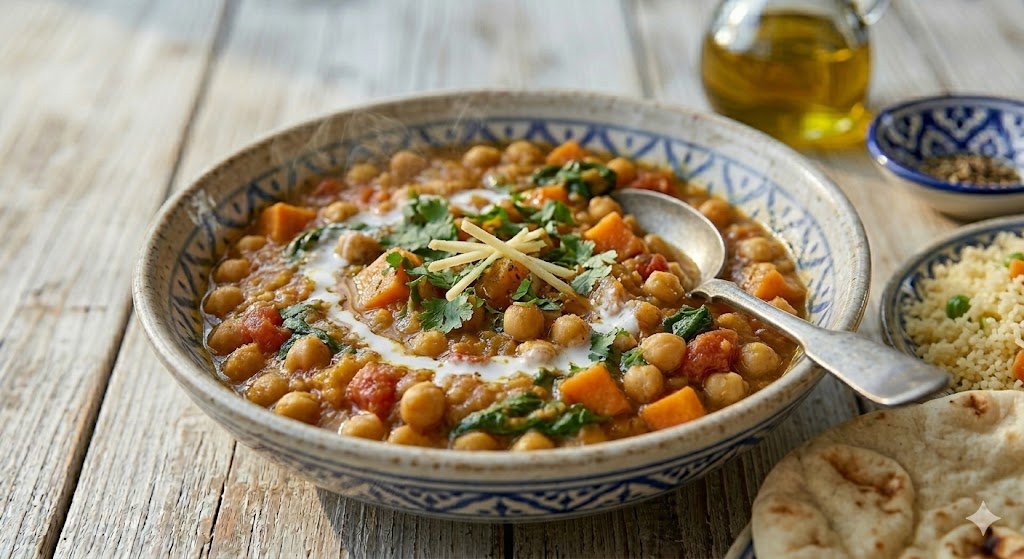
It is 11:20 on a Saturday and you are standing in an aisle you do not normally walk down, holding your phone at an angle, comparing a photograph of a jar to nine jars that all look like the photograph.
You wanted to make one nice thing. You are now doing research.
Learning how to shop for a new recipe is the actual barrier to cooking anything unfamiliar, and nobody teaches it. The recipe teaches you the cooking. The shopping you are expected to already know.
Where it goes wrong, specifically
Four failure points, and they are the same four every time regardless of which cuisine you are attempting.
The ingredient you cannot find.
It is in the world section, or the chilled cabinet nowhere near the other chilled things, or under a name the recipe did not use. You spend eleven minutes on it and either give up or buy something adjacent and hope.
The quantity you cannot judge.
The recipe says a bunch of coriander. The shop sells a pot, a bag and a growing plant. It says two tablespoons of tamarind paste and the smallest jar contains four hundred grams, which is enough tamarind for the rest of your life.
The substitution you should not have made.
Some swaps are free and some are the difference between a dish and a disappointment. Nothing tells you which is which while you are standing there, so you guess, and you find out at the stove.
The six jars.
You buy everything the recipe asks for, cook it once, and now own gochujang, tamarind, black vinegar, fish sauce, dried shrimp and a spice blend you cannot identify. Six months later they are still there, judging you quietly from the back of a cupboard.
The jar problem is the real one
That last point is worth dwelling on, because it is what actually stops people trying a second new cuisine after the first one.
The dish cost you twenty-eight dollars of pantry to make once, and it did not feel like twenty-eight dollars of pantry, it felt like an evening that went well. But somewhere in the back of your head an accounting happened, and next time the unfamiliar recipe appears you feel a small drag that you would not be able to explain.
The fix is not to buy less. It is to buy the jars for a cuisine rather than for a dish. Those six jars are three or four more meals if the next three or four meals are chosen with them in mind, and they are dead stock if the next thing you cook is Italian.
One unfamiliar dish is expensive. Four unfamiliar dishes from the same shelf is a hobby that pays for itself.
The swaps that are free
A working shortlist, and it is shorter than the internet suggests.
Shallots for onion, at a small loss of sweetness. Any neutral oil for any other neutral oil. Lime for lemon in most savoury cooking, though not in baking. Greek yoghurt for most thick dairy in a sauce that will not boil. Cornflour for potato starch in a thickening job. Most hard aged cheeses for each other in a grating context, which parmesan purists will contest and which is nonetheless true on a Tuesday.
Rice vinegar and white wine vinegar are close enough for a dressing. Dried herbs for fresh at roughly a third of the volume, but only in something that cooks, never as a finish.
The swaps that ruin it
This is the more useful list, and it is the one that never appears under the recipe.
Do not swap a fermented thing for a non-fermented thing. Miso, gochujang, doubanjiang, fish sauce and tamarind are not seasonings, they are the load-bearing wall. Soy sauce is not a substitute for fish sauce. Sriracha is not a substitute for gochujang. Tomato paste is not a substitute for anything with a history.
Do not swap the acid. A dish built on tamarind and one built on vinegar taste like different countries, because they are.
Do not swap the rice. Long grain will not become risotto, and no amount of stirring changes that.
And do not swap the thing named in the title. If it says gochujang stew, the gochujang is not an ingredient, it is the subject.
Substitute the supporting cast. Never substitute the reason the dish exists.
How to actually do it
Practically, three things make an unfamiliar shop go well.
Read the whole recipe in the shop, not at home. Half the problems are quantities you would have caught with thirty seconds of reading, and the other half are ingredients that appear only in step nine.
Buy the small jar even where the large one is better value, the first time. If the dish becomes a repeat, buy the big one on the second attempt. You are paying a premium for optionality and it is worth it.
And plan the second meal before you cook the first. Pick the follow-up dish while the jars are still in the bag, not six months later when you are looking at them with resentment. This is one of the highest-return habits available to a home cook and almost nobody does it, because it requires deciding twice in one sitting, which is exactly the thing everyone has run out of.
What this looks like when the shopping is handled
SwipeCart is built for this gap, so read it as intent rather than a neutral survey. You swipe through dinners, crave right and pass left, including things you have never cooked, because a photograph of a dish is a far better prompt than a cuisine you feel underqualified for.
What you keep lands in a cart, and every ingredient gets matched to a real product at the Kroger or Walmart you actually shop at, in the right size, priced, with the running total moving while you swipe. The aisle you do not know how to walk down stops being a problem you have to solve on foot. Then an agent shops the cart and checks out once you have approved it, swaps included.
And because the deciding happens in a swipe rather than a search, the second dish from the same shelf is a thing you can line up in about four seconds, which is how the six jars stop being a mistake. If the wider version of the shopping gap interests you, we broke it down end to end, and the cupboard graveyard has its own post.
Nobody is bad at cooking unfamiliar food. They are bad at shopping for it, and they were never taught, and it is the part nobody writes down.