Doenjang Jjigae With Clams, Tofu and a Broth That Tastes Like It Took Hours
Jump to recipe ↓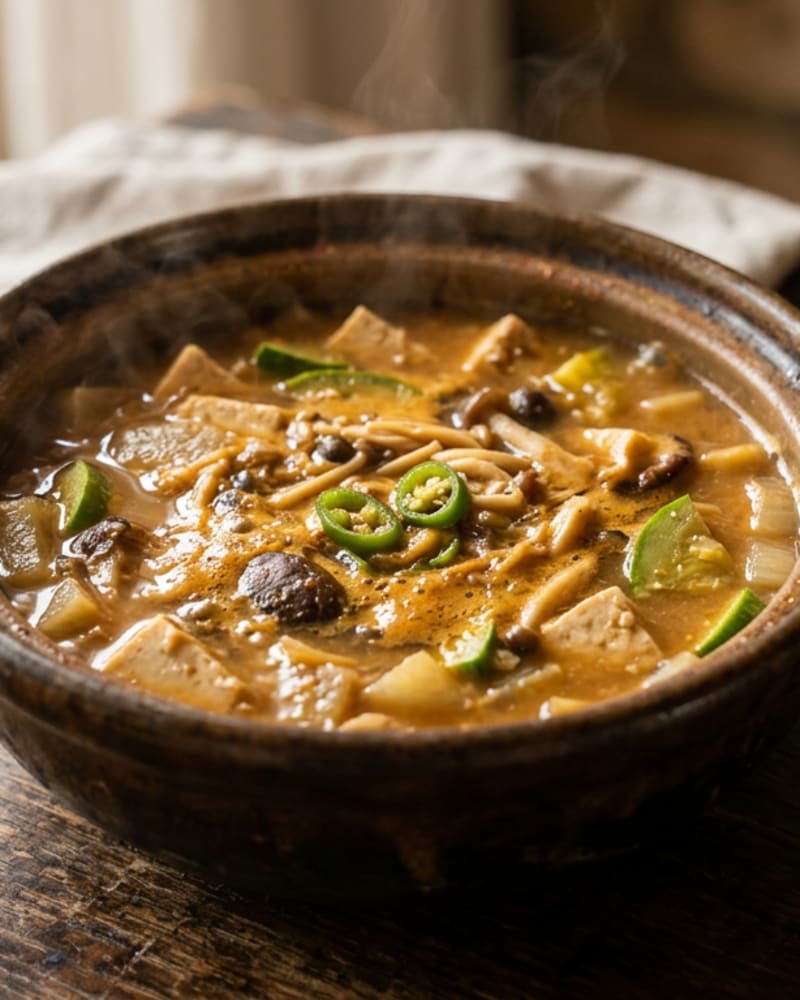
It is 7:48 on a Tuesday, the rice cooker has clicked over to warm, and you want dinner that smells like you have your life together. This doenjang jjigae recipe gets a bubbling pot of soybean paste stew to the table in about 21 minutes, and the pot does most of the flirting for you.
Salty, funky, and a little bit smug: this is the stew that makes plain rice look underdressed.
Doenjang is fermented soybean paste, and stirred into simmering anchovy stock it turns into a broth with the depth of something that cooked all afternoon. Tofu, zucchini and onion go in to soften, clams go in for the last few minutes, and that is the whole plot. One pot, one ladle, and a bowl of rice on the side to catch what the spoon misses.
What you need
- 14 oz tofu, cubed
- 32 fl oz anchovy stock
- 1½ oz doenjang
- 1 zucchini, sliced
- 1 yellow onion, sliced
- 16 oz clams
- 1 tsp salt
- 1 tsp black pepper
How to make it
- Slice the 1 yellow onion and 1 zucchini into thin half moons, about 5 minutes of prep work.
- Cut the 1 block tofu into 1 inch cubes.
- Bring the 4 cups anchovy stock to a simmer in a pot over medium heat for 5 minutes.
- Stir the 3 tbsp doenjang into the simmering stock until fully dissolved.
- Add the sliced onion, zucchini, and tofu cubes to the pot.
- Simmer the stew for 8 minutes until the vegetables soften.
- Add the 1 pound clams and cook 3 more minutes until the clams open.
- Season with salt and black pepper to taste, then ladle into bowls.
Notes
The stock is the first move in any good doenjang jjigae recipe. You bring it to a simmer before the doenjang goes in, and you stir until the paste dissolves completely, with no little clumps hiding at the bottom. A smooth broth is what separates a stew that tastes deep from one that tastes gritty.
Doenjang varies from tub to tub in how salty it runs, which is why the salt and pepper wait until the end. Taste once the clams have opened, then decide. Swipe right on this stew in SwipeCart and the agent puts the doenjang in the cart for you, so you skip the squinting-at-labels part of the international aisle.
Leftovers keep three to four days in the fridge, per USDA FSIS. Reheat gently, and eat the clam-heavy bowls first, because clams turn rubbery the longer they sit and get warmed again. The broth itself settles and tastes rounder the next day. Freezing is not a great fit here: tofu changes texture once frozen and thawed, so if you want to stock the freezer, make the stew without the tofu and the clams.
Any clam that stays shut after the full cooking time should go in the bin rather than get pried open.
Swaps that actually work
The doenjang is the point. Leave it alone, and if you can only find one tub, buy that one rather than reaching for miso as a stand-in, because miso tends to be sweeter and milder and you will be making a different soup.
Everything else in this doenjang jjigae recipe can move. Firm tofu holds its cubes the best, while softer tofu gives you a looser, more spoonable stew that breaks apart a little in the pot. If you prefer, swap the clams for mussels, which open in a similar way and give the broth a similar briny edge. No zucchini on hand? A handful of sliced mushrooms or a potato cut thin slots into the same place in the pot, though a potato will want extra simmering time, so add it with the onion at the start.
Want some heat? Slice a green chili over the top at the end. It looks good, it wakes up the broth, and it does not change the method.
If you do not have anchovy stock, plain water will make a thinner, quieter stew. The swap that costs you the dish is skipping the stock entirely and expecting the paste to carry the whole bowl alone.
If it goes wrong
The broth is gritty or lumpy. The doenjang was not dissolved before the vegetables went in. Fish out a ladleful of hot broth, mash the stubborn clumps against the side of a bowl with a spoon until smooth, then stir it back into the pot.
It tastes harshly salty. Too much paste for the amount of stock, or salt added before tasting. Add a splash of hot water and let it simmer for another minute, and add a few more tofu cubes to soak up the salt.
The clams are tough and chewy. They cooked too long after opening. Next time pull the pot off the heat as soon as the shells have popped, and serve right away. In the pot you are looking at now, there is no fix for the clams, but a spoonful of the broth over rice makes up for most of it.
The vegetables are mushy or the tofu has crumbled. The simmer was too hard. Keep it at a steady, gentle bubble, and stir only enough to move the pieces around, not to break them.
What to serve with it
Rice is the first answer, and a bowl of it per person so you can spoon broth over each bite. If you want to dress the table up, add kimchi and a few simple banchan from the fridge, such as sliced cucumbers dressed in a little vinegar or a pile of steamed greens.
The next-level version is a fried egg slid onto the rice, runny yolk and all, which takes the whole meal from a decent Tuesday to a flex.
This stew also works as lunch the next day, as long as you reheat it gently and add a fresh squeeze of patience. It is a good one for dinner for two: a single pot in the middle of the table, two spoons, and no debate about who does the dishes.
Why this one earns its place
Some dinners ask you to impress them. This one asks you to bring a pot to a simmer, drop in a few things you can slice while the stock heats, and then ladle. It is the dish you make when the plan fell over and you still want to feel like someone with taste.
It also rewards you for committing to the doenjang jjigae recipe more than once. One tub of doenjang will make this stew again and again, and every time the broth gets a little more yours. Think of it as the fridge-door relationship that actually works out.
Swipe it into your week and the agent shops the rest. If you want more soup to keep the momentum going, Budae Jjigae is the loud, party-night cousin, Miso Ramen is another bowl built on fermented paste, and what's for dinner tonight has more ways to end the nightly guessing game.
More like this: all Korean recipes in Crave Corner.