Chicken Nanban With Tartar Sauce That Steals the Whole Plate
Jump to recipe ↓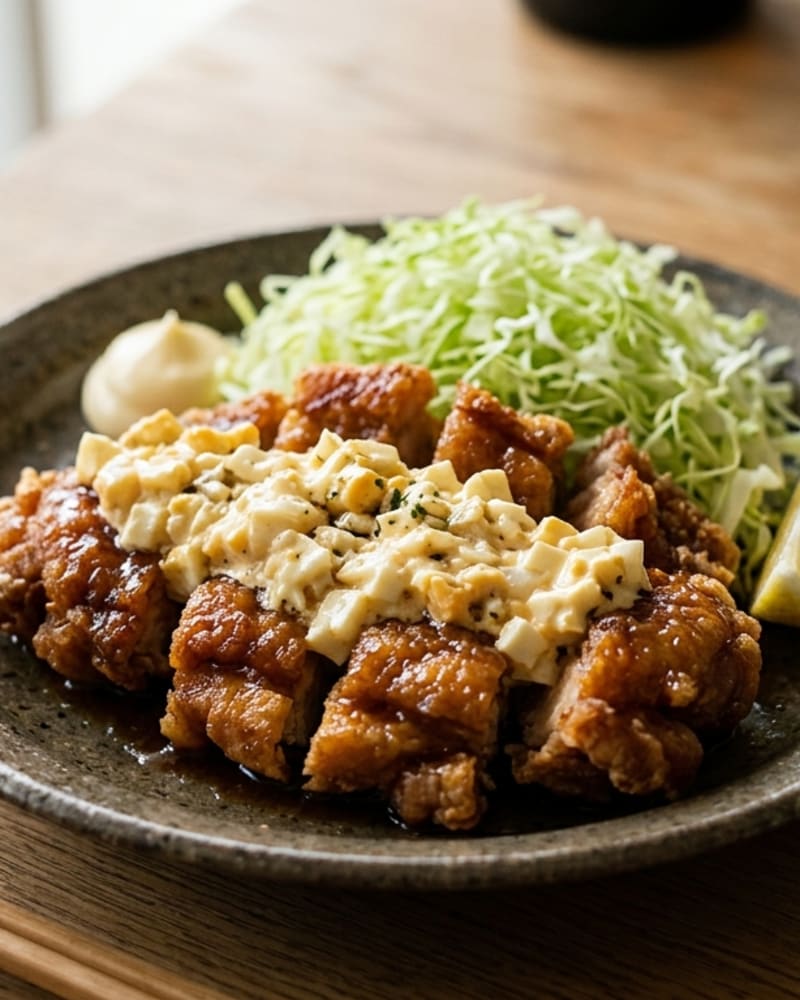
It is 7:20 on a Wednesday, and the chicken in the oven is about to meet its plus-one. This chicken nanban is about 42 minutes, and the tartar sauce is the plus-one you were not warned about, the one that steals the room. A frozen breaded shortcut handles the crunch, and the sauces handle the seduction.
Crunch, glaze and a spoonful of tartar: the date that talks over dinner.
Chicken nanban is widely associated with Miyazaki on the Japanese island of Kyushu, where fried chicken gets dunked in a sweet-sour sauce and topped with a chunky egg tartar. The sweet, tangy glaze and the cool, creamy sauce pull in opposite directions, and the crisp chicken sits between them like a referee who enjoys the argument.
What you need
- 24 oz frozen breaded chicken breasts
- 4 microwavable short-grain rice pouches
- ½ cup mayonnaise
- 2 eggs
- ¼ cup dill pickle
- ¼ yellow onion
- 3 tbsp soy sauce
- 3 tbsp rice vinegar
- 2 tbsp granulated sugar
- 2 tbsp mirin
- 2 cups green cabbage
- 1 tbsp vegetable oil
- 1 tsp salt
- 1 tsp black pepper
How to make it
- Dice 1/4 cup dill pickle and mince 1/4 yellow onion, then shred 2 cups green cabbage, about 5 to 8 minutes of prep.
- Place 2 eggs in a small saucepan, cover with water, bring to a boil, cook 9 minutes, then cool under cold water, peel, and finely chop.
- Stir together 1/2 cup mayonnaise, the chopped eggs, 1/4 cup diced dill pickle, and the minced onion. Season the tartar with salt and black pepper to taste, then chill.
- In a small bowl whisk 3 tbsp soy sauce, 3 tbsp rice vinegar, 2 tbsp granulated sugar, and 2 tbsp mirin until the sugar dissolves for the nanban sauce.
- Bake the 24 oz frozen breaded chicken breasts on a sheet pan according to package directions, usually about 20 to 25 minutes at 400 F, until crisp and hot in the center.
- While the chicken cooks, heat the 4 microwavable short-grain rice pouches as directed on the package, about 90 seconds each, and keep warm.
- Toss the hot chicken pieces in the nanban sauce so each piece gets a glossy coat, working quickly so the breading stays crisp.
- Plate the warm rice with shredded cabbage alongside, top with sauced chicken, and spoon generous tartar over each serving.
Notes
Cooked leftovers keep three to four days refrigerated, per USDA FSIS. Store the tartar in its own container, the chicken in another and the rice in a third, since the breading softens if anything wet touches it.
Chicken nanban is not a big freezer dish. Tartar sauces made with mayonnaise and chopped egg may separate or turn watery, so skip freezing that part. Reheat leftover chicken on a sheet pan in a hot oven or in an air fryer instead of the microwave, which tends to leave breading limp.
Plan the evening around the tartar, which is the part with a waiting period. The tartar benefits from a little chilling time. If you have a spare half hour, make it first and let it sit, and it settles into something more cohesive and less like three ingredients standing near each other.
Frozen breaded chicken varies from brand to brand in thickness and crumb, so read the package before you commit to a timing. Thicker pieces may need the long end of the range, and a quick cut into the biggest one tells you whether the center is hot.
Swipe this into the week and the agent shops the mirin and rice vinegar, which are the two bottles most likely to be missing from a pantry. The rest is mostly staples.
Swaps that actually work
The nanban sauce is the point, so leave the balance alone: soy sauce for salt, rice vinegar for tang, sugar and mirin for the glossy sweetness. If you shift one, you tend to pull the whole thing off center.
Homemade fried or oven-baked chicken thighs work in place of the frozen breaded breasts, and many cooks prefer thighs for their juiciness. Whatever you use, you want the pieces cooked through to 165°F, per USDA guidance.
If you do not have microwavable rice pouches, short-grain rice cooked on the stove or in a rice cooker is the more traditional route. Japanese-style mayonnaise, if you can find it, tends to be richer and tangier and suits the tartar well.
Shredded cabbage can swap for thinly sliced lettuce if that is what you have, though cabbage holds its crunch longer under warm chicken. Capers or cornichons can stand in for dill pickle, and a sliced scallion can replace the minced onion. Swap the mayonnaise for something lighter and you get a different, sadder date.
If you want a little heat, a pinch of chili flakes or a few drops of hot sauce stirred into the tartar goes a long way without changing the character of the dish. Keep it modest, because the sauce is meant to be tangy, and the tartar is there to cool things down.
If it goes wrong
The breading went soggy. The chicken sat in the sauce too long or cooled before it was tossed. Slide it back onto a sheet pan in a hot oven for a few minutes to re-crisp, then dress it at the very last second. Chicken nanban punishes dawdling and rewards punctuality, like many first dates.
The tartar is thin or watery. The eggs went in warm or the pickle was wet. Chill it, drain the pickles on a paper towel next time, and stir in a little more mayonnaise if it still looks loose.
The rice is hard or dry. The pouch went in for too long or sat uncovered while the chicken finished. Sprinkle a few drops of water over it, cover loosely, and warm it for a few seconds, or fluff it with a fork so the steam redistributes.
The sauce tastes too sharp. The vinegar can dominate if the sugar did not fully dissolve. Whisk it again until the grains are gone, and add a splash more mirin to round the edge.
The chicken is pale or cold in the middle. The pan was crowded, or the pieces were thick. Return it to the oven until it is hot through and reaches 165°F, then sauce it.
What to serve with it
The default with chicken nanban is warm rice and shredded cabbage on the side, which soak up the sauce and give the richness somewhere to rest.
The better version of the default is the cabbage dressed with a splash of rice vinegar and a pinch of salt, which keeps it crisp and sharp against the tartar.
The thing in the fridge that lifts it is a lemon wedge or a few pickled ginger slices. Leftovers work as a next-day lunch, with the tartar and sauce kept apart until you are ready to eat. A bowl of miso soup alongside turns it into a fuller meal without much more work.
Why this one earns its place
Chicken nanban is a dish with two personalities and one job, which is a fair description of most of your better dinner dates. It makes a freezer-aisle shortcut feel like a plan, and it gives a Wednesday some personality. You get crunch, tang, richness and a bit of cool crunch from the cabbage, all on one plate, with very little standing at the stove. That is a good return on forty-odd minutes.
If you like crisp chicken with a Japanese accent, chicken karaage and pork tonkatsu are close relatives. And when the question is simply what to cook this week, quick weeknight dinner ideas is where to keep browsing.
More like this: all Japanese recipes in Crave Corner.