Chicken Karaage With a Crisp Shell and Juicy, Garlicky Thighs
Jump to recipe ↓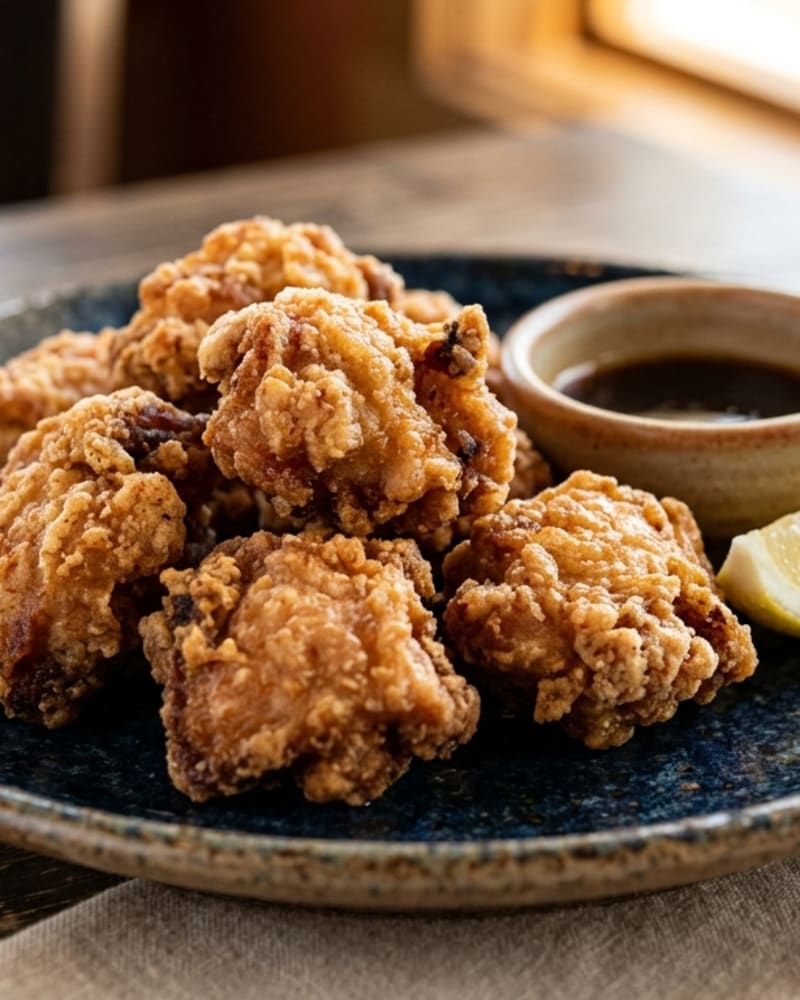
It is 8:05 on a Wednesday, the rice is steaming, and the kitchen smells of soy, ginger and garlic. This chicken karaage takes about 44 minutes from the first rinse of rice to the first squeeze of lemon, and the bites are juicy under a crisp, craggy coat. Serve it to someone you like and watch them pretend to be polite about the last piece.
A 15-minute soy and ginger marinade, a dusting of potato starch, and oil at 350°F: three small moves, one very good bite.
The lemon wedge cuts through the richness, and you end up with a bowl that looks like it came from a counter you would queue for.
What you need
- 1½ lb chicken thigh
- 3 tbsp soy sauce
- 2 tbsp mirin
- 1 tbsp fresh ginger
- 3 garlic
- 1 tsp sesame oil
- ¾ cup potato starch
- 2 cups vegetable oil
- 1 lemon
- 2 cups short-grain rice
- ½ tsp salt
- ¼ tsp black pepper
How to make it
- Rinse 2 cups short-grain rice and cook according to package directions, about 20 minutes, then keep warm.
- Mince 3 garlic cloves and grate 1 tbsp fresh ginger, about 3 minutes. Cut 1.5 lb chicken thigh into 1.5-inch bite-size pieces.
- In a bowl, mix the chicken with 3 tbsp soy sauce, 2 tbsp mirin, the minced garlic, grated ginger, 1 tsp sesame oil, and salt and black pepper to taste. Marinate 15 minutes.
- Toss the marinated chicken in ¾ cup potato starch until every piece is well coated.
- Heat 2 cups vegetable oil in a deep skillet or pot to 350 F over medium-high heat.
- Fry the chicken in batches for 5 to 6 minutes until deep golden and cooked through, turning once. Drain on a rack.
- Cut 1 lemon into wedges. Serve the karaage over the rice with lemon wedges on the side for squeezing.
Notes
Cooked leftovers keep three to four days refrigerated, per USDA FSIS. Chicken karaage is at its crispest the minute it comes off the rack, and the next day it is a different, still good thing: cold in a rice bowl, or warmed in a hot oven or skillet to bring some of the crunch back. A fried coating is unlikely to survive a freezer trip, so cook what you plan to eat.
The marinade is salty, and 15 minutes is plenty. Leaving the chicken in longer pushes the soy deeper than you want, and the pieces can come out seasoned more heavily than the rice can balance.
For chicken karaage that cooks evenly, cut the thighs into pieces of about 1.5 inches, and keep them close in size. Even pieces finish together, which matters because a deep fry gives you very little time to rescue a late bit. USDA lists 165°F as the safe minimum for poultry, and the first batch is the time to cut one open and check.
Let the excess marinade drip off before the starch goes on, then press the pieces into the potato starch until every surface is coated. A dripping piece tends to grab the starch in clumps, while a slightly drained one takes it evenly and fries into the craggy shell you want.
This is the kind of card you swipe right on without a second look. The agent brings thighs, potato starch and a lemon, and the only decision left is whether you share.
Swaps that actually work
The thighs and the soy, ginger and garlic marinade are the point. Leave those alone. Thigh meat stays juicy through a hot fry, and the marinade is what makes it chicken karaage and not plain fried chicken.
Breast works if it is what you have, cut to the same size. It runs drier, so watch the clock closely, and cook it to 165°F.
Cornstarch can stand in for potato starch. It is the dependable backup date: a touch less light on its feet, but it shows up and it still fries crisp. Do not swap in plain flour, which turns the shell thick and bready.
If you are out of mirin, a small pinch of sugar stirred into the soy sauce gets you part of the way, with a little water to loosen it. Skip the sesame oil if you must, since a teaspoon is a background note. Any short or medium grain rice you have works for the base, cooked by the package directions.
The swap that costs you the dish is garlic powder and ground ginger in place of fresh. The fresh versions give the marinade its bright, sharp edge, and the powders can taste flat and dusty.
If it goes wrong
The coating is pale and greasy. The oil was too cool, or too many pieces went in at once. Raise the heat, let the oil recover to 350°F, and fry the rest in smaller batches. Hot oil, like most good things, does not like to be rushed or crowded. For the pieces already done, a couple of minutes in a hot oven helps.
The starch clumped or slid off. The chicken was too wet when it went into the starch. Next time, let the marinade drip off first and press the starch on firmly. For this batch, shake the loose coat off and let the pieces fry as they are.
The outside is dark but the inside is pink. The pieces were too large, or the oil ran too hot. Lower the heat a notch and return the pieces for a minute or two, until a cut piece is no longer pink and reads 165°F.
It is too salty. The marinade ran long, or the soy was heavy. A squeeze of lemon and a good mound of plain rice pull it back, and a shorter soak next time keeps it from happening again.
What to serve with it
The default is what the recipe already gives you: karaage over short-grain rice with a lemon wedge on the side, which is a full dinner.
The better version of the default is a heap of thinly shredded cabbage with lemon and a pinch of salt on the side. The cool crunch is the right foil for something this rich.
The thing in the fridge that lifts it is mayonnaise stirred with a little lemon juice, as a dip. It takes thirty seconds.
On a night for two, put a pile of it in the middle and eat with your fingers. It is finger food, and no knife is required, and it puts the two of you on a more honest footing.
Day-after lunch is cold karaage over reheated rice, with the lemon wedge squeezed on at the last second.
Why this one earns its place
This chicken karaage gives you the fried-chicken craving with a better story: a quick marinade, a coat that crackles, and a wedge of lemon to tidy up the richness. It uses one deep skillet and a rack, and the rice is cooking while you work.
It is also a dish for the nights when you want to impress someone without trying visibly hard. For more dinner ideas for two, meal planning for couples is the place to start. If you want to stay in a Japanese mood, the gyoza is a good companion, and the Korean beef bulgogi bowls are another rice-bowl dinner in the same spirit.
More like this: all Japanese recipes in Crave Corner.