Andong Jjimdak With Sticky Glass Noodles, Served Straight From the Pot
Jump to recipe ↓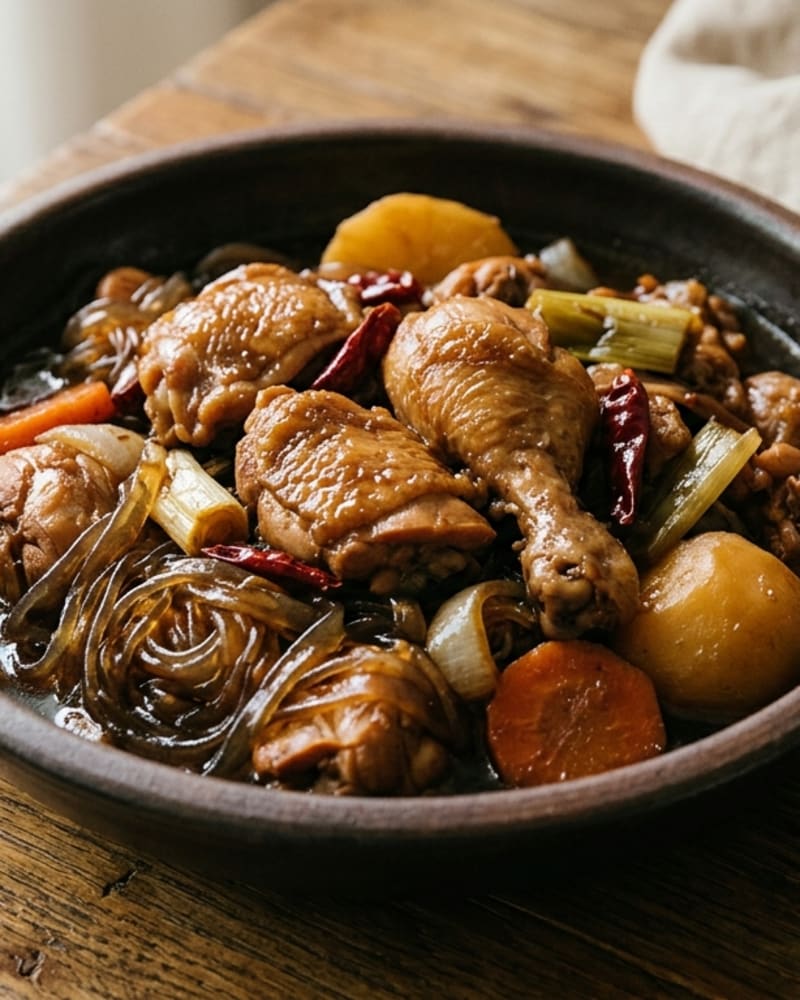
It is 6:45 on a Sunday evening and a wide pot is bubbling on the stove, shiny and dark, with the lid rattling like it has opinions. This andong jjimdak recipe is sweet, a little spicy and gloriously clingy, which is more than you can say for most people, and it gets better the longer it stays close.
Braised chicken, potatoes and glass noodles in one pot, served straight from it.
Andong jjimdak is a Korean braise named for the city of Andong. Chunks of chicken thigh simmer with potato, carrot, onion and shiitake in a soy, brown sugar and gochugaru sauce, then the noodles go in at the end and soak up whatever is left. It takes 55 minutes, and there is no good reason to dirty a serving dish.
What you need
- 2 lb chicken thighs
- 6 oz sweet potato noodles
- 1 yellow onion
- 2 carrot
- 2 potato
- 4 oz shiitake mushrooms
- 3 green onion
- 6 garlic
- ½ cup soy sauce
- 3 tbsp brown sugar
- 1 tbsp gochugaru
- 1 tbsp sesame oil
- 1 tsp sesame seeds
- 1 tbsp vegetable oil
- 1 tsp black pepper
How to make it
- Cut 2 lb chicken thighs into large chunks. Slice 1 yellow onion, cut 2 carrots and 2 potatoes into chunks, halve 4 oz shiitake mushrooms, mince 6 garlic cloves, and cut 3 green onions into 2-inch pieces (about 10 minutes).
- Soak 6 oz sweet potato noodles in warm water for 15 minutes while you start the braise, then drain.
- Whisk together ½ cup soy sauce, 3 tbsp brown sugar, 1 tbsp gochugaru, the minced garlic, 1 tbsp sesame oil, and black pepper to taste.
- Heat 1 tbsp vegetable oil in a wide heavy pot over medium-high heat. Brown the chicken pieces for 4 to 5 minutes, turning once.
- Add the onion, carrot, potato, and mushrooms. Pour the sauce over everything with 1.5 cups water, bring to a boil, then lower to a steady simmer. Cover and cook 15 minutes.
- Stir in the drained noodles and green onions. Simmer uncovered another 8 to 10 minutes, tossing often, until the noodles are chewy and the sauce is sticky and glossy.
- Finish with 1 tsp sesame seeds and serve family-style straight from the pot.
Notes
Cooked leftovers keep three to four days refrigerated, per USDA FSIS. The noodles keep drinking the sauce as it sits, so leftovers are thicker and stickier than the first night. Warm them in a pan with a splash of water to loosen things up.
This andong jjimdak recipe holds its flavor well into day two, because the chicken and potato have had longer with the sauce. The noodles soften further and the sauce tightens, so think of it as a different texture rather than a worse one.
Soak the noodles first, as the method says. The sweet potato noodles go in warm water for 15 minutes while you start the braise, then get drained. Do not skip that step and add them dry, because they will pull the liquid out of the pot before they soften.
Brown the chicken properly. The method gives it 4 to 5 minutes in hot oil, turning once, and you are looking for color on the outside rather than cooked-through meat, because the braise finishes the job. That color is a big part of why the sauce ends up glossy and deep instead of thin.
Chicken is safe to eat at 165 F internal temperature, per USDA. After the covered simmer and the uncovered finish, the thighs will be well cooked, and a thermometer in the thickest chunk is a quick way to be sure.
The last stretch is the part worth your attention. After the noodles and green onions go in, you simmer uncovered for 8 to 10 minutes, tossing often. You are done when the noodles are chewy and the sauce looks sticky and glossy, clinging to the chicken instead of pooling at the bottom. Toss often so the noodles do not clump or catch on the pot.
Cut the vegetables into large, even chunks. Small pieces of potato and carrot will fall apart before the chicken is tender, while chunky pieces hold their shape through the covered 15 minutes and the uncovered finish.
Swaps that actually work
The chicken thighs and the soy-sugar-gochugaru sauce are the point of any andong jjimdak recipe. Thighs stay juicy through a long simmer, and the sauce is the whole personality of the dish, so swap around them rather than through them.
The heat is gentle at one tablespoon of gochugaru. If you want it spicier, add a little more gochugaru, or put some chili flakes on the table and let each person decide. If you want it milder, use less and the dish stays sweet and savory, which is the point of it.
Vegetables are the flexible part. Sweet potato in place of regular potato works, and so does more mushroom in place of carrot, or a handful of cabbage if the fridge needs clearing out. Keep the pieces large so they last through the braise.
The glass noodles are sweet potato noodles, chewy once soaked and simmered. If you cannot find them, any other thin starch noodle is a fair stand-in, though the texture will be different, so check the package for soaking instructions rather than guessing.
The swap that costs you the dish is the noodles. Without them you have a soy-braised chicken and potato dish, which is nice, but the sticky, chewy tangle at the bottom of the pot is the best part.
If it goes wrong
The sauce is thin and watery. It needs more time uncovered. Keep simmering over a steady heat, tossing, until it clings to the chicken and noodles. If your pot is very wide, the sauce will reduce faster, so keep an eye on it.
The noodles are mushy or clumped together. They went in too early, or they were left alone too long. Toss them often once they are in the pot, and add them only for the final stretch the method describes.
The potatoes are hard in the middle. The simmer was too gentle or the lid came off early. Cover the pot again for a few minutes with a splash of water, then finish uncovered, and cut the chunks a little smaller next time.
It tastes flat. Check the salt first, which in this dish comes from the soy sauce. If it needs more, add a splash of soy. If it needs brightness, a few sesame seeds and the green onion scattered over the top will help more than you would expect.
What to serve with it
With an andong jjimdak recipe like this, the default is a bowl of plain steamed rice. The glossy sauce on rice is a good reason to keep the pot close.
The better version of the default is rice with something cold and crisp on the side: kimchi, quick-pickled cucumber, or a simple salad of sliced cucumber and vinegar. The braise is sweet, salty and rich, and a sharp, crunchy bite cuts through it.
The thing in the fridge that lifts it is a few sliced green onions on top and a little extra sesame oil drizzled over at the end.
It works as lunch the next day, especially if you warm it with a splash of water.
Why this one earns its place
A pot in the middle of the table changes the mood of dinner. There are no separate plates to coordinate and no one to wait for. Each person reaches in, pulling out chicken, noodles and potatoes, and the conversation gets looser. It is a dish for people you are comfortable with, or for people you are about to become comfortable with.
This andong jjimdak recipe asks very little of you: one pot, one cutting board, and a stretch where the pot does the work. If you swipe it into your week, SwipeCart's agent can shop the cart, and you can spend your evening smelling the garlic and soy instead of hunting for ingredients.
If you like noodles in a sticky sauce, drunken noodles takes a very different route to the same craving. For a more soothing bowl on a cold night, chicken noodle soup is the classic. And when a one-pot dinner needs a plan, weekly meal planning is how you make a Sunday like this one repeatable.
More like this: all Korean recipes in Crave Corner.