Beef Sukiyaki, the One-Pot Simmer That Does the Wooing for You
Jump to recipe ↓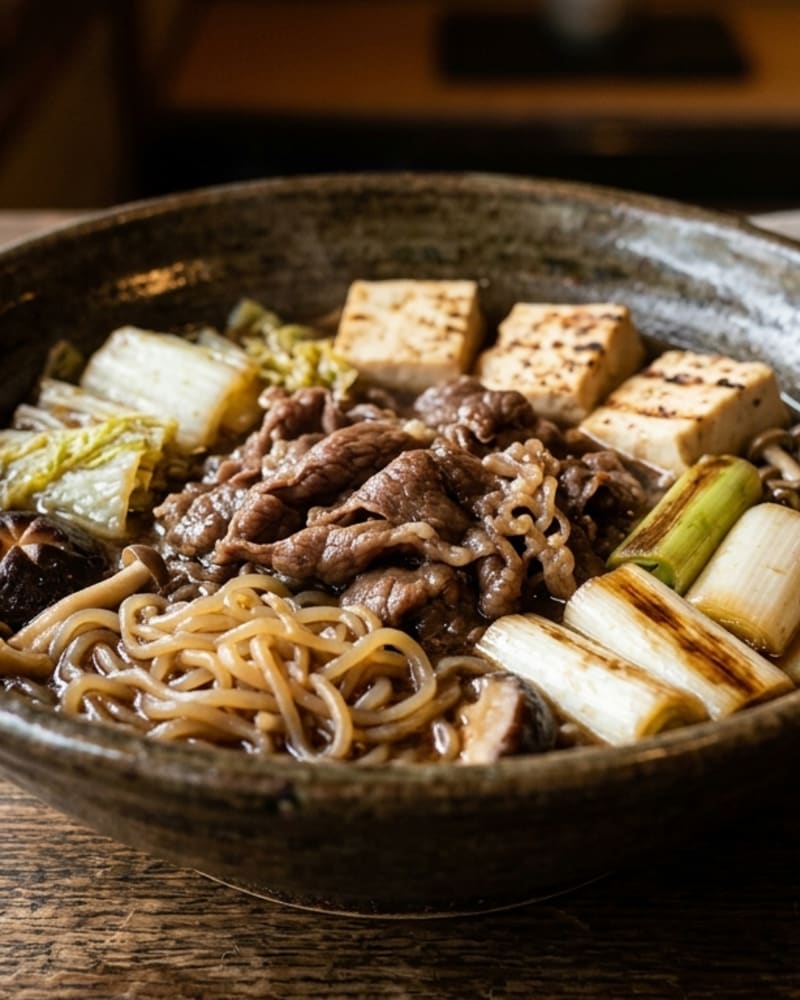
It is 7:05 on a Friday and the day has taken enough of you already. Beef sukiyaki lets you set one wide pot in the middle of the table, be on the table in about 24 minutes, and look like the person who plans a thoughtful dinner for two (or four) on purpose, and we will not mention you started at 7:05.
One pot, a sweet soy broth, and a spoon that does all the talking.
Sukiyaki is a Japanese dish of thin beef and vegetables simmered in a sauce of soy, mirin and sugar. Here the sauce is whisked in a bowl first, the beef gets a quick sear, and the cabbage, mushrooms, tofu and green onions go in around it. Eight to ten minutes later everything is tender and glossy, and the rice is ready for the ladle.
What you need
- 1.25 lb ribeye steak
- 4 cups napa cabbage
- 6 oz shiitake mushrooms
- 14 oz firm tofu
- 4 green onion
- 1/3 cup 0.33 cups soy sauce
- 1/3 cup 0.33 cups mirin
- 3 tbsp sugar
- 1 cup beef broth
- 1½ cups short-grain rice
- 4 egg
- 1 tbsp vegetable oil
- 1 tsp salt
- 1 tsp black pepper
How to make it
- Thinly slice 1.25 lb ribeye steak, chop 4 cups napa cabbage, stem and slice 6 oz shiitake mushrooms, cube 14 oz firm tofu, and cut 4 green onions into 2-inch pieces, about 12 minutes.
- Rinse 1.5 cups short-grain rice and cook according to package directions until sticky and tender.
- Whisk 1/3 cup soy sauce, 1/3 cup mirin, 3 tbsp sugar, and 1 cup beef broth in a bowl until the sugar dissolves.
- Heat 1 tbsp vegetable oil in a wide shallow pot or deep skillet over medium heat and quickly sear the beef slices for 1 to 2 minutes, then push to the side.
- Add the napa cabbage, shiitake mushrooms, tofu, and green onions around the pot, pour in the sauce, and simmer gently for 8 to 10 minutes until the vegetables wilt and the tofu is heated through.
- Season lightly with salt and black pepper if needed.
- Crack 1 egg into each serving bowl if desired, ladle hot sukiyaki over it so the egg softly cooks, and serve with the short-grain rice.
Notes
Cooked leftovers keep three to four days refrigerated, per USDA FSIS. Store the rice separately from the beef sukiyaki so neither goes soggy, and reheat the pot gently on the stove rather than boiling it, which tightens the beef.
It does not freeze well. Napa cabbage and tofu both turn watery and spongy after thawing, so treat this as a fridge dish.
If you plan to use the egg, remember it is optional and softly cooked by the heat of the ladled sukiyaki, not fully set. Eggs that are raw or lightly cooked carry some risk, so skip it if you are cooking for someone pregnant, very young, elderly or immunocompromised.
If the sauce tastes too sweet or salty at the end, remember the broth reduces a little as it simmers. A splash of water brings it back, and a squeeze of acid or a pinch of pepper settles the sweetness. Swipe this one into your week and the agent can find the mirin and the napa cabbage while you are still deciding who to cook it for.
Sukiyaki is a dish for slow eating. Put the pot on a trivet in the middle of the table if you can, and let everyone ladle their own bowl, adding egg if they want it. That turns beef sukiyaki from a weeknight dinner into a small event, which is the whole charm of it.
Swaps that actually work
The thin-sliced beef and the soy, mirin and sugar sauce are the point of sukiyaki. Leave those alone and everything else can move.
For the beef, ribeye is the traditional choice because it is tender and marbled, and it slices thin more easily if you freeze it for about 20 minutes. A butcher counter will sometimes slice it for you, or look for beef labeled for hot pot or shabu shabu. Sirloin can work, but it will be a little less rich, the way the safe choice at a first dinner usually is.
Mirin is a sweet rice wine, and it is the one ingredient here with no real understudy. A splash of dry sherry or rice vinegar plus extra sugar gets you in the neighborhood, but the pot will taste like a stand-in date: pleasant, and not quite who you came for.
For the vegetables, regular green cabbage is slower to wilt and a little sharper than napa, but it works if you slice it thin. If the shiitake are priced like a dare, any mushroom stands in, and the agent will not take it personally. Firm tofu is better than soft here because it holds its shape in the pot.
For the green onions, the white and light green parts are the best for simmering. Save the dark green for scattering on top.
If you cannot find short-grain rice, medium-grain is the closest thing and sticky enough to catch the broth. Long-grain rice works too, though it stays looser.
The swap that costs you the dish is skipping the sear. The quick brown on the beef is where the flavor starts, and it does not have to be long, just hot.
If it goes wrong
The beef is tough and gray. It cooked too long or sat in a gentle boil. Next time sear it for no more than 1 to 2 minutes, push it to the side as the method says, and keep the simmer gentle so the broth never boils hard over it. Tonight, slice it thinner on the plate and let the broth do the flirting.
The broth is too sweet. The sugar and mirin concentrated as it simmered. Add a splash of water or a bit more soy sauce to rebalance, and taste again before serving.
The broth is too thin or watery. The cabbage and mushrooms released their liquid. Simmer a few minutes longer with the lid off, or spoon off a little broth and serve it on the side.
It tastes flat. Most often salt. The soy sauce is doing the seasoning, so add a splash, and finish with the black pepper the method calls for.
What to serve with it
The default is a bowl of short-grain rice, hot and sticky, which soaks up the broth. The better version of the default is a bowl built the way the method describes: rice, a ladle of beef and vegetables, and an egg cracked in at the last second so the heat sets it softly around the edges.
The thing in the fridge that lifts it: a handful of fresh scallion, a little pickled ginger, or a pinch of chili flakes at the table.
It works as lunch the next day, reheated gently. The flavors settle in overnight, and the tofu drinks up the broth.
A quick note on timing: the prep is the longest part, all that slicing and chopping, and the simmer is short. Do the cutting while the rice cooks and you will hit the table in about the 24 minutes the clock promises.
Why this one earns its place
There is something quietly romantic about a pot you share. Beef sukiyaki is a dish that turns a weeknight into an event without asking for much more than a sharp knife, a wide pot and about 24 minutes. It is a dinner for two that scales up to four without losing its charm.
It is also a good answer to the question of what to cook when you want to impress someone but do not want to look like you are trying. The pot goes in the middle, the sauce does the work, and you get to say, it was nothing.
If you want to keep the evening going, these are good company: Korean Beef Bulgogi Bowls for another sweet and savory beef night, Chicken Katsu Curry for the next Japanese-leaning dinner, and meal planning for couples for a week of dinners built for two.
More like this: all Japanese recipes in Crave Corner.