Pesto Eggs Fried Right in the Pesto, With Yolks That Stay Runny
Jump to recipe ↓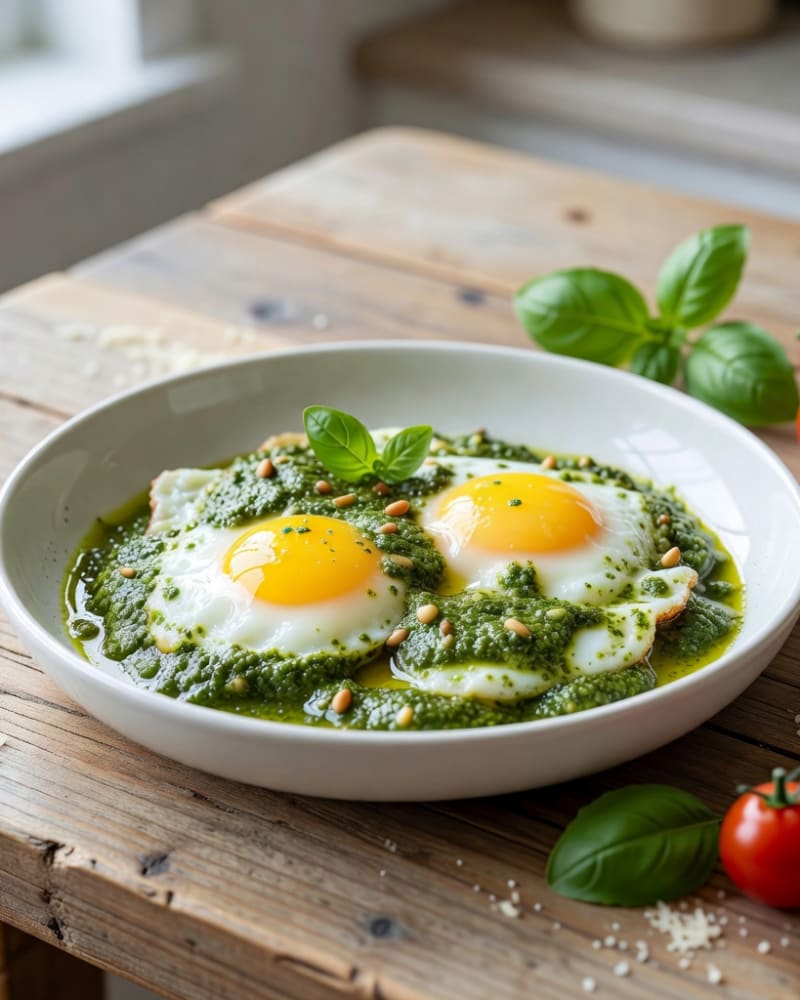
About 213 calories per serving, estimated from the ingredient list.
It is 7:45 on a Saturday, there is half a jar of pesto in the door of the fridge, and you have two eggs and the end of a sourdough loaf. That is the whole shopping list for pesto eggs: eggs fried straight in basil pesto, set under a lid, and slid onto toast. The jar you opened for one pasta night finally gets a second date. Serve it to anyone you are trying to impress and let them assume you were up early planning it. We won't correct them.
The pesto is the cooking fat and the sauce at the same time.
Pesto is mostly oil, cheese and basil, which means it can do the job butter usually does in the pan. As it warms, the oil loosens out of the paste and the eggs fry in it, while the basil and cheese toast against the skillet and stick to the underside of the whites in a savory, slightly crisp green layer. You end up with fried eggs that already taste seasoned all the way through, plus a spoonful of warm, fragrant pesto left in the pan to pour over the top. It looks like brunch at a café and takes about as much effort as a plain fried egg.
What you need
- 2 eggs
- 2 tbsp basil pesto
- 2 slices sourdough bread
- ¼ tsp flaky salt
- ⅛ tsp red chili flakes
- ¼ tsp black pepper
How to make it
- Heat a non-stick skillet over medium-low heat.
- Spoon 2 tbsp basil pesto into the skillet and spread it into a thin layer.
- Crack 2 eggs directly into the warm pesto and season with a pinch of flaky salt and black pepper.
- Cover the skillet and cook for 3 to 4 minutes until the whites are set but the yolks remain runny.
- Toast 2 slices of sourdough bread in a toaster or separate pan.
- Place the pesto eggs on the toasted bread and spoon any remaining pesto from the skillet over the top.
- Finish with an extra pinch of flaky salt and red chili flakes.
Notes
Pesto eggs are best eaten the second they leave the pan. Fried eggs do not reheat in any way you will enjoy, so make what you will eat. If you do have a cooked egg left over, cooked leftovers keep three to four days refrigerated, per USDA FSIS, but in practice the toast is the thing that suffers first.
The lid matters more than it looks. Covering the skillet traps steam, which sets the top of the whites without you having to flip anything or baste. That is how you get firm whites and runny yolks in the three to four minutes the method gives.
Spread the pesto into a thin layer as the method says. A thick blob in the middle of the pan means the eggs sit on a pool of oil and steam instead of frying, and the edges do not pick up that toasted green crust.
Jarred pesto works well here, and a brunch guest is unlikely to ask about its pedigree. Homemade is looser and oilier, so you may need a touch less of it. When the jar is down to a scrape, swipe right on pesto eggs again and the agent puts a fresh one on the Kroger order before next Saturday, so the second date does not depend on your memory.
If you get a pale, oily plate with no crisp edges, the pan was probably not warm enough when the pesto went in. Give the empty skillet a minute on the burner first.
Swaps that actually work
The pesto is the point. Leave it in and leave it as the fat. Adding oil or butter underneath dilutes it and the eggs stop tasting like pesto eggs.
Any pesto works. Sun-dried tomato pesto gives you a red, sweeter version; arugula or kale pesto is more peppery. Vegan pesto without cheese fries just as well but browns less.
Sourdough is ideal because the crumb is sturdy and the crust holds up under a runny yolk. Any good bread works: ciabatta, a thick slice of country loaf, an English muffin. Thin sandwich bread goes limp under the yolk almost immediately.
Flaky salt finishes, and the texture is part of the bite. Regular kosher salt is fine if that is what you have; use less, because it is finer and saltier per pinch.
The red chili flakes are optional, but they cut through the richness and keep the plate from feeling heavy. A drizzle of chili crisp works the same way.
The swap that costs you the dish is scrambling. Stir the eggs through the pesto and you get green scrambled eggs with none of the toasted edges or the runny yolk that sauces the toast.
If it goes wrong
The pesto went dark and bitter. The heat was too high, or the pan sat too long before the eggs went in. Pesto has cheese and garlic in it, and burnt pesto tastes like bitter lawn clippings no matter how good the eggs are. Pull the skillet off, wipe it, and start again on lower heat with fresh pesto. There is no rescuing scorched basil.
The tops of the whites are still clear and wobbly. No lid, or the lid went on late. Cover the pan now and give it another minute. If you have no lid, a large plate or baking sheet over the skillet does the same job.
The yolks are hard. They stayed covered too long. Start checking at three minutes next time, and remember the eggs keep cooking for a few seconds after you lift them out.
It tastes flat. It probably needs salt. Pesto brands vary a lot in how seasoned they are, so add that extra pinch of flaky salt at the end and taste a corner before deciding.
What to serve with it
The default is exactly what the method gives you: one egg on each slice of toasted sourdough, pesto spooned over, a pinch of flaky salt and chili flakes on top.
The better version of the default is a handful of halved cherry tomatoes or a few slices of ripe tomato on the toast before the egg goes on. The acid and juice balance the oil in the pesto beautifully.
The thing in the fridge that lifts it is a wedge of lemon squeezed over the finished plate, or a few shavings of Parmesan if there is a heel of it hanging around.
This does not work as next-day lunch, which is fine, because it barely counts as cooking. Make pesto eggs fresh every time.
Why this one earns its place
It turns a half-used jar of pesto into a breakfast that looks like you planned it. Yours no longer has to quietly expire in the fridge door; pesto eggs give the rest of the jar a job.
It is also one of those recipes that asks for very little and gives back a plate you would happily photograph. Once you have done it twice, you will do it without looking. Swipe it into your week and the agent will remember the sourdough so you do not have to.
If breakfast on toast is where you live, avocado toast is the obvious next swipe. For another egg breakfast that comes together in one pan, cheesy scrambled egg quesadilla. And if the bigger problem is using up what is already in the fridge, meal planning and food waste is the system behind it.
More like this: all Italian recipes in Crave Corner.