Avocado Toast That Holds Up, Not the Sad Beige Kind
Jump to recipe ↓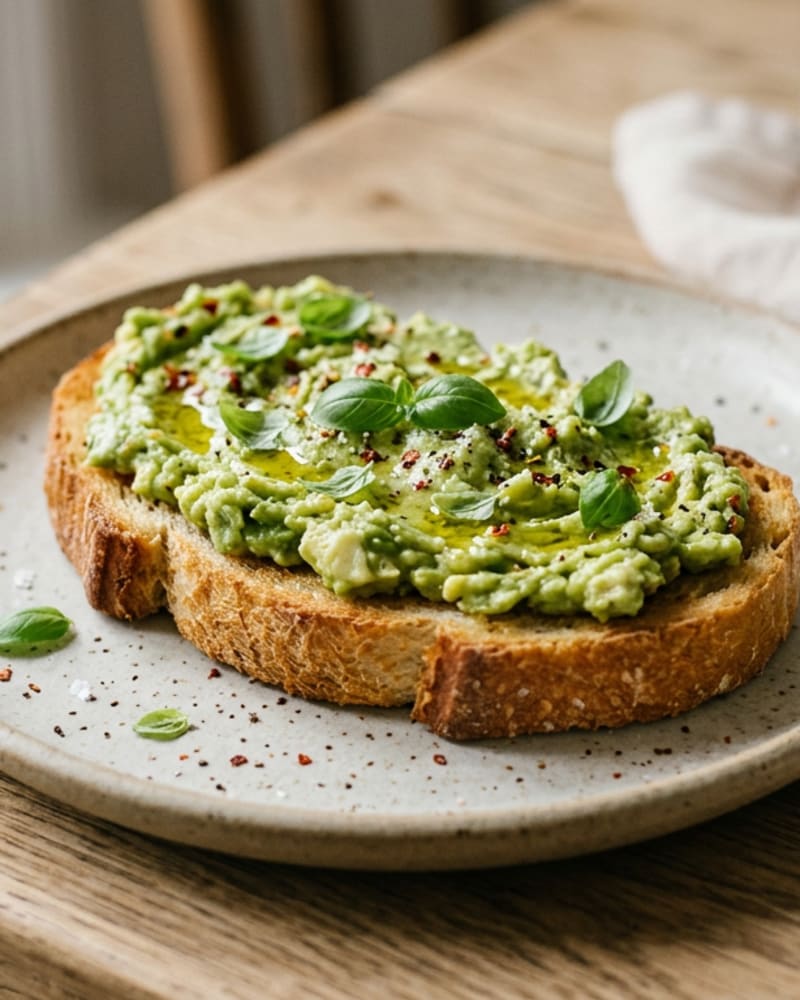
About 322 calories per serving, estimated from the ingredient list.
It is 7:40am and you have eleven minutes before you need to leave. The fridge has one avocado that is exactly ripe today and will not be tomorrow. This avocado toast recipe is built for that eleven minutes.
Avocado toast fails for two reasons, and neither one is the avocado.
The bread is undertoasted, so it turns to paste under something wet. And the avocado never got salted properly, so it tastes like green nothing spread on carbohydrate. Fix those two and this is a genuinely good ten minute breakfast rather than a thing you make because it is easy and then feel slightly disappointed by.
What you need
- 2 thick slices sourdough or any bread with a real crust
- 1 large ripe avocado
- ½ lemon, juiced
- 1 tbsp olive oil
- Flaky salt, black pepper, and chilli flakes to finish
How to make it
- Toast the bread hard, darker than feels right. A pale slice goes limp under wet avocado within a minute.
- Halve the avocado, scoop the flesh into a bowl, and add the lemon juice and a real pinch of salt.
- Mash with a fork to a rough texture, leaving lumps. A smooth purée slides off the toast and tastes flatter.
- Taste it now. It should be bright and clearly seasoned on its own, not just green.
- Spread thickly on the hot toast, right to the edges so no dry corner is left.
- Finish with olive oil, flaky salt, pepper and chilli, and eat it standing up if you have to.
Notes
Assembled toast does not keep. There is no version of this you make in advance. Make it, eat it, and accept that as the deal.
Leftover mashed avocado keeps about a day in the fridge with the stone pressed back in and cling film laid flat on the surface so no air touches it. It will still darken at the edges. That browning is oxidation rather than spoilage, so it is safe, and you can scrape the top layer off and use what is underneath.
If your avocado is underripe, do not try to rescue it with more lemon and more salt. Hard avocado stays hard and tastes grassy no matter what you put on it. Leave it on the counter another day, ideally next to a banana, and eat something else this morning.
If it is overripe and stringy, mash it much finer than you would otherwise and add more acid. The strings are unavoidable but a smoother texture hides them.
The most common disappointment is that it tastes like less than the sum of its parts. That is nearly always seasoning, and it is fixed in the bowl rather than at the table.
Buying avocados on the day you want them is the actual difficulty here, and no technique solves it. Buy them hard, three or four at a time, and leave them out. Move each one to the fridge the moment it yields to a gentle press at the stem end, and it will hold there for another two or three days rather than going over in an afternoon. That single habit is worth more than anything else on this page, because the difference between a good avocado and a bad one is larger than the difference between a good recipe and a bad one.
Swaps that actually work
The avocado is the point. Everything else can move.
The bread matters more than people expect it to. Sourdough is ideal because the crust survives contact with something wet, and the sourness works against the fat. A supermarket sandwich loaf will not hold, no matter how long you toast it, because there is no structure in it to begin with. Rye works and is arguably better. A bagel works. Anything soft and pre sliced turns to mush somewhere around the third bite.
Lemon can be lime, or a splash of any vinegar you have open. Red wine vinegar is better than nothing, and nothing is the option that actually costs you the dish, because fat without acid reads as flat no matter how much salt you add.
Chilli flakes are optional. So is the olive oil, though it is doing more than garnishing, it carries the salt across the surface.
The swap that costs you the dish is skipping the salt because the bread is salty. It is not the same salt and it is not in the same place.
If it goes wrong
It went soggy. The toast was too pale, or it sat on a plate while you did something else. Toast darker than looks right and assemble at the last possible second.
It tastes flat and green. Almost always salt. Season the avocado in the bowl, not on top of the finished toast, and taste it before it goes anywhere near the bread.
It slid off in one piece. You mashed it too smooth. Leave lumps, because texture is what grips the surface.
It went brown while you were eating it. More acid, and less standing around. Lemon slows oxidation, it does not stop it.
What to serve with it
A fried egg or a jammy soft boiled one on top turns this from a snack into something that lasts until lunch rather than until ten o'clock.
The better version of the default is a small handful of rocket underneath the avocado, dressed with a little of the same lemon. It costs you no extra time, it stops the plate reading as entirely beige, and the pepperiness does the same job the chilli does.
The thing in the fridge that lifts it is any sharp cheese, crumbled over. Feta especially, because the salt and the acid arrive together.
If you are feeding more than yourself, put the bowl of seasoned avocado and a stack of hot toast on the table and let people build their own. It stops you assembling four plates that are all going soft at slightly different rates, and it means the last person to sit down gets the same thing as the first.
It does not travel and it does not sit. This is a breakfast you eat standing in the kitchen where you made it, and that is not a flaw.
Why this one earns its place
Avocado toast earns its spot because it is the fastest real breakfast there is, and because it uses up the one avocado that would otherwise go soft on your counter and get thrown away on Thursday. That is genuinely the whole argument, and it is enough of one.
You already know how to make it. The reason to write it down is that the salting step is the one everybody skips, and it is the single step that decides whether you eat something good or something you merely tolerate on the way out of the door.
If mornings are where your plan falls over, what's for dinner tonight makes the same case for the other end of the day. When one ripe avocado is the reason you are cooking this at all, meal planning and food waste is the longer version of that problem. And if you want breakfast to stop being a decision you make while half awake, meal prep for the week is where to start.
More like this: all American recipes in Crave Corner.