Cheesy Scrambled Egg Quesadilla for the Ten Minute Morning
Jump to recipe ↓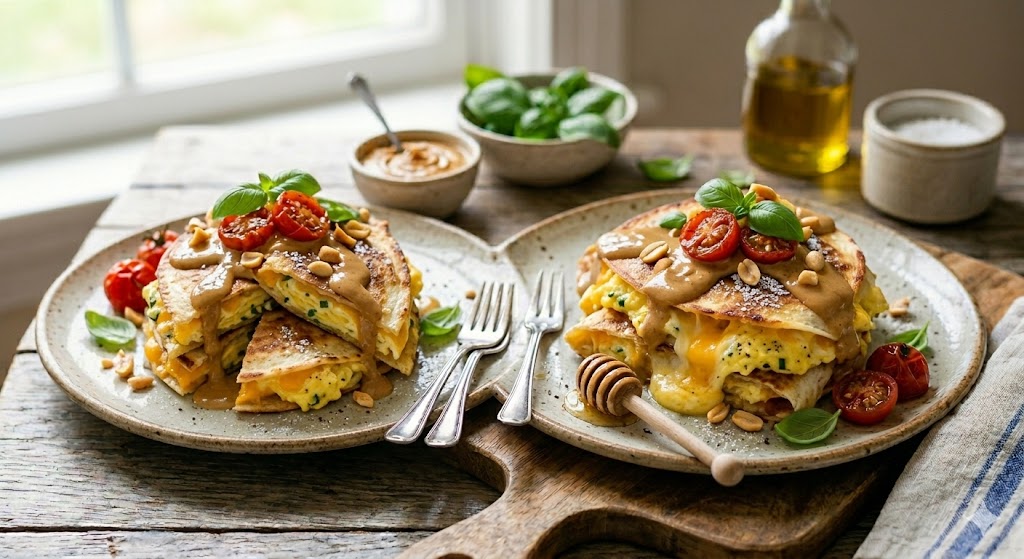
About 468 calories per serving, estimated from the ingredient list.
It is a weekday, you have ten minutes, and this scrambled egg quesadilla recipe is the reason you are not eating cereal standing up again.
Eggs cooked three times are rubber, and this dish cooks them three times.
Once in the pan, once resting while you build, and once inside the folded tortilla. The only way that ends well is pulling them off the heat while they still look not quite done, which feels wrong for about four seconds and then makes complete sense.
What you need
- 4 eggs
- 2 large flour tortillas
- 120g cheddar or a melting cheese, grated
- 2 spring onions, sliced
- 1 tbsp butter
- Salt, black pepper, and hot sauce to serve
How to make it
- Beat the eggs with a pinch of salt until the yolks and whites are fully combined and slightly frothy.
- Melt the butter in a non stick pan over low heat, add the eggs, and stir slowly with a spatula, pushing from the edges into the middle.
- Take them off while they are still glossy and a little loose, about ninety seconds. They will finish cooking twice more.
- Wipe the pan, put it back on medium, and lay a tortilla in it dry.
- Scatter half the cheese over the whole surface, spoon the eggs onto one half, add the spring onions, then the rest of the cheese.
- Fold the bare half over, press gently, and cook two minutes a side until golden and crisp.
- Rest one minute so the cheese sets, then cut into wedges and serve with hot sauce.
Notes
This is best within about two minutes of leaving the pan, which is not a limitation on a breakfast you made in ten.
Cooked leftovers keep three to four days refrigerated, per USDA FSIS, though eggs reheated in a tortilla are noticeably worse than they were.
It does not freeze.
Cheese on both sides of the eggs is doing structural work as well as flavour. It is the glue that holds the fold together and the barrier that keeps the wet eggs off the tortilla, which is why the quesadilla stays crisp rather than steaming from the inside.
The most common disappointment is dry, squeaky eggs. That is heat rather than timing, and low and slow with constant movement is the whole answer.
Beat the eggs properly before they go anywhere near the pan. Streaks of unmixed white cook faster than the yolk around them and set into rubbery ribbons, which is why some scrambled eggs have texture running through them that nobody wanted. Thirty seconds with a fork until the colour is completely uniform.
Wipe the pan between the eggs and the quesadilla. Residual butter is what stops the tortilla crisping, because you want a dry surface at that stage and butter burns at the temperature the fold needs.
Salt the eggs before cooking rather than after. Salt added early has time to dissolve and season throughout, while salt added at the end sits on the surface and reads as sharp rather than seasoned. This is a small thing that shows up every single time.
Swaps that actually work
The eggs are the point and the technique matters more than anything you add to them. Low heat, constant gentle movement, off early.
The cheese needs to melt. Cheddar, monterey jack, mozzarella or a mix are all fine, and anything hard and aged will go oily instead of stretchy.
Spring onions can be chives, or nothing. Anything with real moisture, like tomato or mushroom, needs cooking off separately first or it will make the whole thing wet.
Flour tortillas are correct here. Corn cracks when folded around something this soft, and the fold is load bearing.
Butter rather than oil for the eggs, and it is not interchangeable. Butter browns slightly and gives scrambled eggs a savoury depth that neutral oil cannot, and at the low heat this recipe uses there is no risk of it burning. It is one ingredient doing two jobs.
A second egg per person is the easiest upgrade here. Four eggs across two quesadillas is a light breakfast, six makes it a substantial one, and nothing else in the method changes.
The swap that costs you the dish is cooking the eggs hard because you are rushing. Everything else on this list is optional and that one is not, because there is no step later that rescues overcooked egg.
If it goes wrong
The eggs are rubbery. Heat too high, or they went in already fully cooked. Pull them looser than feels right.
The tortilla is pale and floppy. The pan was not hot enough for the assembly stage, or you used oil. Dry pan, medium heat.
It fell apart when cut. Not enough cheese against the top surface, or you cut it straight away. Cheese on both sides, rest a minute.
It is flat. Salt in the eggs before they cook, not after, and hot sauce at the table. Eggs and cheese are both mild and the dish needs something sharp.
The filling slid out when you folded it. Too much egg for the size of the tortilla, or the eggs were too loose. Keep the filling to one half with a clear border, and let the cheese underneath set for a few seconds before folding.
What to serve with it
The default is hot sauce and nothing else, eaten off a board.
The better version of the default is a spoonful of salsa on the side rather than inside, where it adds acid without adding water to the filling.
The thing in the fridge that lifts it is avocado, sliced on top after cutting, or pickled jalapeños folded in with the eggs.
A handful of rocket or spinach thrown into the eggs in the last ten seconds wilts just enough and turns this into something that carries you past eleven o'clock rather than to it.
It travels surprisingly well wrapped in paper for about an hour, which makes it a decent thing to eat on the way somewhere.
Why this one earns its place
It is a genuinely hot, genuinely savoury breakfast in ten minutes using four things most people already have, which is a short list of qualities that rarely appear together.
It also teaches the egg timing that transfers everywhere else. Once you have understood that eggs carry on cooking after they leave the heat, scrambled eggs, omelettes and frittatas all improve at the same time.
If breakfast is the meal that keeps defaulting to whatever is quickest, meal prep for the week covers building a morning that does not need decisions. When the deciding is the tiring part rather than the cooking, decision fatigue and what to eat. And quick weeknight dinner ideas has more in this speed bracket, most of which work at breakfast too.
More like this: all Mexican recipes in Crave Corner.