Pelau With Caramelized Sugar Chicken and Rice That Cooks in One Pot
Jump to recipe ↓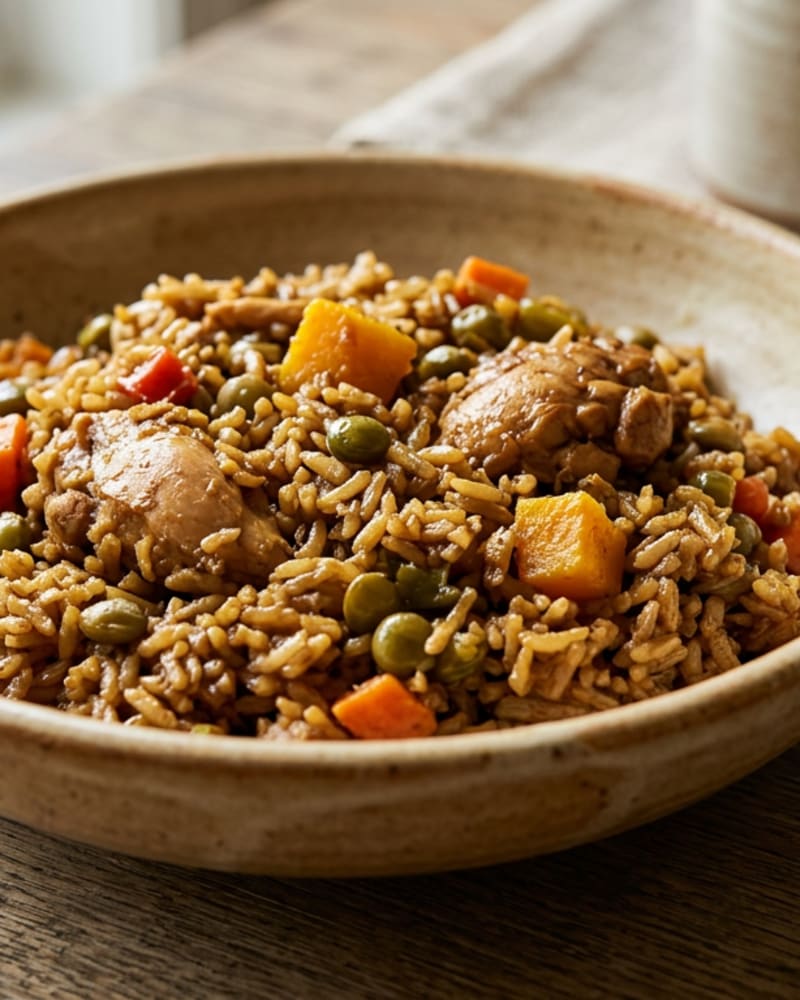
6:20 on a Sunday evening, the lid of the biggest pot you own is rattling, and the kitchen smells like burnt sugar in a good way. This pelau recipe is 43 minutes, one pot, and rice that cooks in coconut milk and the browned drippings of chicken thighs. You brown the sugar on purpose, a little dangerous and entirely under control.
Burnt sugar, seared chicken, coconut rice, and one pot that asks nothing of you after the lid goes on.
You melt brown sugar in the pot until it darkens, then drop in the chicken thighs, which grab the caramel and sear in it. Onion and garlic go in for a few minutes, then the rice, coconut milk and water. Salt and black pepper, the lid goes on, and the pot does its work for 25 minutes. The result is rice with a golden-brown color, pieces of chicken throughout and a faint sweetness at the edges.
What you need
- 1½ lb chicken thighs
- 2 cups long-grain white rice
- 2 tbsp brown sugar
- 1 onion
- 3 garlic cloves
- 1 cup coconut milk
- 1 tsp salt
- ½ tsp black pepper
How to make it
- Chop the 1 onion and mince the 3 garlic cloves in about 5 minutes.
- Brown 2 tbsp brown sugar in a pot for 2 minutes then add 1.5 lb chicken thighs.
- Cook the chicken 8 minutes until seared on all sides.
- Stir in the chopped onion and garlic for 3 minutes until fragrant.
- Add 2 cups long-grain white rice and 1 cup coconut milk with 2 cups water.
- Season with 1 tsp salt and 0.5 tsp black pepper then simmer covered 25 minutes.
Notes
Cooked leftovers keep three to four days refrigerated, per USDA FSIS. Cool the pot quickly, and move the pelau to a shallow container so it chills evenly.
Day two of this pelau recipe is a good one, since the flavors settle into the rice. Reheat it in a covered pan over low heat with a splash of water, stirring gently, until it is steaming hot all the way through. The microwave works, with a damp paper towel over the bowl.
You can freeze cooked pelau in portions, for reheating on a night you do not feel like cooking. The rice softens a little after thawing, and a splash of water when you reheat helps.
Chicken thighs are cooked at 165 F internally, according to USDA. The eight minutes of searing plus 25 minutes of simmering covered gives plenty of time, but a thermometer in the thickest piece settles any doubt.
Use a pot with a tight-fitting lid and a heavy bottom, so the heat is even and the rice cooks without scorching. Once the lid is on, leave it alone for the 25 minutes. Lifting it lets the steam out and the rice cooks unevenly.
Browning the sugar is the part that feels risky, and it is the part that makes the dish. Pelau is a first date that rewards nerve, and your date is a pot of caramel.
Swaps that actually work
The browned sugar is the point of this pelau recipe. It gives the rice its color and the faint bittersweet edge that separates pelau from plain chicken and rice. Leave it in.
Chicken thighs stay juicy through a long simmer. If you only have breasts, cut them into large pieces and expect a drier result, and keep an eye on the temperature, which should be 165 F inside.
Coconut milk gives the rice richness. Use the full-fat kind, shaken well before you open the can, and expect a lighter, less creamy pot if you use a light version.
Long-grain white rice is what the method asks for, because it cooks to separate, fluffy grains in the amount of liquid given. Rinsing the rice before it goes in removes loose starch, and it is a step many cooks like. Parboiled rice works too, but it can need more liquid.
Peas or diced squash can go in with the rice for a fuller pot. Add about a cup, and the dish becomes more of a meal in one. Swipe left on the squash and the agent leaves it off the list, no hard feelings, no awkward goodbye at the produce aisle.
The swap that costs you the dish is using white sugar in place of brown. It darkens faster and tastes harsher, and you lose the molasses note that makes the chicken taste rich and slightly sweet.
If it goes wrong
The sugar burned and tastes bitter. It went too far, to black rather than amber. Wipe out the pot, start again with fresh sugar, and take it off the heat at the first wisp of smoke or a deep amber color.
The rice is mushy. There was too much liquid, or the lid was lifted and the rice kept steaming unevenly. Take off the lid, turn the heat to low, and let the surface steam off for a few minutes before you fluff with a fork.
The rice is hard or the pot is dry. The heat was too high, or the lid did not seal. Add a splash of hot water, cover tightly, and cook over low heat for a few more minutes until the rice is tender.
It tastes flat. Salt, most likely. Add a pinch to the finished pot, stir it through gently, and taste again. The method calls for salt and black pepper, and the rice soaks up a lot of both.
What to serve with it
The default for a pelau recipe is a bowl and a spoon, and nothing else is needed. It is a full dinner in one pot.
A better version of the default is a simple salad on the side. Sliced tomato, cucumber and lime juice give a cold, sharp contrast to the sweet, rich rice.
The thing in the fridge that lifts it is a hot sauce or a pepper sauce. A few drops over the top wake up the coconut and the caramel without covering them.
It works as lunch the next day, and it is the kind of dinner that is easy to pack and reheat. Add a splash of water, cover and warm it through.
Why this one earns its place
Some dinners need your attention the whole way through. This pelau recipe needs your attention while the sugar and chicken go in, then trusts you to walk away, and it will still be good when you come back.
Swipe it into your week and the agent can shop the chicken, the rice and the coconut milk, so the evening is a pot, a lid and a clock, and the only thing you have to be on time for is the sugar.
If you are still choosing, arroz con pollo is the one-pot chicken and rice with a different accent, jerk pork is the Caribbean night with more heat, and agentic AI grocery explains what your cart is doing while you stir.
More like this: all Caribbean recipes in Crave Corner.