Panda-Style Chow Mein With Crunchy Cabbage and Noodles That Do Not Clump
Jump to recipe ↓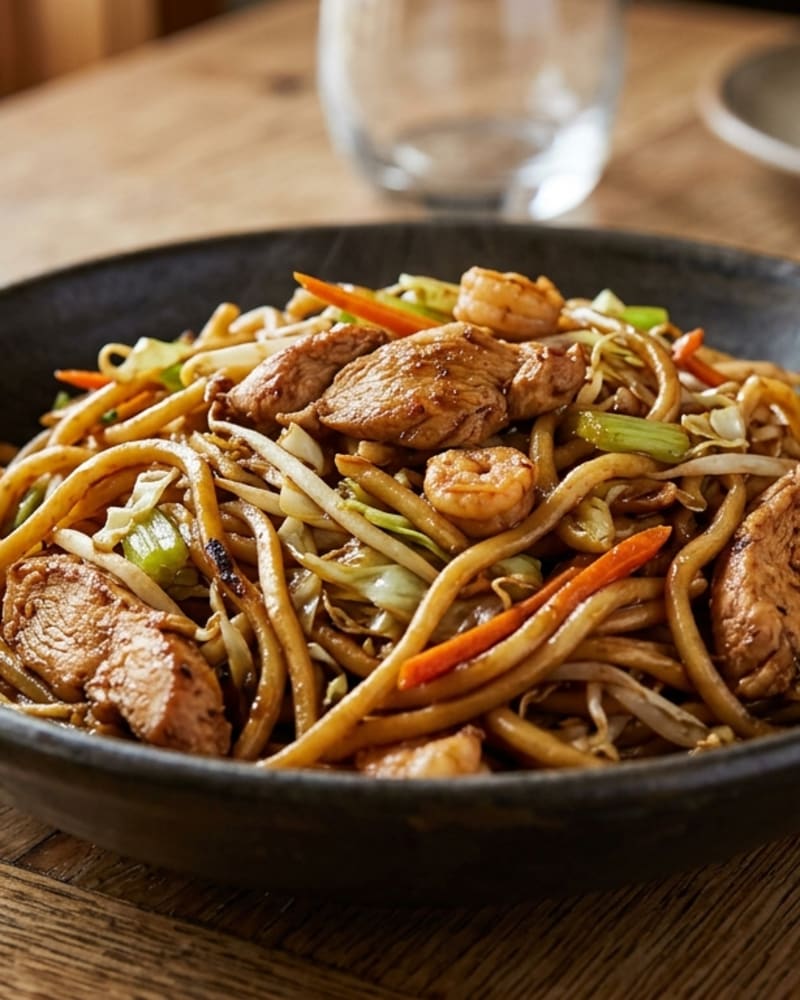
At 7:05 on a Friday your delivery app is still "finding a driver," and your wok is already hot. This chow mein recipe is 18 minutes from slicing to bowls, a home riff on the takeout-counter favorite, not the official recipe of Panda Express or anyone affiliated with it. Slick noodles, cabbage with some bite, and the quiet satisfaction of dinner arriving before the app has made up its mind.
Noodles in sesame oil, onion and celery first, cabbage second, then everything together and hot.
The sequence is short, and this chow mein recipe wants a wide pan and a free hand. You keep tossing for 2 to 3 minutes, until every strand is coated and the steam smells like the back of a takeout kitchen.
What you need
- 12 oz lo mein noodles
- 4 cups green cabbage
- 2 celery
- 1 yellow onion
- ¼ cup soy sauce
- 1 tbsp sesame oil
- 2 tbsp vegetable oil
- 3 garlic
- 1 tsp sugar
- ½ tsp salt
- ¼ tsp black pepper
How to make it
- Thinly slice 4 cups green cabbage, 2 celery stalks, and 1 yellow onion, and mince 3 garlic cloves, about 8 minutes.
- Cook 12 oz lo mein noodles in boiling water according to package directions until just tender, drain, and toss with 1 tbsp sesame oil.
- Heat 2 tbsp vegetable oil in a large wok or skillet over medium-high heat and stir-fry the onion and celery for 2 to 3 minutes until slightly softened.
- Add the minced garlic and 4 cups sliced cabbage and stir-fry another 3 to 4 minutes until the cabbage wilts but still has crunch.
- Add the drained noodles, ¼ cup soy sauce, and 1 tsp sugar, tossing constantly for 2 to 3 minutes so everything is coated and hot.
- Season with salt and black pepper to taste, toss once more, and serve immediately in bowls.
Notes
Cooked leftovers keep three to four days refrigerated, per USDA FSIS. Store the chow mein in a shallow container and reheat in a hot skillet instead of a microwave if you want the edges to come back.
Day two is good, if a little softer. The cabbage gives up some of its crunch overnight, and the noodles absorb the soy sauce, so the flavor deepens. This chow mein recipe tastes best at the wok and holds up fine from a container.
Let the pan get properly hot before the first onion goes in, so the cabbage sears at the edges instead of steaming. If the wok looks crowded, that is your cue to cook in two batches rather than one sad pile, since a heaped pan steams and a roomy one fries. Measure the soy sauce and set out the bowls before the oil goes in, because the stir-fry moves fast and the noodles go cold if you start hunting for the cap.
Swipe it on SwipeCart and the agent shops the lo mein noodles and the cabbage for you. The only thing left to do is keep a straight face about how fast it was.
Swaps that actually work
The lo mein noodles are the point. Their chew and their soak-up of soy sauce is the whole texture of the dish, so leave them alone. Any fresh or dried lo mein or egg noodle that cooks to package directions will do, and spaghetti is the emergency stand-in if the fridge is thin. It tastes like a different relationship, but it is a pleasant one.
Green cabbage can become napa or a bag of coleslaw mix, which saves you the slicing. Add shredded carrot if you want color, or a handful of sliced green onions at the end for a fresher bite. Swap the celery for sliced bell pepper or a handful of bean sprouts if that is what you have.
The noodles stretch to a full meal alone, but leftover chicken, cooked shrimp or tofu can go in with the noodles at the end, just long enough to heat through. If you are cooking the protein from raw, do it first and move it aside, and cook chicken to 165°F and shrimp to 145°F.
Dark soy sauce, oyster sauce or a spoon of hoisin changes the dish. They are good additions, but they turn it into something other than the dish on this page. The swap that costs you the dish is skipping the sesame oil on the noodles, because they stick together and the wok turns into a clump.
If it goes wrong
The noodles are clumped. They sat in the colander without sesame oil. Toss them with the oil as soon as they are drained, and if they still clump, add a spoon of hot water to the wok and pull them apart with chopsticks.
The cabbage went limp and watery. It stayed in too long or the pan was crowded. Keep the heat at medium-high, give the cabbage 3 to 4 minutes, and pull the pan off the heat when it wilts but still has crunch.
It is bland. Soy sauce is the seasoning, and the noodles drink it fast. Add a splash, toss, and taste, then season with the salt and black pepper at the very end.
It is too salty. The soy sauce went in heavy-handed. Add a handful more cabbage and a splash of water to share the load, and serve it next to plain rice. We do not judge heavy hands, but the pan does.
What to serve with it
The default is a bowl, a fork and chopsticks if you are feeling theatrical. Set out two bowls and it counts as a date; set out one and it counts as self-care, which is also a perfectly good relationship. This chow mein recipe makes 4 servings, so the pan is also the serving dish if the table is casual.
The better version of the default is a fried egg on top, or leftover orange chicken from the fridge. The noodles are savory and plain, and a rich topping makes them feel like a full meal.
The thing in the fridge that lifts it is a drizzle of chili crisp, a squeeze of lime, or sliced green onions. Any one of them gives a plain bowl of noodles something to say for itself, and a little chili crisp goes a long way if you are cooking for someone you want to impress.
It also makes a good lunch the next day. Reheat in a skillet with a splash of water and the noodles loosen right up.
Why this one earns its place
It is short on ingredients, light on effort and fast on the clock, which is what a weeknight can handle. Eleven pantry and produce items cover it, and some of them may already live in your kitchen. You can have 18 minutes of cooking and a bowl on the table before the delivery driver has found your street.
It also makes a good side for date night: the noodles let a showier main take the spotlight and still get eaten first. For something with more going on, beef and broccoli stir-fry is the natural next course. Kung pao tofu brings the heat. And what's for dinner tonight is the post to open when the app is still finding a driver.
More like this: all Chinese recipes in Crave Corner.