Kung Pao Tofu That Gives Your Takeout Order a Reason to Worry
Jump to recipe ↓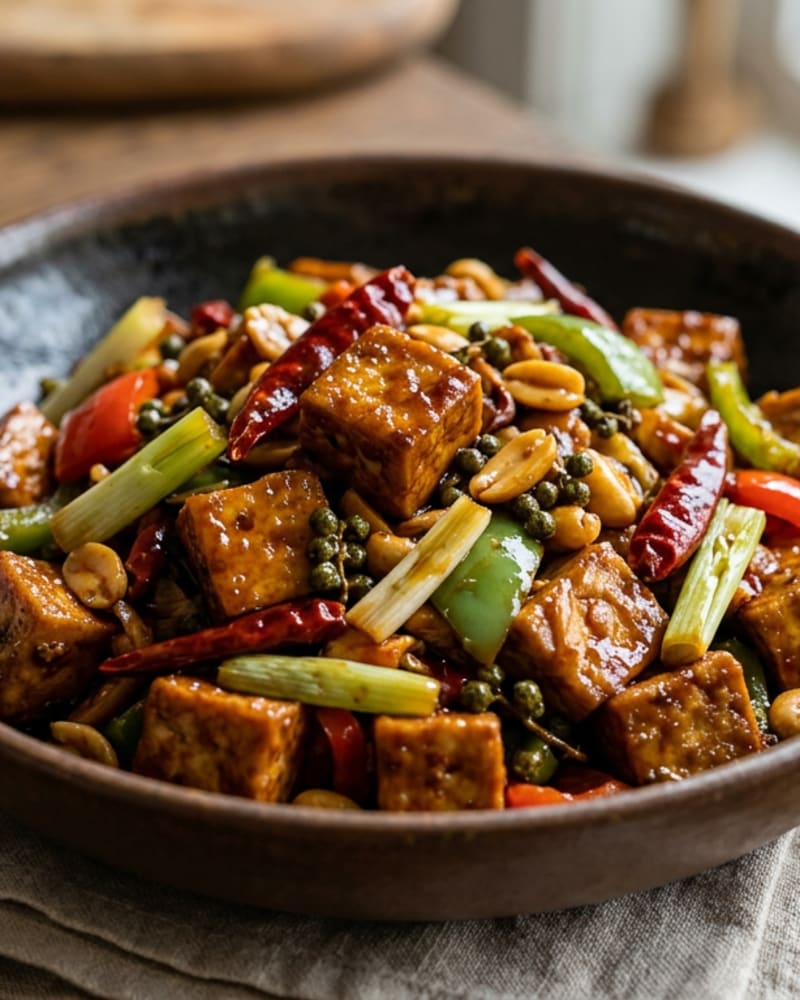
About 444 calories per serving, estimated from the ingredient list.
It is 7:10 on a Friday, the delivery app is open, and your thumb is hovering over the exact order you placed last Friday. Close it. You are allowed to ghost the takeout place for one night, and this kung pao tofu is the rebound that turns out to be better company.
Crisp tofu, toasted peanuts, a little heat and a glossy finish, all from one wok.
The rice goes on first and does its own thing for eighteen minutes. While it simmers, you cube the tofu and slice a bell pepper, then fry the tofu over high heat until it is golden and crisp on all sides. Dried chilies and peanuts go in next to toast, the pepper follows for a few minutes, and the soy sauce goes over everything to simmer down into a glaze. It lands on the rice right away, while the edges still crunch.
What you need
- 14 oz firm tofu, cubed
- 14 oz firm tofu
- ½ cup peanuts
- 4 dried chilies
- 1 bell pepper, sliced
- 1 bell pepper
- 2 tbsp soy sauce
- 1 cup white rice
- 2 microwavable white rice pouch
How to make it
- Rinse the 1 cups white rice then cook it in a pot with 2 cups water and a pinch of salt. Bring to a boil, cover, and simmer on low for 18 minutes until done.
- Cube the 14 oz firm tofu and slice the 1 whole bell pepper. This takes about 5 minutes.
- Heat a wok over high heat, add the cubed tofu, and fry for 7 minutes until crisp on all sides.
- Add the 4 whole dried chilies and 0.5 cups peanuts, then stir for 2 minutes.
- Toss in the sliced bell pepper and cook another 3 minutes.
- Pour the 2 tbsp soy sauce over everything and simmer 4 minutes until glossy.
- Stir gently to coat each piece evenly and remove from heat once the sauce thickens slightly.
- Spoon the kung pao tofu over the cooked rice and serve right away.
Notes
Cooked leftovers of kung pao tofu keep three to four days refrigerated, per USDA FSIS. The tofu softens overnight as it soaks up the sauce, which some people prefer. To bring some crunch back, reheat it in a hot pan for a few minutes instead of the microwave. It does not freeze well once cooked: freezing changes the texture of tofu and leaves it spongy.
Firm tofu holds its shape under high heat, and the drier it is, the faster it crisps. Blot the cubes with a clean towel after cutting so the surface moisture does not spit in the wok or slow the browning.
The dried chilies are there for aroma and a slow, warm heat. Leave them whole and toast them only until they darken slightly and smell toasty; past that, they turn bitter fast. You can eat them, but they are better as a warning label than a snack.
Toast the peanuts with the chilies so their flavor deepens. Roasted, unsalted peanuts give you the most control over salt, because the soy sauce is already bringing plenty.
Tofu is the match people swipe left on before they have seen it in good lighting. Fry it properly, give it a little char and a glossy coat, and it becomes the one you keep texting back.
This version keeps the sauce to soy alone, which makes it simpler and more savory than restaurant kung pao, which often leans on vinegar, sugar and Sichuan peppercorns. It is a clean, salty, nutty bowl that lets the tofu and peanuts carry it.
Swaps that actually work
The tofu is the point, so choose it carefully. Firm or extra-firm is what lets kung pao tofu crisp and hold together. Silken and soft tofu will fall apart in the wok and cannot be rescued once they do.
The rice can move. The ingredient list includes two microwavable white rice pouches as the shortcut, and they are a perfectly good option when the eighteen-minute simmer feels like a long-distance relationship. Brown rice works if you start it earlier; it takes longer to cook.
Peanuts can become cashews for a softer, sweeter crunch. For a peanut allergy at the table, roasted sunflower seeds keep the texture, or skip the nuts entirely and add extra pepper.
Any color of bell pepper works. Red and yellow are sweeter, green is grassier and a bit more bitter, and a mix looks the most like the photo. Sliced zucchini or celery can join the pepper for more crunch.
Soy sauce can be swapped for tamari if you need it gluten-free; the flavor stays nearly the same. If you cannot find whole dried chilies, a pinch of red pepper flakes stirred in near the end brings the heat without the aroma.
For a meat version, cubed chicken thigh fries up beautifully the same way; cook it to 165°F before the soy goes in.
The swap that costs you the dish is soft tofu. The texture is the whole appeal, and without it you have a pleasant, salty stew instead of kung pao.
If it goes wrong
The tofu is soggy instead of crisp. It was wet, crowded, or the wok was not hot enough. Push the tofu to one side, let the empty part of the wok get hot again, and fry the cubes in a single layer, turning only once they release. Do this before the soy sauce goes in.
The tofu is sticking to the wok. It was moved before a crust had formed, or the wok was not hot enough to begin with. Leave it alone for another minute; a set crust lets go on its own. Slide a thin metal spatula underneath rather than scraping.
The chilies turned black and bitter. They toasted too long or over too much heat. Fish out the darkest ones and keep going; a few bitter chilies will not ruin the batch, but a pan full of them will.
It is too salty. The soy reduced further than you wanted. Add a splash of water to loosen the glaze, toss, and serve it over a bigger bed of rice. Unsalted peanuts next time help too.
What to serve with it
The default is the rice, and plain white rice is exactly right because it soaks up the salty glaze and cools the chilies.
The better version of the default adds a smashed cucumber salad with a little rice vinegar and salt, so there is something cold and crisp against the hot wok edges.
The thing in the fridge that lifts it is a handful of sliced scallions scattered over the top, or a few sesame seeds if you have a jar open.
It makes a solid lunch the next day, reheated in a pan to bring back some crunch.
Why this one earns its place
It gives you the takeout feeling without waiting on a driver, and it makes a strong case for tofu to anyone who still thinks they do not like it. The ingredient list is short, the wok work is quick once the rice is going, and the result has crunch, heat and gloss in every bite. Kung pao tofu is also an easy yes for a mixed table, since the meat version is one swap away.
Swipe it into your week for the next Friday the delivery app starts flirting with you, and let the agent pick up the tofu and peanuts.
If you want another homemade answer to the takeout menu, Chinese-American orange chicken bowls scratch the same itch. For a lighter wok night, cauliflower fried rice uses the same high heat. And when you are stuck on the question itself, what's for dinner tonight has more ideas.
More like this: all Chinese recipes in Crave Corner.