Pad Thai With Shrimp, a Tamarind Sauce That Balances and Noodles That Do Not Clump
Jump to recipe ↓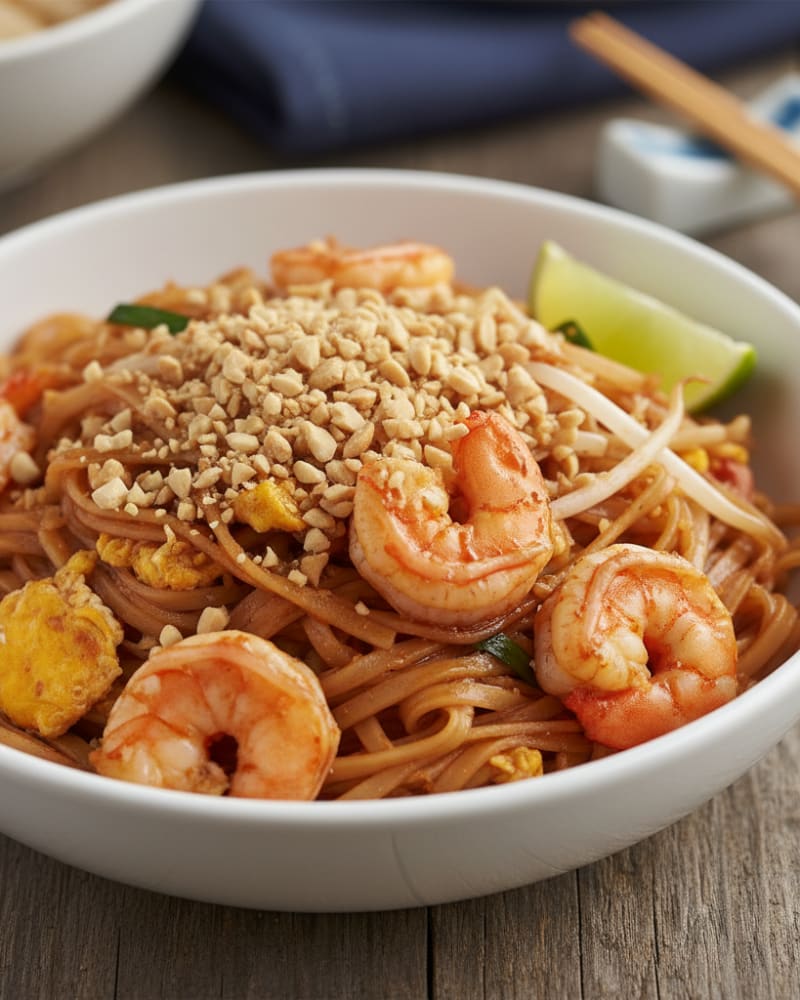
It is 6:50 on a Friday, you have a takeout app open in one tab and a bag of rice noodles in the cupboard, and tonight the cupboard wins. This pad thai recipe takes 18 minutes of prep and 20 at the wok, and it lands on the plate with a sweet, sour and salty sauce that makes the delivery fee feel like a rumor. It is a dish that feels like a night out and needs no shoes.
Soak, toss, squeeze a lime, and call it a date.
Pad thai is a Thai stir fry of rice noodles with a sauce built from tamarind, fish sauce and sugar. You soak the noodles in warm water, mix the sauce, cook shrimp in a hot wok, scramble egg in the same pan, then add the noodles and sauce and toss until the strands soak it up. Bean sprouts and green onions go in at the end for crunch, and crushed peanuts and lime wedges finish the plate. It is a flurry of activity that takes less time than it looks.
What you need
- 8 oz rice noodles
- 1 lb peeled shrimp
- 2 eggs
- 2 tbsp tamarind paste
- 2 tbsp fish sauce
- 2 cups bean sprouts
- ¼ cup crushed peanuts
- 2 tbsp sugar
- 2 lime
- 2 tbsp cooking oil
- 4 stalks green onions
How to make it
- Soak 8 oz rice noodles in warm water until pliable, about 15 minutes. Drain.
- Mix the pad thai sauce with 2 tbsp tamarind paste, 2 tbsp fish sauce, 2 tbsp sugar, and juice from 1 lime.
- Slice the green onions. Cut the remaining lime into wedges.
- Stir fry 1 lb peeled shrimp in 2 tbsp cooking oil in a hot wok until pink. Push aside and scramble the 2 eggs in the same wok.
- Add the drained noodles and the sauce to the wok. Toss 2 to 3 minutes until the noodles absorb the sauce.
- Add 2 cups bean sprouts and the sliced green onions. Toss briefly.
- Serve the pad thai topped with 0.25 cup crushed peanuts and the lime wedges.
Notes
Cooked leftovers keep three to four days refrigerated, per USDA FSIS. Shrimp is the part to watch, so refrigerate the leftovers promptly in a shallow container.
This pad thai recipe is best the moment it comes off the heat. Leftovers lose their spring as the noodles firm up in the fridge. Reheat in a skillet with a splash of water and a few minutes of tossing, and finish with a fresh squeeze of lime.
Freezing is not a good idea. Rice noodles turn brittle after thawing, and shrimp gets rubbery, so cook only what you plan to eat.
Shrimp is done when it turns pink and opaque, which fits the 145°F guideline for shellfish. A hot wok cooks it in a couple of minutes, so pull it as soon as it curls, then push it aside before it can tighten.
Mix the sauce before the wok gets hot. Once the pan is smoking, you will not want to hunt for the tamarind. Taste the sauce on a spoon: it should be a little too sharp and sweet on its own, because the noodles mellow it.
Swaps that actually work
In a pad thai recipe, the tamarind is the point, so leave it alone. Its tart, fruity note is what separates pad thai from any other noodle stir fry, and lime juice alone will not stand in for it.
The rice noodles can be any flat, medium-width rice noodle. Thinner noodles cook faster, and wider ones need a longer soak, so check them as they soften.
Shrimp can give way to sliced chicken thigh, pressed tofu or extra egg. If you use chicken, make sure it reaches 165°F in the wok before the noodles go in.
If you do not have fish sauce, a splash of soy sauce with a pinch of salt gets you close, though you lose a little depth. Sugar can be white or brown.
Crushed peanuts add crunch and richness. If you have an allergy at the table, skip them and use toasted sesame seeds or crispy shallots. Two limes are on the list: one goes into the sauce and one is cut into wedges for the table. Squeeze a wedge over your own plate, because the acid is what turns a sweet sauce from heavy to bright. A swap that costs you the dish is dropping the lime at the end. The acid wakes up the whole plate, and without it the sauce tastes heavier than it should.
Four servings is a full wok, so toss with a wide spatula and lift from the bottom rather than stirring in circles. Keep the bean sprouts and sliced green onions waiting beside the stove, because they go in the moment the noodles have taken up the sauce.
If it goes wrong
The noodles are clumped or gummy. They soaked too long or sat after draining. Toss them with a little oil if they are going to wait, and add a splash of water to the wok to loosen them. Keep tossing until they separate.
The noodles are hard in the middle. They did not soak long enough. Add a splash of water to the wok, cover for a minute and toss again until they soften.
The sauce is too sweet or too sour. Tamarind varies by brand. Add a pinch of sugar if it is sour, or a squeeze of lime if it is sweet, and taste as you go.
It tastes flat. Salt, so add a few more drops of fish sauce or a pinch of salt. Then add lime. A little chili flake on the side lets each person tune it.
What to serve with it
The default for this pad thai recipe is the bowl with lime wedges and a few extra peanuts, and it is complete without any help.
The better version has a small plate of raw vegetables on the side, such as cucumber slices, extra bean sprouts and a few sprigs of cilantro. They give the table something cool and crisp to alternate with the sauce.
For something from the fridge, a handful of chopped herbs or a drizzle of chili sauce works. A cold glass of something fizzy helps.
It makes a decent lunch the next day if you reheat it in a skillet with a splash of water and add fresh lime and peanuts.
Why this one earns its place
Because this pad thai recipe is the takeout order you can beat at home. Takeout comes with a wait, a fee and a lukewarm box. This comes with a hot wok and your own say over how much lime goes on. The sauce comes from four pantry staples, the wok takes minutes, and the plate looks like something you would pay for.
Swipe it into your week when you want a dinner that feels like going out without leaving the house, and let the agent shop the noodles, the shrimp and the tamarind. If you are cooking for someone you like, serve it with the lime still on the side and let them squeeze their own.
For more noodle nights, try chicken lo mein, the crying tiger when you want something bolder, or how the cart gets filled.
More like this: all Thai recipes in Crave Corner.