Miso Butter Salmon for Two That Looks Like You Planned the Whole Evening
Jump to recipe ↓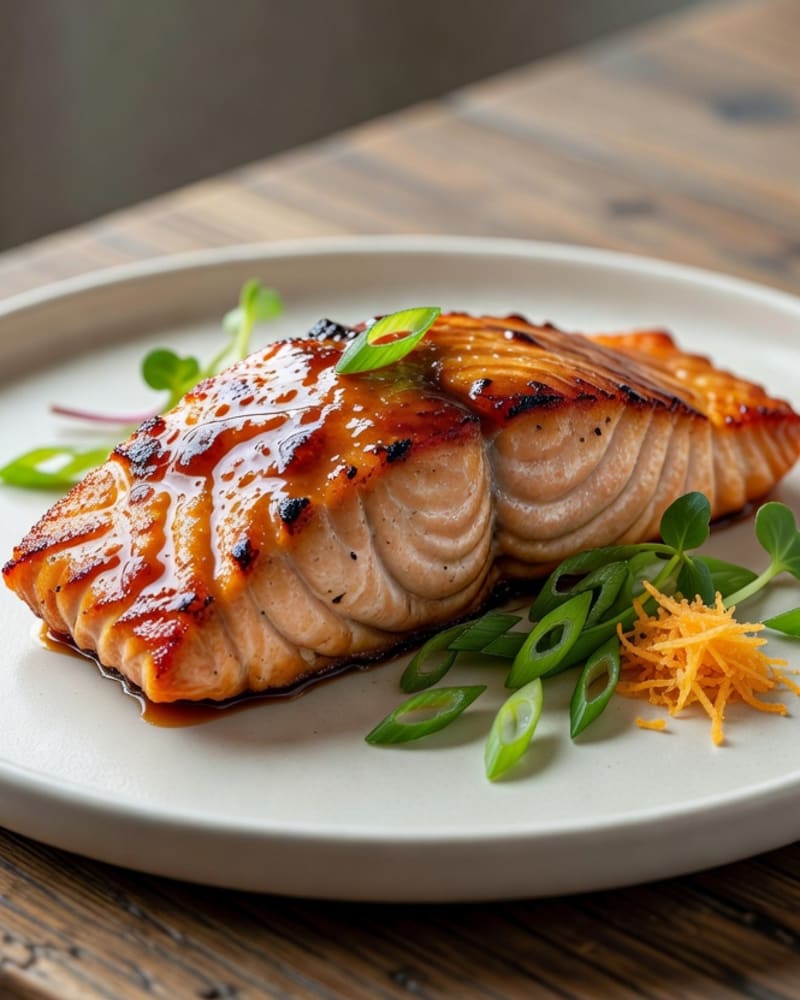
About 1052 calories per serving, estimated from the ingredient list.
It is 7:12 on a Thursday, someone is coming over at eight, and the fridge holds two salmon fillets and a tub of miso you bought for one soup back in March. This miso butter salmon recipe takes you from cold tray to two finished bowls in 28 minutes. The glaze does such a convincing impression of effort that you can let them assume the rest, and we certainly won't correct them.
Two fillets, one tray, and a glaze that does the flirting for you.
The miso butter is four things stirred together in a bowl: white miso, butter, mirin and sesame oil. Under the broiler it bubbles, darkens at the edges and turns into a salty, sweet lacquer that tastes slow even though it had eight minutes. The rice cooks while you prep, the bok choy chars in a skillet while the fish broils, and everything lands at the same moment, which is the part that reads as competence.
What you need
- 2 salmon fillets
- 2 tbsp white miso paste
- 1 tbsp butter
- 1 tbsp mirin
- 1 tsp sesame oil
- 2 scallions
- 1 tbsp sesame seeds
- 1½ cups rice
- 1 lb bok choy
- ¼ tsp salt
- ¼ tsp black pepper
How to make it
- Rinse 1.5 cups rice, then cook it in a pot with 3 cups water and a pinch of salt until tender, about 15 minutes. Fluff and set aside.
- Trim and halve the 1 lb bok choy lengthwise. Slice the 2 scallions. Toast 1 tbsp sesame seeds in a dry pan for 1 minute until golden.
- Mix 2 tbsp white miso paste, 1 tbsp butter, 1 tbsp mirin, and 1 tsp sesame oil into a smooth paste.
- Pat the 2 salmon fillets dry and season with salt and black pepper. Place on a foil-lined baking sheet and spread the miso butter over each fillet.
- Broil the salmon on high for 8 minutes until the glaze is bubbly and the fish flakes easily.
- While the salmon broils, heat a skillet over medium heat and cook the bok choy cut-side down for 4 minutes until lightly charred and tender.
- Divide the cooked rice between two bowls. Top each with a salmon fillet and some bok choy.
- Garnish with the sliced scallions and toasted sesame seeds.
Notes
Cooked leftovers keep three to four days refrigerated, per USDA FSIS. Store the salmon, rice and bok choy in separate containers if you can, because the bok choy weeps a little and softens the rice overnight.
Leftover salmon is better cold than reheated. Flake it over the rice with the last of the scallions and eat it at your desk like a person who meal plans on purpose. If you do reheat it, go gently and briefly, because a second round of heat dries salmon out fast.
The salmon from this miso butter salmon recipe does not freeze well once broiled; the texture turns cottony. The miso butter on its own keeps happily in a covered jar in the fridge, so mixing a double batch is a reasonable move for the next time the evening changes shape at seven.
The method says to broil until the fish flakes easily, and if you own a thermometer, the USDA safe minimum for fish is 145°F. Thick center-cut fillets take longer than thin tail pieces, so check the thickest part of each one rather than trusting the clock alone.
Foil under the fish is not decoration. Miso and mirin both carry sugar, and sugar welds itself to a bare sheet pan. With foil, cleanup is folding one sheet into the trash.
This is the dinner you swipe right on at lunch and feel quietly smug about by 7:40. Two portions, no sad Saturday leftovers to negotiate with, and a table that looks like you had a plan all along.
Swaps that actually work
The white miso is the point of any miso butter salmon recipe. It brings the salt, the depth and the sugars that brown, so leave it alone. Yellow miso behaves almost the same. Red miso is stronger and saltier, so use a little less and taste the paste before it goes on the fish.
The butter and mirin are where you have room. No mirin: a small pinch of sugar dissolved in a splash of water puts the sweetness back, though you lose a little of the gloss. No butter: a neutral oil makes a thinner glaze that browns less but still works.
Bok choy can become broccolini, green beans or halved Brussels sprouts, cooked the same way in the skillet until the edges char. Thicker vegetables need a few extra minutes, so start them first. Think of the bok choy as the friend who makes you look good in photos: you can bring someone else, but bring someone equally green.
The salmon can become arctic char, which cooks almost identically, or cod if you want something milder. Cod fillets are often thinner and more delicate, so start checking them earlier.
The swap that costs you the dish is baking instead of broiling. Baking cooks the fish, but the glaze stays pale and pasty, and the dark, bubbling top is the whole reason to make this. If your oven has no broiler, move the tray to the top rack at the hottest setting you have and accept a paler finish.
If it goes wrong
The glaze burned before the fish was done. The tray sat too close to the element, or your broiler runs hot. Pull it out, lift any black patches off with a spoon, and finish the fish a rack lower. Stay by the oven for the last few minutes next time.
The glaze slid off into a puddle. The fillets went in wet, and moisture under the paste steams instead of browning. Spoon the puddle back over the top and broil another minute. Pat the fish properly dry before the paste goes on.
The salmon is dry. It cooked too long, often because a thin fillet ran on the same timing as a thick one. Spoon the pan juices over it and serve it flaked over the rice, where the rest of the bowl covers for it.
It tastes flat. The miso is doing all the seasoning for the fish, and the rice and bok choy have only a pinch of salt between them. Add a little more salt to the bok choy and lean on the scallions, which are there for brightness.
What to serve with it
The recipe already builds the bowl: rice, salmon, charred bok choy, scallions and toasted sesame seeds. That is the default, and it is a complete dinner.
The better version of the default puts something sharp on the side, like quick cucumber pickles in rice vinegar or a spoonful of kimchi. The glaze is rich and sweet, and a little acid keeps the last bite as good as the first.
The thing in the fridge that lifts it is a wedge of lime, or a drizzle of chili crisp if there is a jar hiding in the door.
If someone is watching you cook, set the bowls up at the counter and let them add their own scallions and sesame seeds. It is less effort than plating and looks far more relaxed.
As lunch the next day, cold salmon flaked over cold rice with the leftover bok choy holds up well.
Why this one earns its place
It is a dinner for two that looks considered, takes 28 minutes and uses one tray, one pot and one skillet. That ratio of effort to impression is hard to beat on a weeknight, and it gives the week one meal that feels like an occasion rather than a task.
It also solves the miso problem, the tub in the fridge door that came home for a single recipe. This miso butter salmon recipe uses two tablespoons, and once you have tasted miso under a broiler, the rest of the tub stops looking like a guilty purchase.
Swipe it into the week for the night someone is coming over, and let the agent put the salmon and bok choy in the cart while you decide what to wear.
If you like a sweet, glossy glaze on salmon, the spicier cousin is gochujang salmon. For more dinners built around two people and two moods, see meal planning for couples. And if the miso tub still has plenty left, miso ramen is the next place for it to go.
More like this: all Asian recipes in Crave Corner.