Gochujang Salmon With a Sticky Glaze That Stops Short of Burnt
Jump to recipe ↓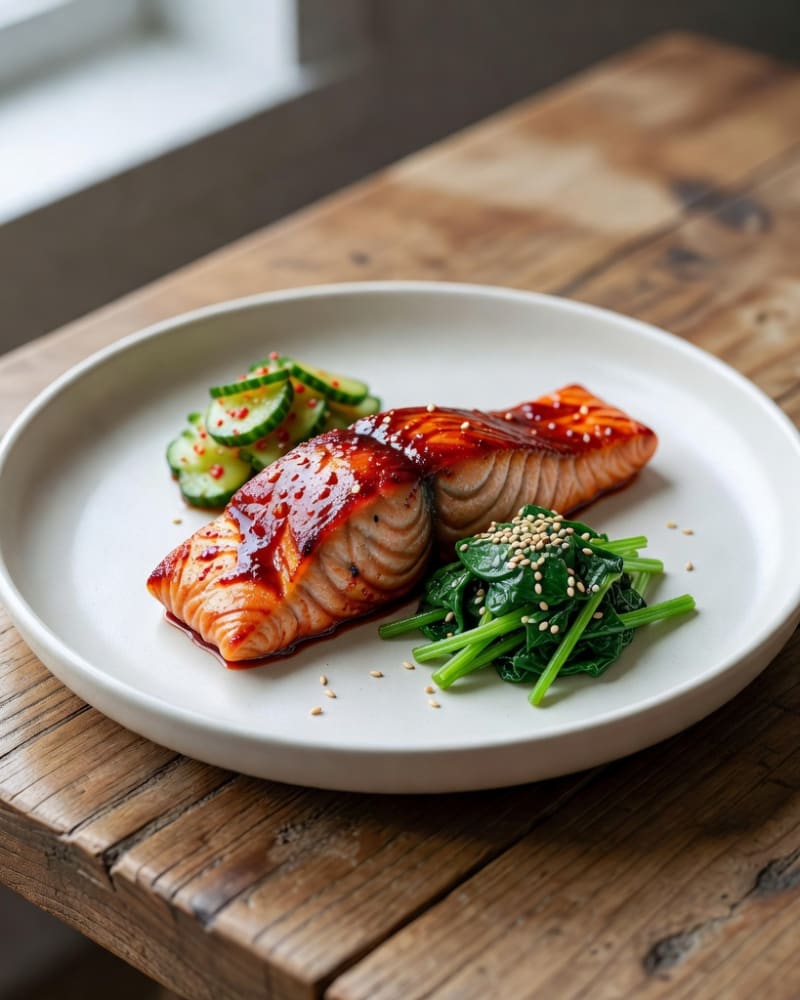
About 1269 calories per serving, estimated from the ingredient list.
It is 7:10 p.m., there are two salmon fillets in the fridge, and the rice went on before you took your coat off. Two fillets, so someone is coming over, and you would like them to think you tried harder than you did. Gochujang salmon is five things stirred together in a small bowl and a pastry brush, and that is most of the effort.
Eight to ten minutes under the broiler turns that red paste into a glossy, sticky lacquer that reads as date night.
Gochujang is a Korean fermented chili paste, and it brings heat, a savory depth and a little sweetness all at once. Honey pushes the sweetness further and caramelizes under the broiler. Soy sauce adds salt, sesame oil adds a toasty note, and a single garlic clove keeps it from tasting like candy. Brushed over salmon and broiled, the glaze catches dark at the edges while the fish underneath stays tender. With steamed broccoli and rice, the plate is complete without any further thought.
What you need
- 2 salmon fillets
- 2 tbsp gochujang paste
- 1 tbsp honey
- 1 tbsp soy sauce
- 1 tsp sesame oil
- 1 garlic clove
- 1 tbsp sesame seeds
- 3 scallions
- 2 cups white rice
- 1 head broccoli
- ¼ tsp salt
- ¼ tsp black pepper
How to make it
- Cook 2 cups white rice according to package directions and set aside.
- Cut the broccoli into florets and steam them in a pot with a little water for 5 minutes until tender.
- Mix 2 tbsp gochujang paste 1 tbsp honey 1 tbsp soy sauce 1 tsp sesame oil and the minced garlic clove in a small bowl.
- Pat the 2 salmon fillets dry and place them skin side down on a foil lined baking sheet.
- Brush the gochujang glaze over the salmon and broil on high for 8 to 10 minutes until caramelized and flaky.
- Garnish the salmon with 1 tbsp sesame seeds and sliced scallions from the 3 scallions.
- Serve the salmon over the rice with the steamed broccoli on the side.
Notes
Cooked leftovers keep three to four days refrigerated, per USDA FSIS. Leftover salmon is often better cold than reheated. Flake it over rice for lunch, or warm it very gently in a low oven, covered, so it does not dry out.
Cooked salmon can be frozen, but the texture suffers. It is fine flaked into fried rice later and disappointing as a fillet, so cook what you will eat in the next few days.
The salmon is done when it flakes easily with a fork and has turned opaque most of the way through. USDA puts the safe minimum for fish at 145°F if you want to check with a thermometer.
Broilers vary a lot. Eight to ten minutes is the guide in the method, but the real factors are how close the rack is to the element and how thick the fillets are. Thin fillets may be ready at the low end. Check early.
Pat the fillets very dry before glazing. Moisture on the surface keeps the glaze from sticking, and a glaze that slides off pools on the foil and burns there instead of on the fish.
Line the baking sheet with foil. Honey that caramelizes on a bare pan has to be soaked off, and you do not want to be elbow-deep in a sheet pan while your date finishes the wine alone.
Gochujang salmon is happiest with the skin side down on the foil. The skin protects the bottom of the fillet from the heat of the pan, and if you leave it on the foil when you lift the fish off, it peels away cleanly.
Start the rice first and the broccoli second. The rice takes the longest, the broccoli needs only five minutes in its pot, and the salmon is the last thing to go under the heat, so everything lands on the plate warm at the same time.
Swaps that actually work
The gochujang is the point. It is the fermented depth and the slow heat, and nothing else quite replaces it. Sriracha mixed with a little white miso gets you somewhere in the neighborhood, but it is a different dish. Many grocery stores carry gochujang in the international aisle, and a tub keeps for a long time in the fridge. Swipe on it once and it sticks around, which is more than some first dates manage.
Maple syrup or brown sugar work in place of honey. Both caramelize the same way under the broiler.
Tamari works in place of soy sauce if you need it gluten-free. Check the gochujang label too, since some brands contain wheat.
Skin-on and skinless fillets both work. Arctic char is a close swap for salmon. Boneless chicken thighs take the glaze well too, though they need longer and should reach 165°F.
Broccoli can become green beans, bok choy or spinach, whatever is on hand. White rice can be jasmine, short-grain or brown, cooked however you normally cook it.
If it goes wrong
The glaze burned before the fish was cooked. The rack was too close to the element. Move the pan down a level, tent the fillets with foil, and finish cooking. Scrape off any truly black patches before serving.
The glaze slid off. The fish was wet, or the glaze was laid on in one heavy coat. Pat the fillets dry and brush on a thinner layer. If there is glaze left in the bowl, brush on a second coat halfway through.
The salmon is dry. It cooked too long. Salmon keeps cooking for a minute after it leaves the oven, so pull it when it just flakes. For the fillets in front of you, spoon any pan juices over the top and serve with plenty of rice.
It is too spicy. Gochujang brands vary in heat, and some are labeled by heat level. Serve with more rice, and next time stir a little extra honey into the glaze.
What to serve with it
The default is right there in the method: white rice and steamed broccoli. It is a complete dinner and does not need anything else.
The better version of the default is a quick cucumber salad, thinly sliced with a splash of rice vinegar and a pinch of salt, because something cold and crisp next to the warm, sticky salmon is the whole appeal.
The thing in the fridge that lifts gochujang salmon is kimchi. A spoonful on the side adds crunch, acidity and more of the same fermented flavor.
Leftovers make a good cold lunch bowl. Flake the salmon over leftover rice with broccoli and a few sliced scallions.
Why this one earns its place
Gochujang salmon is a dinner for two that plays it cool, and no one at the table has to know how little it asked of you. A five-ingredient glaze and a hot broiler do most of the work, and the result is sticky, spicy and properly satisfying.
It also opens the door to gochujang itself, which you will find yourself reaching for again once the tub is in the fridge. Swipe it into a weeknight and let the agent put the gochujang in the cart.
For another quick plate that leans on rice, cauliflower fried rice is a good companion. Meal planning for couples covers cooking for two without waste. And quick weeknight dinner ideas has more meals that are on the table this fast.
More like this: all Asian recipes in Crave Corner.