Korean Fried Chicken Wings That Stay Crunchy Under a Gochujang Glaze
Jump to recipe ↓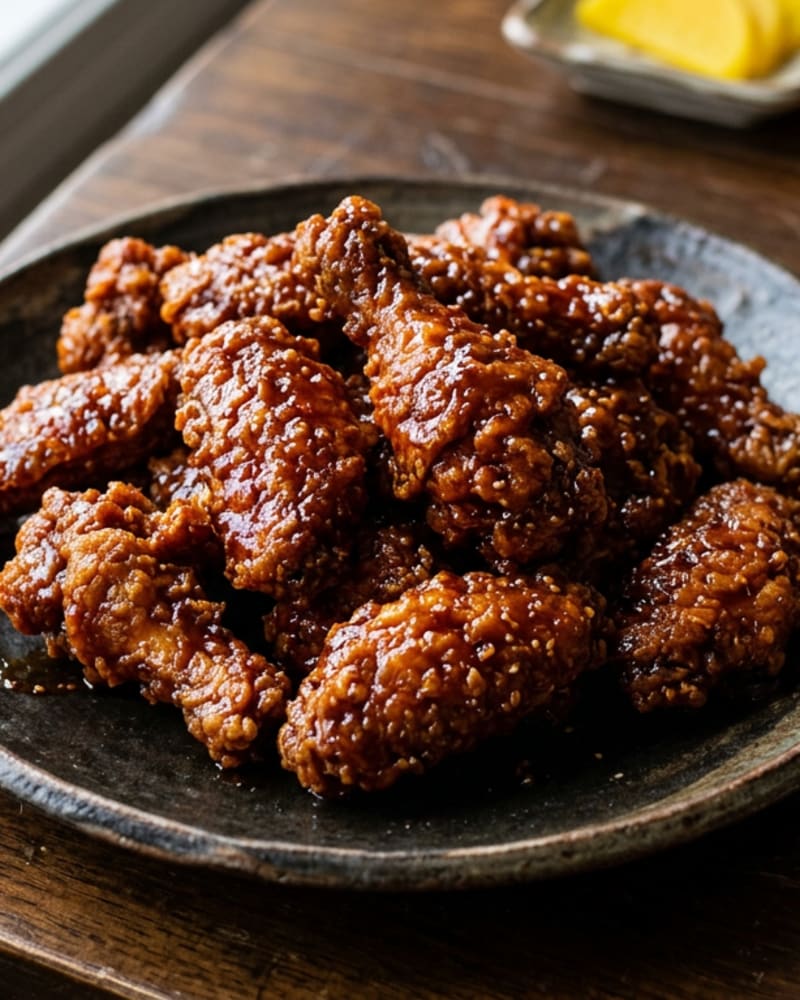
It is 9:20 on a Saturday, the movie is picked, and the question of what to eat has turned into a negotiation on the couch. This Korean fried chicken recipe settles it with wings fried twice in potato starch and tossed in a gochujang honey glaze that is sticky, sweet and loud. It makes a night in look like the better offer, and you can let them think it was their idea.
Two fries, one glaze, and a crunch you can hear across the couch.
Potato starch fries up thin and crisp, more like a shell than a breading. The first fry at 350°F cooks the wings through; the second, hotter fry at 375°F drives out moisture and sets the crust hard. Then the glaze goes onto the hot wings in a big bowl, and they go to the table straight away while they still crackle.
What you need
- 2 lb chicken wings
- 8 oz potato starch
- 4 cups vegetable oil
- 3 tbsp gochujang
- 2 tbsp honey
- 1 tsp salt
- ½ tsp black pepper
How to make it
- Season the chicken wings with salt and black pepper to taste.
- Place the potato starch in a large bowl, add the wings, and toss until evenly coated, then let them rest for 10 minutes.
- Heat the vegetable oil in a deep pot to 350 degrees F.
- Fry the wings in batches for 8 minutes, then remove and drain on paper towels.
- Increase the oil temperature to 375 degrees F and fry the wings again for 4 minutes until extra crispy.
- Mix the gochujang with the honey in a large bowl.
- Toss the hot wings in the gochujang honey glaze and serve right away.
Notes
Cooked leftovers keep three to four days refrigerated, per USDA FSIS. Glazed wings soften in the fridge, so reheat them on a rack in a hot oven or an air fryer until the glaze sizzles and the skin firms up again.
If you know there will be leftovers, keep a few wings unglazed. They crisp up again far better the next day, and you can glaze them fresh.
Wings are done when the meat pulls easily from the bone, and the USDA safe minimum for poultry is 165°F, measured at the thickest part away from the bone.
Frying in batches is how this works. Four cups of oil in a deep pot is plenty for wings as long as they have room to move. Too many at once drops the oil temperature, and they come out pale. Let the oil climb back between batches.
Use a thermometer for the oil if you have one. Guessing is how you end up with a dark outside and an underdone middle.
Keep the pot no more than half full of oil, pat the wings dry so they do not spit, and keep a lid within reach. Do not put water on an oil fire.
This Korean fried chicken recipe is the swipe for a crowd, a game, or the night you want the person next to you to stop scrolling and look up.
Swaps that actually work
The double fry is the point of any Korean fried chicken recipe. Skip the second round and you have nice wings, not Korean fried chicken, so leave it alone.
Potato starch can become cornstarch, which works nearly as well and sits on more shelves. Some cooks mix the two. Flour gives a thicker, bready coat that softens faster under the glaze.
Wings can become boneless chicken thighs cut into chunks. They cook faster, so watch the first fry and check for 165°F.
The glaze is two ingredients and easy to build on. Minced garlic, a splash of soy sauce or a little rice vinegar all fit, and maple syrup or brown sugar can stand in for honey. If gochujang is too hot for someone at the table, cut it with more honey, or split the batch and toss half the wings in honey, soy sauce and garlic instead.
Not ready for the full commitment of a deep pot of oil? An air fryer makes a good wing with this starch coating, though the crust will be less glassy. Brush the glaze on lightly so it does not steam the coating soft.
The swap that costs you the dish is glazing the wings early and letting them sit. Glaze, toss, serve, in that order and without a pause.
If it goes wrong
The coating fell off in the oil. The wings went straight from the starch into the pot. Let them rest after coating so the starch turns tacky, and shake off loose powder before they go in.
The wings are pale and greasy. The oil was too cool or the pot too crowded. Fry fewer at a time, and let the oil come back to 350°F before each batch.
The outside is dark but the inside is underdone. The oil ran hot on the first fry. Lower the heat, and finish any underdone wings on a rack in a hot oven until they reach 165°F before glazing.
The glaze made them soggy. They sat. Toss them only when they are hot from the second fry, and get them to the table straight away.
What to serve with it
The default is a big pile of wings and more napkins than seems reasonable.
The better version of the default adds pickled radish, like the yellow slices in the photo or cubes of white radish pickle, sharp and cold against the hot glaze.
The thing in the fridge that lifts it is sliced cucumber with rice vinegar and salt, a bowl of kimchi, or a crunchy cabbage slaw.
To make it a full dinner, add steamed rice to catch the extra glaze. Fried chicken with beer is a pairing popular enough in Korea to have its own name, chimaek, and a cold beer or sparkling water fits right in.
As lunch the next day, the wings are good reheated in a hot oven, and cold from the fridge they are a guilty pleasure.
Why this one earns its place
This Korean fried chicken recipe turns a dish you might think of as takeout only into something you can make at home with seven ingredients, one pot and a thermometer. The double fry sounds fussy and is mostly waiting.
It also makes a night in feel like an event. A plate of glossy wings in the middle of the table makes people sit closer and talk with their hands full.
Swipe it in for game night or a movie night for two, and the agent shops the wings, the potato starch and the gochujang.
If gochujang has a permanent spot in your fridge, Korean beef bulgogi bowls are the weeknight follow-up. Not sure where potato starch lives in your store? How to shop for a new recipe covers that. And if you would rather choose dinner the way you choose everything else, by swiping, the food tinder app post explains how.
More like this: all Korean recipes in Crave Corner.