Carnitas Burrito Bowls, Crisped in the Pan at the End
Jump to recipe ↓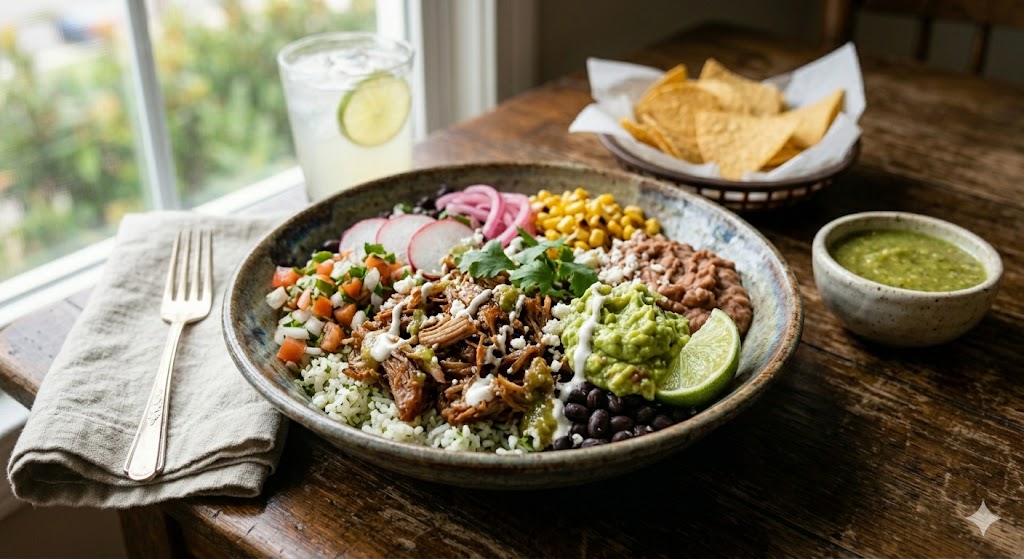
About 624 calories per serving, estimated from the ingredient list.
Sunday afternoon, three hours where you are in the house anyway, and this carnitas burrito bowl recipe asks for about fifteen minutes of your attention across all of it.
Carnitas that never hit a hot pan are just pulled pork.
The slow cook makes the meat tender, and tenderness on its own is monotonous. What makes carnitas worth the afternoon is the contrast between soft strands and crisped brown edges, and that happens in three minutes at the very end in a pan hot enough to hurt.
What you need
- 1.2kg pork shoulder, cut into large chunks
- 2 tsp each cumin and dried oregano
- 1 onion, quartered
- 4 cloves garlic, peeled
- 2 oranges, juiced, halves thrown in too
- 300g rice, cooked
- 400g tin black beans, drained
- Salsa, lime, coriander and soured cream to build
How to make it
- Season the pork chunks heavily with salt, the cumin and the oregano, turning until every side is coated.
- Put them in a heavy pot with the onion, garlic, orange juice and the squeezed halves, and add water until the meat is about two thirds submerged.
- Cover and cook at 150C for three hours, until a fork twists through the meat with no resistance.
- Lift the pork out, discard the orange halves, and shred it coarsely with two forks. Keep the cooking liquid.
- Get a wide pan very hot, add the pork in a single layer, and leave it alone for three minutes until the underside is properly brown and crisp.
- Splash in a ladle of the cooking liquid, toss once, and take it off the heat while some edges are still crunchy.
- Build bowls with rice, beans and pork, then salsa, lime, coriander and soured cream at the table.
Notes
Cooked leftovers keep three to four days refrigerated, per USDA FSIS. Store the pork in some of its cooking liquid rather than dry, or it stiffens.
It reheats extremely well, which is unusual, because you crisp it again in a pan each time and it comes back better than a reheat has any right to be.
The cooked pork freezes for three months, again with a little liquid. Portion it before freezing so you can crisp one serving at a time.
Do not throw the cooking liquid away. It is orange, pork fat and aromatics reduced for three hours, and a ladle of it is what stops the crisped meat drying out. Skim the fat if you want, or do not.
The most common disappointment is pork that shreds but tastes underseasoned. A shoulder that size needs considerably more salt than feels comfortable going on, because it is seasoning a large mass from the outside.
Cut the pork into chunks rather than cooking the shoulder whole. Large pieces cook more evenly, they shred without a fight, and every cut surface is another face that takes seasoning and later takes colour in the crisping pan. A whole joint is more impressive going into the oven and worse coming out of it.
Do not let the pot boil. Three hours at 150C should produce a lazy bubble and nothing more. A hard simmer tightens the muscle fibres before the connective tissue has had time to break down, which is how people end up with pork that is somehow both overcooked and tough.
Crisp in batches if you are doing the full quantity. Six servings of shredded pork will not fit in one pan in a single layer, and stacked pork steams exactly like crowded vegetables do.
Swaps that actually work
Pork shoulder is the point, and the fat content is doing the work rather than the cut being traditional. Leaner pork will shred but it goes stringy and it will not crisp properly, because there is no rendered fat to fry it in.
The orange is more structural than it sounds. It is the acid that cuts three hours of rendered fat, and without it the whole bowl reads as heavy. Lime juice plus a little sugar is a workable substitute.
Rice can be anything, including leftover rice from the night before, and cauliflower rice works if you want it lighter. Black beans can be pinto.
The oregano is worth using dried rather than fresh, which is unusual advice. Dried Mexican oregano in particular holds up across three hours where fresh herbs simply disappear, and it is one of the flavours that makes the finished pork taste like carnitas rather than generically slow cooked.
The swap that costs you the dish is skipping the final crisping and going straight from pot to bowl. It saves five minutes and removes the reason to make carnitas rather than any other slow cooked pork.
If it goes wrong
The pork will not shred. It is not done. Connective tissue needs time rather than heat, so put it back for another thirty minutes and check again.
It crisped but went dry. No cooking liquid at the end, or it stayed in the pan too long after the splash. Off the heat as soon as it sizzles down.
It is greasy. Skim the liquid before you use it, and drain the pan after crisping.
It is flat. Salt first, then lime at the table. A burrito bowl is assembled rather than cooked as one thing, so it needs acid on top as well as seasoning underneath.
What to serve with it
The default is everything in the bowl and nothing beside it, because a burrito bowl is already a complete plate.
The better version of the default is putting every component out in separate dishes and letting people build their own. It costs nothing, it handles the person who does not want soured cream, and it stops the rice going soggy under everything else in a bowl that sits.
The thing in the fridge that lifts it is quick pickled red onion, which cuts the fat better than salsa does.
A cold beer or something sharp works better here than anything sweet, because three hours of rendered pork fat wants cutting rather than complementing.
It is one of the best next day lunches on this site, and the pork is genuinely better on day two.
Why this one earns its place
It is three hours of oven time for six servings, and almost none of that is work. That ratio is the entire argument for cooking a shoulder rather than something quicker.
It also gives you a component rather than a meal. Crisped carnitas goes into bowls on Sunday, tacos on Monday and a quesadilla on Tuesday without anyone feeling they are eating the same dinner three times, which is a different thing from ordinary leftovers.
If cooking once and eating three times is the aim, meal prep for the week is the system around this. For working out whether a large cut is actually cheaper per serving, average grocery budget for a family of four. And weekly meal planning is where a Sunday shoulder stops being ambitious and becomes routine.
More like this: all Mexican recipes in Crave Corner.