Jeyuk Bokkeum, Spicy Korean Pork Stir-Fry in Sixteen Minutes
Jump to recipe ↓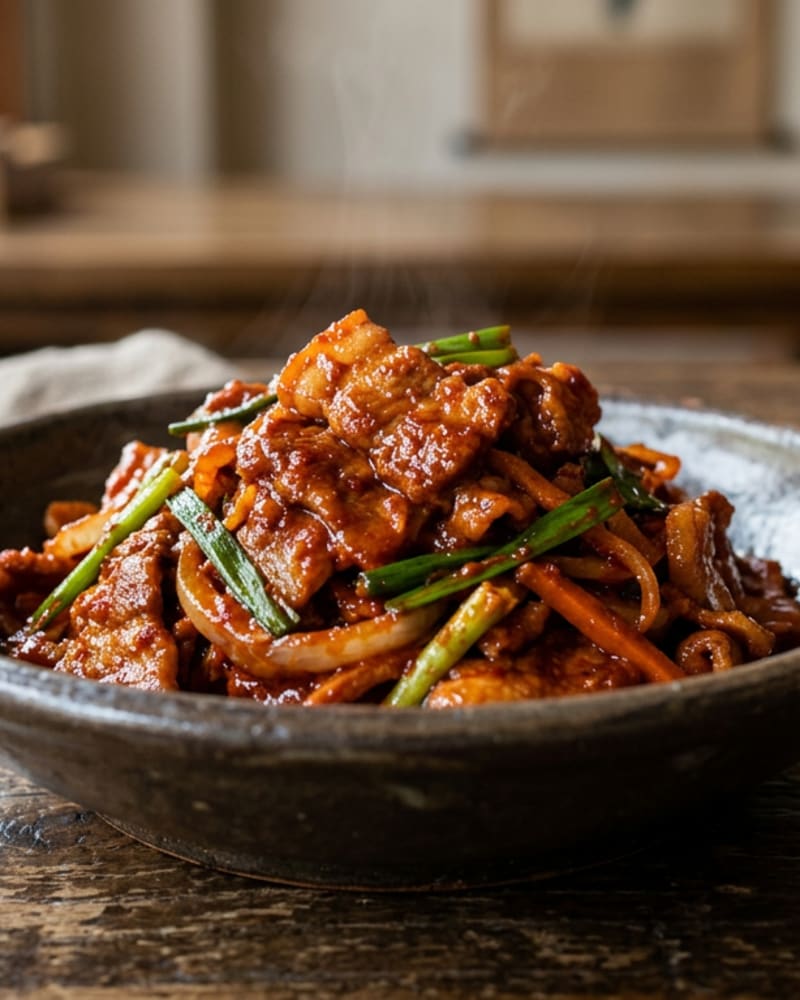
It is 6:10 on a Thursday, you have one pound of pork shoulder and a tub of gochujang that has been in the fridge door since you last felt ambitious. This jeyuk bokkeum recipe goes from cutting board to table in sixteen minutes, in one skillet, with a sauce that sticks and a little heat that lingers. It is a spicy dinner with an attitude, and it does not ask you to be fluent in anything.
Hot pan, red sauce, thin pork, and no mercy for the stove.
Jeyuk bokkeum is a Korean stir-fry of sliced pork shoulder in a red, spicy sauce built on gochujang. The pork gets tossed with the paste, hits a very hot skillet, and browns while the sauce goes dark and sticky around it. Then the onion goes in, then the scallions, and it is done.
There are not many ingredients in this recipe, and that is its charm. The gochujang brings spice, sweetness and savory depth all at once, so the rest of the work is cutting and timing.
What you need
- 1 lb pork shoulder, sliced thin
- 3 tbsp gochujang
- 1 onion, sliced thin
- 3 stalks green onion, cut into 1 inch pieces
- ¼ tsp salt
- ¼ tsp black pepper
How to make it
- Slice the 1 lb pork shoulder into thin strips, about 6 minutes of prep.
- Slice the 1 whole onion into thin strips.
- Chop the 3 stalks green onion into 1 inch pieces.
- Toss the pork strips with the 3 tbsp gochujang, salt, and black pepper.
- Heat a large skillet over high heat and add the marinated pork.
- Stir fry the pork for 6 minutes until it starts to brown.
- Add the sliced onion and cook 3 minutes more.
- Toss in the chopped green onion and cook 1 minute until everything is caramelized.
Notes
Cooked leftovers keep three to four days refrigerated, per USDA FSIS. This jeyuk bokkeum recipe reheats fine. Use a hot skillet for a minute or two so the edges pick up color again.
It improves a little on day two, because the sauce settles into the pork. It also freezes acceptably. The onion softens after thawing, but the pork is still good.
The method is quick. Slice the pork shoulder into thin strips, which takes about six minutes, and slice the onion and cut the scallions into one-inch pieces. Toss the pork with the gochujang, salt and pepper. Heat a large skillet over high heat, add the pork, and stir-fry for six minutes until it starts to brown. Add the onion for three minutes, then the scallions for one more minute, until everything looks caramelized.
Pork shoulder is a fatty cut, which is why it stays tender over high heat. Slicing it thin is the whole trick, so if you have trouble, chill it for about twenty minutes first. It firms up and the knife goes through cleanly.
Whole cuts of pork are cooked to 145°F with a three-minute rest, but thin strips browned for six minutes in a hot pan will be cooked through. Cut into a thick piece to check there is no pink.
Keep a bowl of rice ready before you start, because the pork finishes faster than rice does. If the rice is not going yet, start it first, since the pork will be done in the time it takes to find a clean bowl.
Gochujang is salty as well as spicy, and the recipe only adds a quarter teaspoon each of salt and pepper. Taste before you add any more.
Swaps that actually work
The gochujang is the point of any jeyuk bokkeum recipe. It is a fermented red chili paste, sold in tubs in the international aisle of many grocery stores, and nothing else in the cupboard tastes like it. Leave it alone.
Pork belly makes a richer version, and pork loin makes a leaner one. Loin dries out faster, so pull it at the first sign of browning. Thin chicken thigh slices also work, and chicken needs to reach 165°F.
If you want a longer marinade, tossing the pork with the gochujang and letting it sit while you slice the vegetables gives the flavor a head start. The recipe works without it.
For sweetness, a spoon of honey or a pinch of sugar in the marinade rounds out the heat. For extra depth, a little minced garlic goes into the toss. Neither is in the recipe as written, so treat them as optional.
Regular onion can be replaced with a sweet one. Scallions can be replaced with chives or leeks.
The swap that costs you the dish is a gentle pan. If the skillet is only medium, the pork releases water and boils instead of browning, and you lose the caramelized edges.
SwipeCart angle: the dating app of dinners has its own type, and this is the red-flag-that-turns-out-to-be-fine one. It looks like trouble and it is a very good time.
If it goes wrong
The pork is gray and watery. The pan was not hot enough or it was crowded. Turn the heat to high, work in two batches if you have to, and let the liquid cook off before you move on to the onion.
The sauce burned. The gochujang has sugar in it, and it can scorch. Lower the heat a little, add a splash of water to loosen the pan, and keep stirring.
It is too spicy. Serve it over plenty of rice and with a cooling side. Next time use a little less paste.
It is too salty. Gochujang brands vary. Stir in a splash of water, serve it over more rice, and use a little less paste next time.
The pork is tough. It was sliced thick or cooked too long. Slice thinner next time and pull it from the heat as soon as it browns.
What to serve with it
The default is a bowl of steamed rice. It cools the heat and catches the sauce.
The better version of the default is lettuce leaves. Wrap a piece of pork and some rice in a leaf, and you have a cooler, crisper bite.
The thing in the fridge that lifts it is kimchi, sliced cucumber, or a fried egg on top.
This jeyuk bokkeum recipe works as lunch the next day. Reheat it in a hot skillet and serve it over rice.
Why this one earns its place
This jeyuk bokkeum recipe is sixteen minutes, one pan, a short grocery list and a lot of flavor. A weeknight dinner that tastes like effort is a good thing to have in rotation.
If you like Korean flavors at home, bossam is the gentle pork cousin and buldak is the spicy chicken one. Budget grocery list app is where to read about keeping a short list like this one cheap.
More like this: all Korean recipes in Crave Corner.