Buldak With a Sticky Glaze and a Blanket of Melted Mozzarella
Jump to recipe ↓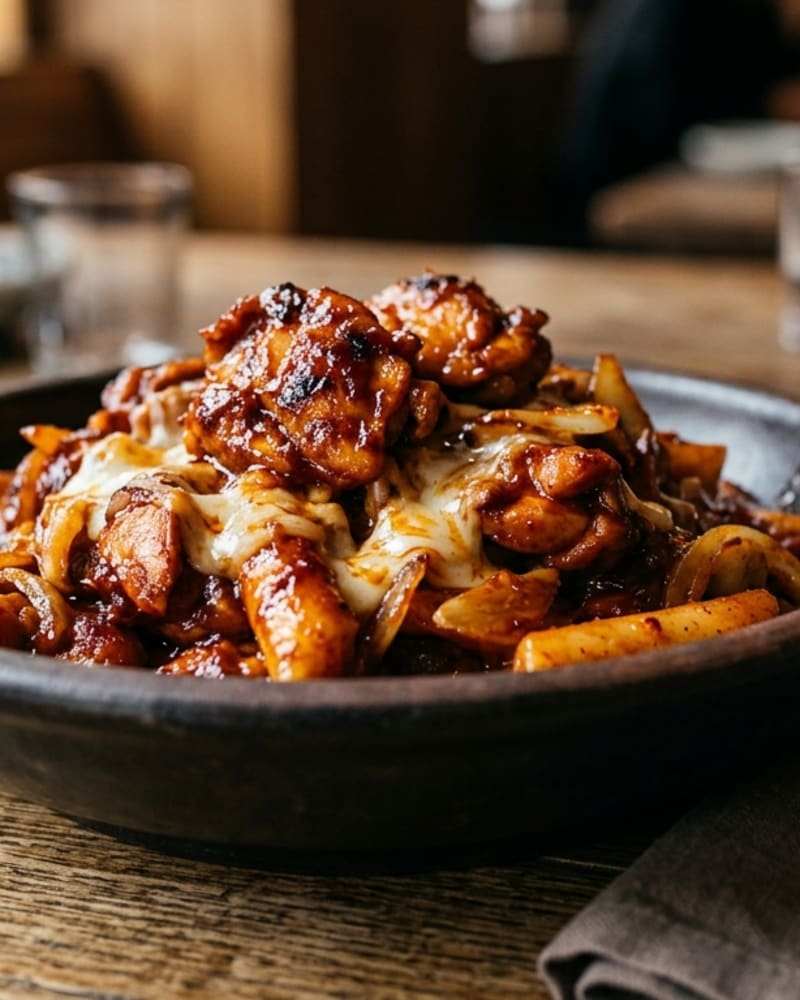
At 6:30 on a Wednesday the rice goes on, the gochujang comes out of the fridge, and you decide to be a little reckless. This buldak recipe takes 41 minutes and ends with sticky chicken wearing a blanket of melted mozzarella. Buldak means fire chicken, which is a fair warning, and you are going to ignore it, the way you do with anyone who is bad for you in exactly the right way.
Sweet heat, a glossy glaze and a cheese pull, all in one skillet.
The sauce is gochujang, gochugaru, soy sauce, honey, garlic and ginger whisked in a bowl before the chicken goes in the pan. It goes on after the chicken is cooked, so you are only coating, not simmering. Then the mozzarella goes over the top, the lid goes on for a minute or two, and dinner is served over short-grain rice that has been waiting patiently.
What you need
- 1½ lb chicken thighs
- 3 tbsp gochujang
- 2 tbsp gochugaru
- 2 tbsp soy sauce
- 2 tbsp honey
- 5 garlic
- 1 tbsp ginger
- 2 tbsp vegetable oil
- 1 cup mozzarella cheese
- 3 green onions
- 1 tsp sesame seeds
- 1½ cups short-grain rice
- ½ tsp salt
- ¼ tsp black pepper
How to make it
- Cut 1.5 lb chicken thighs into bite-size pieces, mince 5 garlic cloves, grate 1 tbsp ginger, and slice 3 green onions (about 8 minutes).
- Rinse 1.5 cups short-grain rice until water runs mostly clear and cook according to package directions (about 20 minutes).
- In a bowl, whisk 3 tbsp gochujang, 2 tbsp gochugaru, 2 tbsp soy sauce, 2 tbsp honey, the minced garlic, grated ginger, salt to taste, and black pepper to taste.
- Heat 2 tbsp vegetable oil in a large skillet over medium-high heat. Add the chicken and cook for 6 to 8 minutes, stirring, until browned and cooked through.
- Pour the sauce over the chicken and stir for 2 to 3 minutes until every piece is glossy and sticky.
- Sprinkle 1 cup mozzarella over the chicken, cover the pan, and cook 1 to 2 minutes until the cheese melts.
- Top with sliced green onions and 1 tsp sesame seeds, then serve hot over the cooked rice.
Notes
Cooked leftovers keep three to four days refrigerated, per USDA FSIS. The cheese firms up in the fridge, which is normal. Reheat in a skillet over medium heat with a splash of water and the glaze loosens back up. We would keep this one to the fridge rather than the freezer, since melted mozzarella does not always thaw gracefully.
Cut the thighs into bite-size pieces of roughly the same size so they cook through together. Chicken is done at 165°F, and the method's cue is the same: browned outside and cooked through when you cut into the biggest piece.
A buldak recipe this quick depends on prep. The method gives you about 8 minutes to cut the chicken, mince the garlic, grate the ginger and slice the green onions, and the rice takes about 20 minutes, so it goes on as soon as the chopping is done. The chicken and sauce then happen in a handful of minutes.
Once the chicken is browning you will not want to be measuring honey, and sticky tablespoons are easier to handle when the pan is not waiting for you.
Put it on your swipe list on a Monday and the agent will find the gochujang aisle for you. Your only job is to decide how brave you feel.
Swaps that actually work
This buldak recipe takes changes well, as long as the sauce keeps its balance of heat, salt and sweet.
The gochujang is the point. It is the fermented depth, the sweetness and the color, and little in the cupboard stands in for it. Swap it for hot sauce and you have a different dish with the same name, like a rebound with the same haircut.
Everything else flexes. Chicken breast works, though it is leaner and dries out sooner, so pull it the moment it is cooked through. If the spice cupboard is thin on gochugaru, a smaller pinch of cayenne gets you heat without the same fruity edge, so start low and taste.
Mozzarella can be swapped for any good melter. A mild cheddar or a Monterey Jack will do the same job. Short-grain rice is a good bed for a sauce this sticky, though any rice works if the sauce goes over it generously.
The swap that costs you the dish is leaving out the honey. The honey is what keeps the heat from being one-note, and it is what turns the sauce into a glaze.
If it goes wrong
It is too hot. The fire chicken lived up to its name a little too well, and you only have yourself to blame. Stir in another spoonful of honey, scatter on more mozzarella, and serve with extra rice. Cool cucumber slices on the side help too.
The sauce scorched. It hit a pan that was too hot, or it sat without stirring. Turn the heat down to medium, add a splash of water, and stir for a minute until it loosens and turns glossy again. Scrape up anything stuck to the pan.
The cheese went rubbery. It stayed under the lid past the 1 to 2 minutes. Take the pan off the heat and scatter on a fresh handful of mozzarella, then cover for 30 seconds to melt it.
It tastes flat or too sweet. Taste the sauce on the chicken before the cheese goes on. A pinch of salt and a splash of soy sauce bring it back into balance, and a few extra grinds of black pepper add some bite.
What to serve with it
The default is the short-grain rice the recipe is built around. Cook the full 1½ cups, so there is plenty to catch the sauce.
The better version of the default is a quick cucumber salad on the side, sliced thin and dressed with a little salt, to cool each bite down between rounds of heat. The thing in the fridge that lifts it is a jar of kimchi, which gives you the sour edge that the sweet sauce does not have.
Spoon the chicken over the rice in bowls, so the glaze runs down into the grains. A good buldak recipe is half sauce, and the rice is where that sauce ends up.
It works as lunch the next day. Reheat it with a splash of water and add fresh sesame seeds and sliced green onion on top.
Why this one earns its place
Heat, sweet and cheese are three things that should not get along. Stirred together in one pan they somehow do, and that is a good enough reason to keep this one in your rotation.
The sesame seeds and sliced green onions go on at the end for crunch and a fresh bite against the sweet, sticky sauce. It also suits a table with mixed spice limits: cook it as written, and the cheese and rice are there for anyone who wants less fire.
It is a good one for a night when you want something with a little danger and a happy ending. Put it on the table, hand over the rice, and let people sort out their own tolerance.
If you want more of the same fire, Korean fried chicken goes for crunch instead of stickiness. Gochujang salmon puts the same sauce on fish. And swipe meal planner is how a dish like this ends up on the plan in the first place.
More like this: all Korean recipes in Crave Corner.