Japanese Curry Rice That Tastes Like a Slow Sunday in 39 Minutes
Jump to recipe ↓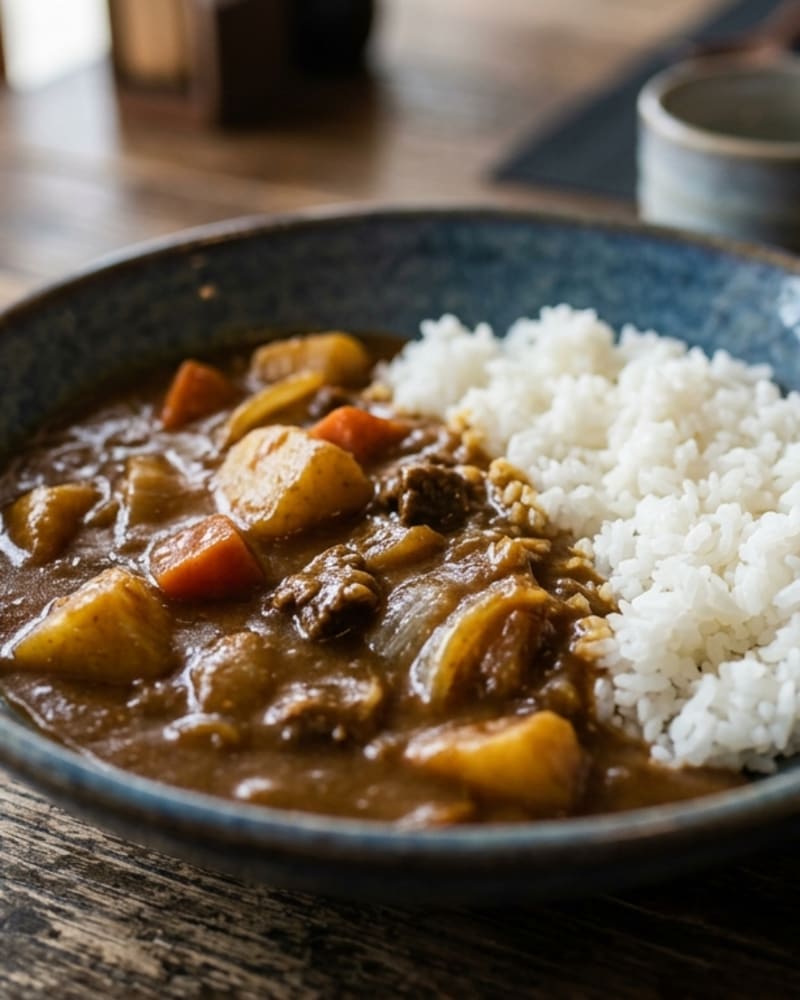
It is 7:05 on a Thursday and the day has been the kind that deserves a bowl of something warm and a door you can close. This japanese curry rice recipe takes thirty-nine minutes, one big pot, and it is the closest thing to being hugged by a dinner. You chop, you brown, you simmer, and the roux does the emotional heavy lifting.
Thick, brown, glossy, and it clings to rice.
Japanese curry is not the sharp, spiky kind. It is mild, a little sweet, rich and savory, built from a block of roux that melts into the broth and turns it velvet. The chicken thighs stay tender, the potatoes go soft at the edges, and the carrots give it color. It is comfort food for a night when you want to be looked after and are not about to cook an entire personality.
You get four bowls out of one pot, and the leftover sauce is arguably better than the first night.
What you need
- 1.25 lb boneless chicken thighs
- 4 oz Japanese curry roux
- 2 microwavable white rice pouches
- 1 yellow onion
- 2 carrots
- 2 Yukon gold potatoes
- 1 tbsp vegetable oil
- 2½ cups water
- ½ tsp salt
- ¼ tsp black pepper
How to make it
- Cut 1.25 lb boneless chicken thighs into 1-inch pieces, slice 1 yellow onion, peel and cut 2 carrots into chunks, and peel and cube 2 potatoes (about 8 to 10 minutes).
- Heat 1 tbsp vegetable oil in a large pot over medium-high heat. Season the chicken lightly with salt and black pepper, then brown for 4 to 5 minutes, stirring once or twice.
- Add the sliced onion, carrot chunks, and potato cubes and cook 3 to 4 minutes until the onion softens at the edges.
- Pour in 2.5 cups water, scrape up any browned bits, and bring to a boil. Reduce heat, cover, and simmer 12 to 15 minutes until the potatoes are fork-tender.
- Break 4 oz Japanese curry roux into pieces, stir into the pot until fully melted, and simmer uncovered 3 to 5 minutes until thick and glossy.
- Microwave 2 white rice pouches according to package directions, about 90 seconds each.
- Spoon the hot rice into bowls and ladle the curry over the top while everything is steaming.
Notes
Cooked leftovers keep three to four days refrigerated, per USDA FSIS. A japanese curry rice recipe like this one keeps well. Curry thickens in the fridge, so loosen it with a splash of water when you reheat it, and stir until it comes back to glossy.
It improves on day two. The flavors settle and the sauce clings better. The potatoes soften a little more, which some people love and others do not, so cut them in larger chunks if you plan to eat it twice.
It freezes acceptably, but potatoes can turn grainy after thawing. If you plan to freeze it, freeze the sauce and chicken and add fresh potato when you reheat.
The method is generous about order. Cut the thighs into one-inch pieces, slice the onion, chunk the carrots and cube the potatoes. Brown the chicken for four to five minutes with salt and black pepper, then add the vegetables and cook another three or four. Pour in the water, scrape up the browned bits from the bottom, and simmer covered for twelve to fifteen minutes until a fork slides into a potato.
Then comes the roux. Break the four ounces into pieces, stir them in until fully melted, and simmer uncovered three to five minutes until the sauce is thick and glossy. Chicken needs to reach 165°F, so cut into a thick piece if you are unsure.
The rice here is the pouch kind, about ninety seconds each in the microwave, so the stove is free for the curry. Spoon it into bowls and ladle the curry over while everything is steaming.
Taste the sauce before you serve it. The roux is already salty, so you may not need to add anything more.
Swaps that actually work
The Japanese curry roux is the point of any japanese curry rice recipe. It is a block, usually sold in a box in the international aisle of many grocery stores, and it is what gives you that mild, sweet, deep-brown sauce. A jar of curry powder stirred into water will not give you the same thing, so leave the roux alone.
The chicken can be swapped for sliced beef, cut thin and browned quickly, or for firm tofu if you want it meatless. Boneless thighs give you the most forgiving texture, because they stay tender when you simmer them. Breast meat tends to dry out and turn stringy, so if you use it, pull it a few minutes early.
The vegetables can move. Sweet potato can stand in for the Yukon gold, and it will melt into the sauce a bit more. Frozen peas stirred in at the end add color.
Short-grain white rice is the classic partner, and the pouch is the fast version. If you have leftover rice, reheat it with a splash of water.
The swap that costs you the dish is skipping the browning. The chicken needs those four to five minutes in the oil, because that is where the savory base of the sauce comes from.
SwipeCart line: if you and the person across the table cannot agree on dinner, this is the one you both swipe right on. It is mild enough to settle a dispute.
If it goes wrong
The sauce is lumpy. The roux went into liquid that was boiling too hard, or it was not broken up. Lower the heat, break it into small pieces, and stir until every piece disappears. If a few lumps remain, press them against the side of the pot with a spoon.
It is too thin. It has not simmered long enough after the roux went in. Keep it going uncovered for another minute or two, stirring, until it coats the back of a spoon.
It is too thick. The roux ran ahead of the water. Stir in a splash of water, a tablespoon at a time, until it flows again.
The potatoes are mushy or still hard. Mushy means they were cut too small or simmered too long. Hard means they need a few more minutes, so cover the pot and test with a fork. Chunks about the same size cook at the same speed.
What to serve with it
The default is white rice and nothing else. The curry is thick and rich, and the rice is what lets you eat a lot of it.
The better version of the default is a small pile of pickled vegetables on the side, whatever you have in the fridge, because something sharp makes the whole bowl taste cleaner.
The thing in the fridge that lifts it is a soft-boiled egg sliced over the top, or a sprinkle of sliced scallion.
This japanese curry rice recipe is a good lunch the next day if you add a splash of water to loosen the sauce, and a bowl at your desk will make people ask what you are having.
Why this one earns its place
This japanese curry rice recipe gets you a pot that feels like effort and costs very little of it. The roux does the seasoning for you, the rice comes out of a pouch, and you spend the time on the part that matters, which is sitting down.
If you are building a week around dinners like this, decision fatigue and what to eat explains why a short list of reliable bowls helps. Chicken katsu curry is the crunchier cousin worth knowing, and meal planning for couples is the one for two people who cannot agree on dinner.
More like this: all Japanese recipes in Crave Corner.