Haemul Pajeon With a Crisp Golden Edge and a Center That Sets
Jump to recipe ↓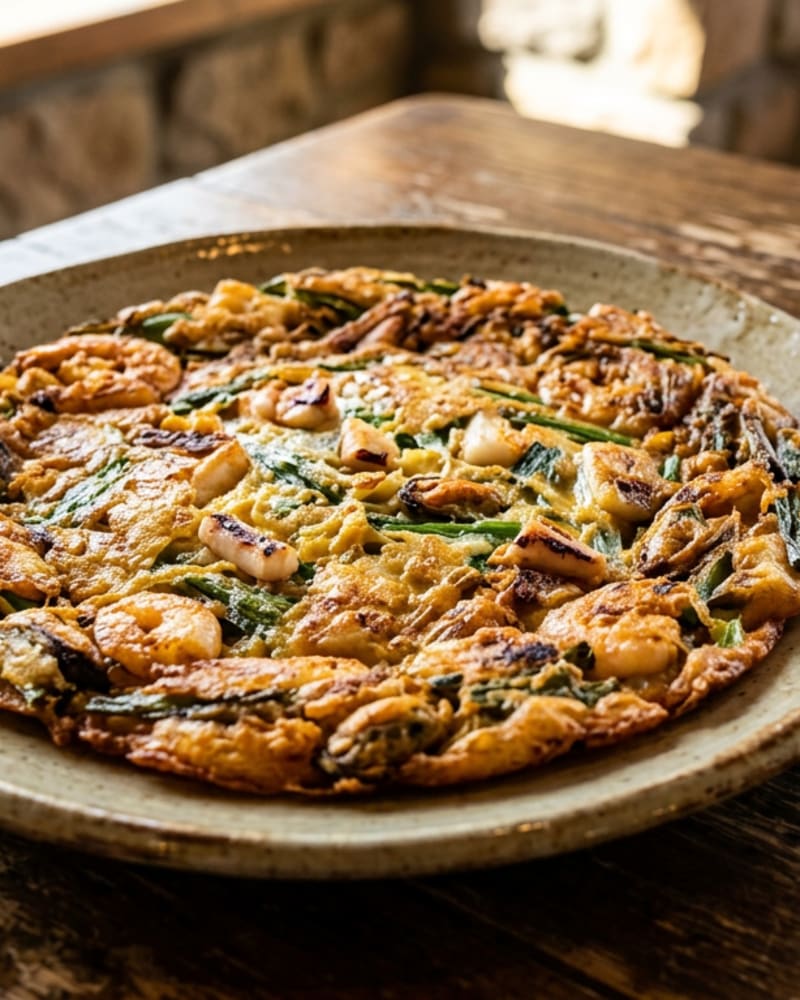
Six forty on a Tuesday, the oil is shimmering, and the batter is whisked with a few lumps you have decided to be relaxed about. This haemul pajeon recipe, the pancake you swiped right on, is crisp seafood and scallion in 29 minutes, torn apart at the table, which makes it a good way to find out how someone feels about sharing.
Thin batter, hot oil, and a dip sharp enough to cut through all of it.
The batter is only flour, an egg, cold water, salt and pepper, and it should look looser than a pancake batter. Eight green onions, shrimp and squid go in until everything is lightly coated, and half of it goes into the pan at a time. You get two pancakes, deep golden on the outside and tender in the middle, cut into wedges and dipped in a mix of soy sauce, rice vinegar and garlic.
The wedges are hot, so you will eat them with your fingers and a little patience, which is sort of the point.
What you need
- 1 cup all-purpose flour
- 8 green onion
- 8 oz shrimp
- 6 oz squid
- 1 egg
- 4 tbsp vegetable oil
- 3 tbsp soy sauce
- 2 tbsp rice vinegar
- 1 garlic
- ½ tsp salt
- ¼ tsp black pepper
How to make it
- Trim and cut 8 green onions into 3-inch lengths. Pat dry 8 oz shrimp and 6 oz squid, then slice the squid into rings. Mince 1 garlic clove for the dipping sauce, about 8 minutes.
- In a mixing bowl, whisk together 1 cup all-purpose flour, 1 egg, ½ tsp salt, black pepper to taste, and 1 cup cold water until just combined. A few small lumps are fine.
- Fold the green onions, shrimp, and squid into the batter so everything is lightly coated.
- Heat 2 tbsp vegetable oil in a large nonstick skillet over medium-high heat. Pour half the batter into the pan and spread into a thin even pancake.
- Cook until the bottom is deep golden and crisp, about 3 to 4 minutes. Flip carefully and cook the other side 3 more minutes. Transfer to a plate and repeat with remaining 2 tbsp oil and batter.
- Stir together 3 tbsp soy sauce, 2 tbsp rice vinegar, and the minced garlic in a small bowl for dipping.
- Cut the pancakes into wedges and serve hot with the soy-vinegar dip on the side.
Notes
Cooked leftovers of this haemul pajeon recipe keep three to four days refrigerated, per USDA FSIS. A pancake is crispest straight from the pan, and a leftover wedge comes back to life in a hot dry skillet for a couple of minutes per side, where a microwave leaves it soft and limp.
The shrimp and squid go in raw and cook inside the pancake. The USDA safe minimum for fish and shellfish is 145°F, so if you are unsure, cut into the thickest wedge and check that the shrimp is opaque all the way through and the squid is firm.
A few small lumps in the batter are fine, as the method puts it. Stop whisking once there is no dry flour left, because overmixing makes it heavy and chewy.
Pat the shrimp and squid dry before they go in, and slice the squid into rings. Wet seafood thins the batter and sends steam into the pancake, and a dry piece stays where you put it.
The scallions are cut into 3-inch lengths, so they lie across the pancake like little green rails and the wedges cut cleanly.
Your agent shops the scallions, shrimp and squid in one cart, and you pick up the flour and the egg on the way.
Swaps that actually work
The scallions, seafood and thin batter are the point of this haemul pajeon recipe. Scallions are what make this a pajeon, and the rest can flex.
Shrimp and squid can be replaced by any seafood that cooks fast and is cut into bite-size pieces: sliced fish fillet, scallops cut in half, or small clams. Cook them to 145°F, as with the original. Keep the amount close to the 14 ounces in the recipe, or the pancake will not hold together.
Swapping the scallions for yellow onion gets you a sweeter, softer pancake: still a good evening, just not the one you swiped on.
For a version without seafood, use thinly sliced zucchini, mushrooms or kimchi. The pancake is the same and the dip does the same job, and it is a good way to turn the recipe into a side dish for another night.
Rice vinegar can be replaced with apple cider vinegar or a squeeze of lemon, with a little less to start. Taste it before it goes on the table, because a dip that is too sharp is harder to correct than one that is too mild.
A pinch of chili flakes or a few slices of fresh chili in the dip is a good addition if you like some heat. It is optional, and the pancake works without it.
The swap that costs you the dish is thick batter. Add more flour and you get something closer to a thick fritter, and you lose the lacy crisp edge that makes this dish worth the trouble.
If it goes wrong
It is soggy or limp. The pan was not hot enough or there was too little oil, so the batter soaked it up instead of frying. Make sure the oil is shimmering and use the full 2 tbsp for each pancake.
The middle is gummy. The batter was spread too thick. Spread it thin and even, and after the flip, cook the second side for the full three minutes. If it is still gummy, return it to the pan for another minute on each side over medium heat.
It broke apart when you flipped it. You flipped too early or too hesitantly. Wait for the bottom to be deep golden, then slide it onto a plate, set the pan over the top, and flip the whole thing in one confident motion. Hesitating halfway helps neither the pancake nor the evening.
The seafood is rubbery. It cooked too long or went in wet. Stick to about three to four minutes on the first side and three on the second, and pat the shrimp and squid dry before you start.
It tastes flat. The pancake is lightly seasoned on its own and leans on the dip. Add a pinch more salt to the batter next time, and for now, tip a little more soy sauce and rice vinegar into the dip.
What to serve with it
The default is the pancake cut into wedges with the dip beside it, eaten hot.
The better version of the default adds something cold and sharp: a bowl of kimchi or sliced cucumber with a pinch of salt. The pancake is rich and the vegetable cuts through it.
What in your fridge lifts it is a bowl of steamed rice, or a handful of lettuce to wrap a wedge in. A cold beer or a pot of hot tea suits it too.
It does not hold as well as other leftovers, so eat it the same night.
Why this one earns its place
This haemul pajeon recipe is for people who are going to hover over the same plate, and it asks for one bowl, one pan and a small dish for the dip. It looks impressive and it is straightforward.
Swipe it in when you want dinner to feel like an event without turning the week upside down. Your agent shops the flour, scallions and seafood, and you do the part where it sizzles.
For more food that comes with a dip, Korean fried chicken is the crispy cousin, gyoza is another one you eat with your fingers, and what's for dinner tonight has some ideas for the nights you do not know what you are after.
More like this: all Korean recipes in Crave Corner.