Fettuccine Alfredo With a Silky Sauce and Nothing to Hide
Jump to recipe ↓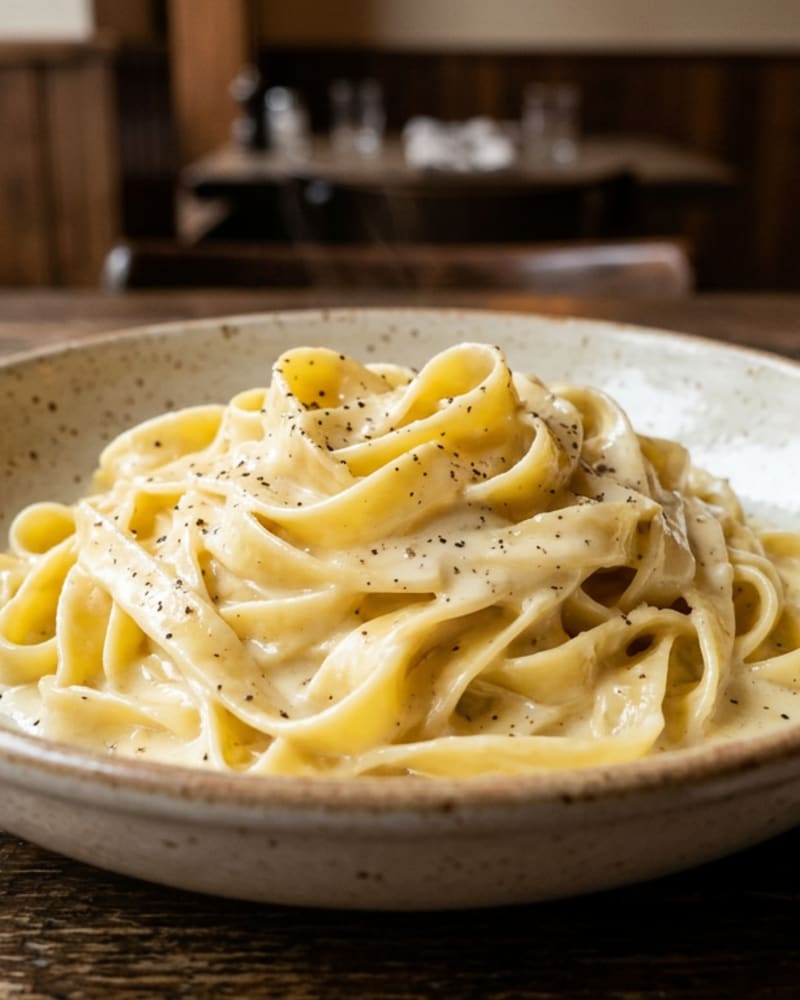
It is 7:50 on a Friday, you told someone you would cook, and the dinner reservation you did not make is now a rumor. This fettuccine alfredo recipe is 15 minutes, six ingredients and no witnesses, and the butter, cream and parmesan do all the seducing as long as you do not rush them.
Low heat, then stop whisking the moment it coats a spoon.
Alfredo has a reputation for being rich and fussy, and the fussy part is mostly a matter of patience. Melt the butter, add the cream and let it simmer gently for 4 minutes, then whisk in the parmesan until the sauce thickens. Drop the drained pasta straight into the skillet, toss for a minute, and you are done. It is the dinner equivalent of dimming the lights: very little effort, a great deal of effect.
What you need
- 12 oz fettuccine
- 1½ cups heavy cream
- 1½ cups parmesan cheese, grated
- ½ cup butter
- 1 tsp salt
- ½ tsp black pepper
How to make it
- Cook the 12 oz fettuccine in salted water for 10 minutes until al dente.
- Melt 0.5 cup butter in a large skillet over medium heat.
- Add 1.5 cups heavy cream and simmer gently for 4 minutes.
- Whisk in 1.5 cups grated parmesan cheese until the sauce thickens.
- Drain the pasta and add it directly to the sauce.
- Toss to coat evenly for 1 minute.
- Season with salt and black pepper to taste before serving.
Notes
Cooked leftovers keep three to four days refrigerated, per USDA FSIS. Use an airtight container, and eat it sooner rather than later, because cream sauces taste best fresh.
This fettuccine alfredo recipe does not improve on day two, and it will not pretend to. The sauce tightens in the fridge and clings to the pasta as a paste. Reheat it in a skillet over low heat with a splash of milk or cream, stirring until it loosens, rather than in a microwave on full power, which tends to separate it.
Skip the freezer. Dairy-heavy sauces can split when thawed, and the pasta turns soft. If you want to prepare ahead, grate the parmesan and measure the cream so the evening is three steps long.
The thing to protect is the heat under the sauce. The method has you melt the butter over medium heat, simmer the cream gently, then add the parmesan. If the pan is aggressive when the cheese goes in, the cheese tightens into grainy clumps. Keep it low, and whisk only until the sauce coats a spoon.
Timing helps too. The method starts with cooking the 12 oz of fettuccine for 10 minutes, so get the butter melting while the water is still coming to a boil and the two parts finish close together. Pasta that sits drained for a while sticks to itself.
Here is the SwipeCart angle: this is the dish you save for the swipe that says "date night, but make it effortless." You will look like you planned it, and your agent will have the cream, butter and parmesan in the cart before you finish pouring the wine.
Swaps that actually work
The parmesan is the point of a fettuccine alfredo recipe, so leave it alone. Grate it yourself from a wedge if you can, since freshly grated cheese tends to melt more smoothly than the dry, pre-grated kind. You need 1½ cups, which is a generous amount, and it is the reason the sauce tastes like cheese rather than cream.
The heavy cream matters too. Milk will not give you the same body, and half-and-half gives a thinner sauce, so if you swap it, expect to simmer a little longer and accept a lighter result.
The butter can be unsalted or salted. If you use salted, hold back on the 1 tsp salt in the ingredients until the end, because the parmesan is salty as well. Taste first, season last.
Pasta shape is flexible. Fettuccine is the classic partner because the wide ribbons carry a lot of sauce, but any long, flat noodle will do. Short pasta also works, though it holds less sauce per bite.
A splash of the pasta's cooking water is a useful rescue to keep nearby. It is not in the method, but a spoonful loosens a sauce that has gotten too thick without watering it down.
The swap that costs you the dish is boiled-hard cream and cold cheese dumped in together. That is how you end up with grease on top and clumps below. Keep it gentle and add the parmesan gradually.
If it goes wrong
The sauce is grainy. The heat was too high when the cheese went in, so the proteins tightened. Take the pan off the burner, whisk in a splash of cream or pasta water, and let it settle for a minute. Next time, add the parmesan in handfuls with the heat low.
It is greasy and split. The sauce got too hot, and the butter separated out. Remove it from the heat, add a tablespoon of warm cream or pasta water, and whisk hard until it comes back together.
It is too thin. The cream did not simmer long enough, or you tossed it with wet pasta. Return it to low heat and let it bubble gently for another minute or two, or whisk in a bit more parmesan until it coats a spoon.
It is flat. Most often salt, and a good grind of black pepper. Add them at the end, taste, then adjust.
What to serve with it
The default is a bowl of this on its own, with extra parmesan and black pepper at the table, since a pasta this rich needs little else.
The better version of the default is a sharp green salad with lemon and olive oil, which cuts through the richness. Crusty bread is lovely too, though it is hard to justify next to a pasta bowl this generous.
The thing in the fridge that lifts it is a handful of chopped parsley or a squeeze of lemon over the top. If there is a cooked chicken breast left over, slice it on top and you have a meal that leans toward chicken alfredo.
It reheats acceptably the next day, with the milk trick above, and it is a very good lunch if you plan on it.
Why this one earns its place
Some nights you want a plate of food that feels like a gesture. This fettuccine alfredo recipe is that plate. It is quick enough for a Friday when the plan fell over, and it comes out looking and tasting like you booked a table.
It also teaches a lesson that carries into other dishes: a smooth cream sauce is mostly about temperature. Learn the pace once and you can carry it into other cream sauces.
For another pasta where the sauce comes together in the pan, try cacio e pepe. When the question is simply what to put on the table tonight, what's for dinner tonight is a good place to settle it. And for the chicken-topped cousin of this dish, there is the chicken alfredo recipe.
More like this: all Italian recipes in Crave Corner.