Cacio e Pepe, and the Trick That Stops It Clumping
Jump to recipe ↓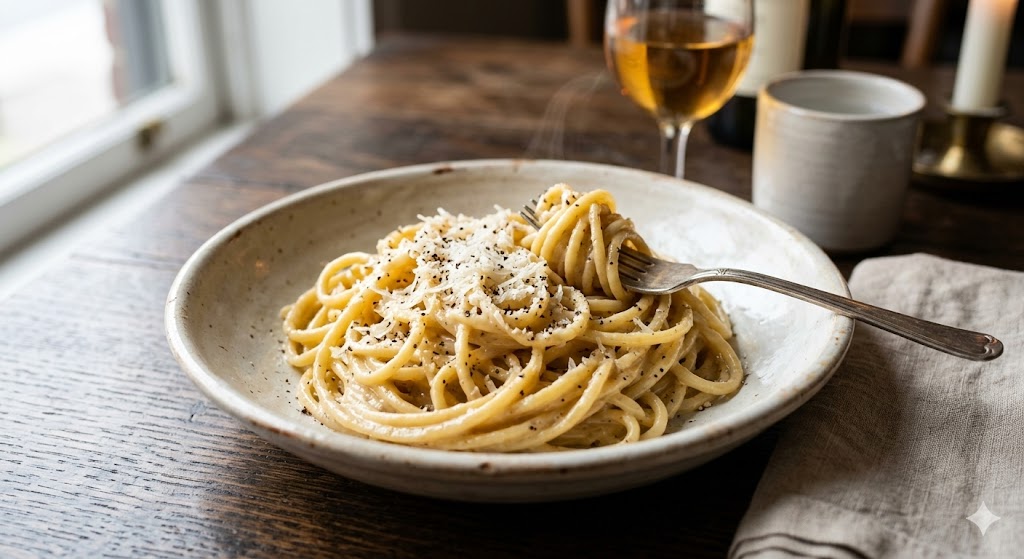
About 561 calories per serving, estimated from the ingredient list.
It is a Tuesday, it is late, and there are four things in the cupboard. This cacio e pepe recipe turns that into dinner rather than into a compromise you eat standing up.
Cacio e pepe is not difficult, but it is unforgiving in exactly one place.
Cheese plus direct heat equals strings. Everything else about this dish is boiling pasta and cracking pepper. Get the pan off the hob before the pecorino goes anywhere near it and you will make it correctly the first time, which is not true of most things worth eating.
What you need
- 200g spaghetti or tonnarelli
- 80g pecorino romano, finely grated
- 2 tsp black peppercorns, coarsely cracked
- 1 tbsp olive oil
- Salt for the pasta water
How to make it
- Boil the pasta in less water than usual and salt it lightly, because pecorino is already salty and you want the starch concentrated.
- Toast the cracked pepper in the olive oil in a wide pan over medium heat until it smells sharp, about thirty seconds.
- Ladle in a splash of pasta water and let it bubble into a thin emulsion.
- Drain the pasta two minutes early, saving a mugful of water, and add it to the pan with a little more of that water.
- Take the pan off the heat completely and wait until it stops sizzling.
- Add the pecorino in handfuls, tossing hard, adding pasta water until it turns glossy and coats every strand.
- Serve straight away in warmed bowls, with more pepper than feels reasonable.
Notes
This does not keep. A sauce this bare is held together by an emulsion of starch, fat and water, and that emulsion breaks in the fridge. Reheated cacio e pepe is grainy and slightly sad. Make what you are going to eat and no more.
It does not freeze, for the same reason.
The most common disappointment is a sauce that is thin and slides to the bottom of the bowl rather than clinging. That is either not enough cheese or not enough starch in the water, and the fix is more pecorino added off the heat, not more water and not, under any circumstances, cream.
The second most common is that it is perfect in the pan and stiff by the time it reaches the table. Warm the bowls. Cold ceramic pulls enough heat out of a small portion to tighten the sauce before you are halfway down.
Use the smallest pot that will hold the pasta. The instinct to boil pasta in an enormous volume of water is correct for most shapes and wrong here, because the water is your sauce and you want it cloudy.
Grate the pecorino much finer than you think you need to. A coarse grater gives you shards that need real heat to melt, and real heat is the one thing you cannot give them. The fine side of a box grater, or a microplane, produces something closer to a powder that dissolves into the starchy water almost on contact. This is the least glamorous instruction on the page and it fixes more failed attempts than the temperature rule does.
Have everything within reach before the pasta drains. Once you take the pan off the heat you are working against a falling temperature, and hunting for the grater at that point is how a sauce ends up stiff.
Swaps that actually work
Pecorino romano is the point. Leave it alone. Parmesan makes a perfectly pleasant bowl of pasta, but it is milder, nuttier and less sharp, and what you end up with is a different dish wearing this one's name. If pecorino is genuinely unavailable, use parmesan and call it something else.
The pasta shape can move freely. Spaghetti, tonnarelli, bucatini and even rigatoni all work. What matters far more than the shape is that you cook it in less water than the packet suggests, so the starch concentrates.
Freshly cracked pepper matters more than it sounds like it should. Pre ground pepper has lost its top notes and gives you heat without the perfume, and the perfume is half of what the dish is named for.
The swap that costs you the dish is pre grated cheese from a bag. It is coated in anti caking starch, it will not melt smooth, and it will clump no matter how careful you are with the temperature.
If it goes wrong
The cheese seized into strings. The pan was too hot when it went in. Off the heat entirely, add a splash of cold pasta water and toss hard. Sometimes it comes back. Often it does not, and that is a lesson rather than a disaster.
It is watery and thin. Too much pasta water, not enough cheese. Add more pecorino off the heat and keep tossing until it thickens.
It is claggy and thick. The opposite problem. Loosen it with pasta water a spoonful at a time, tossing between each one.
It is flat. Usually salt, but here it is often the reverse. You salted the water as you would for any other pasta and the pecorino pushed it over the edge. Next time, salt the water lightly and let the cheese do the work.
What to serve with it
Nothing, ideally. It is a complete thing, it goes cold quickly, and anything that needs plating alongside works against the one quality that makes it good.
If you want a starter, make it sharp and raw. A chicory salad with lemon, or tomatoes with salt and nothing else, both reset your palate between mouthfuls of something very rich.
The better version of the default is simply warmed bowls, which costs you nothing except remembering to do it.
The thing in the cupboard that lifts it is more pepper at the table, cracked coarsely over the top after it is plated.
A glass of something sharp and white works better alongside this than anything red, because the dish is fat and salt and it wants cutting rather than matching.
It is not a next day lunch. This is the rare recipe with no leftover life whatsoever, so cook the amount you want to eat.
Why this one earns its place
Four ingredients, three of them shelf stable, and twenty minutes from deciding to eating. Cacio e pepe is the dish that means a bare cupboard is not an emergency and does not require a shop.
It is also the recipe that repays practice fastest of anything in this section. Make it three times and you will stop thinking about the pan temperature at all, and at that point it becomes a genuinely quick meal you can produce while tired and distracted, which is when most dinners actually get made.
If the cupboard to dinner problem is the one you keep hitting, quick weeknight dinner ideas covers more of them. When it is the deciding rather than the cooking that stalls you, decision fatigue and what to eat is the honest version of why that happens. And how to shop for a new recipe is worth reading before you buy a whole block of pecorino for the first time.
More like this: all Italian recipes in Crave Corner.